
NEW DELHI: As smog thickens in Delhi and people complain of burning eyes, scratchy throats and breathing problems, are the official air quality monitors accurately reflecting the capital’s air quality? A ground check by TOI at several stations found glaring inconsistencies and questionable practices that may be influencing readings. At Anand Vihar – a pollution hot spot – the area around the monitoring unit was being repeatedly doused with water using high-pressure hoses. The practice, officials on site said, was part of routine dust suppression. Experts said such measures can distort readings. At Dilshad Garden, the AQI was in ‘poor’ zone but better than most other spots in the afternoon. The station is deep in a forested patch of a medical institute – covered by trees and away from the city dust and traffic. Sprinkling being done across city to suppress dust: Sirsa Similarly, the Mandir Marg station stood within a green belt and remained largely inaccessible, while at ITO, the monitor was located next to a regularly sprinkled stretch. At Lodhi Road, two stations barely a few blocks from each other, gave readings that differed by as much as 80 points at the same time. These observations raise serious questions over the credibility and representativeness of the capital’s air quality network. Delhi environment minister Manjinder Singh Sirsa, however, defended the data. “How would we suppress the dust? It’s natural, through sprinkling. It is being done throughout the city, including around stations. We are successfully able to control pollution,” he said. Experts, meanwhile, warned that excessive sprinkling near stations is “unethical” and could mislead both policymakers and the public. “These are state-of-the-art stations approved by all relevant agencies, designed to capture air quality over a two to three kilometre radius,” said M P George, former additional director, Delhi Pollution Control Committee (DPCC). “They measure a well-mixed air package, so cleaning one small patch doesn’t change the bigger picture.” He added that while there’s no concrete study linking water sprinkling to altered AQI readings, such actions increase humidity and are more cosmetic than corrective. “In fact, they can be counterproductive – higher humidity promotes secondary particulate formation. Sprinkling near monitors serves no scientific purpose.” Manoj Kumar from the Centre for Research on Energy and Clean Air (CREA) agreed that sprinkling may briefly lower particulate levels near sensors but said it doesn’t change overall air quality. “The worst pollution peaks occur in early morning and late evening, when sprinkling doesn’t happen. So, while readings may look cleaner for a few hours, overall exposure remains hazardous,” he said. Sunil Dahiya, founder of Envirocatalysts, said there was no evidence of post-collection data tampering but the choice of locations – often inside green or shielded areas – and nearby sprinkling clearly influence results. “Such practices give a false sense of safety and prevent citizens, especially vulnerable groups, from taking precautions. They also distort forecasting and policy responses.” Environmental activist Bhavreen Kandhari went a step further, calling it a case of “cleaning data, not air.” “These sensors measure pollution through light scattering. When mist or water is sprayed nearby, it suppresses dust and alters humidity, creating an artificially ‘clean’ AQI that may appear 50-90% better for a few hours. It’s detectable – sudden humidity spikes and abrupt PM2.5 drops are red flags. When this happens under official watch, it’s data distortion, not management,” she said. Lawyer and environmentalist Akash Vashishtha said air pollution control must be rooted in accuracy, not optics. “Prevention, control and abatement can only work when data is truthful. Hiding reality doesn’t bring relief – it delays real solutions. The govt must ensure monitors are placed in representative, high-footfall and industrial areas, not in pockets of greenery,” he said.About the AuthorKushagra DixitKushagra Dixit writes on environmental issues, wildlife conservation, climate change, agriculture, human rights, and scientific research. His investigative coverage encompasses river contamination with emphasis on the Yamuna, air pollution, urban waste and their collective effects on public wellbeing.Read MoreEnd of ArticleFollow Us On Social MediaVideosMEA Assures Full Support For Major Vikrant Jaitley Detained In UAE; Consular Access Provided‘Islamic Bomb’: Ex-CIA Officer Reveals What Drove Pakistan To Build Nukes, Big Claim On Indira GovtMEA’s Measured Response After Donald Trump Says He Could Meet PM Modi During India Visit Next Year‘Do Not Like MLA, But…’: Gaya Voters Face ‘Nitish’ Dilemma, Reveal Bihar Poll MoodIndia Exposes Pakistan’s Nuclear Lies After Donald Trump’s Claim On Underground Tests Stunned WorldRahul Gandhi Accuses PM Modi, Amit Shah, EC Of Stealing Elections, Claims Multiple Polls Manipulated‘Apaharan Department’: Amit Shah Slams Tejashwi Yadav At Jamui Rally, Raises ‘Jungle Raj’ SpectrePakistan Cries Foul At UNSC As India Holds Indus Waters Treaty In Abeyance Over Pahalgam AttackIndia’s MBBS Student Ajit Singh From Rajasthan, Missing for Last 19 Days, Found Dead In Russian DamFAA Grounds America: How The US Flight Cuts Could Derail Indian Travel Plans This Holiday Season123PhotostoriesBollywood tales of love that challenged tradition and still triumphed4 common foods to combine with sesame seeds for better nutrition during wintersBigg Boss 19: From Amaal Mallik’s controversial remarks against contestants to Salman Khan being called biased: Daboo Malik breaks silence on his son’s journey and experiencesReverse fatty liver naturally in 90 days: Here are 3 things to focus onWhy is the 11:11 phenomenon considered lucky, and what are its benefits5 incredible animals found on Earth that can survive the harsh conditions of space8 types of bharta or chokha that can elevate any meal’PK’, ‘Munna Bhai’ to ‘Jagga Jasoos’: Bollywood sequels that were promised but never made till dateWhy Abhishek and Amitabh Bachchan wear two watches: The emotional tradition the Bachchans still followClove Tea for respiratory health: How to make it and 4 ingredients to add to gain maximum benefits123Hot PicksStock market holidayBank HolidayBihar Election 2025Gold rate todaySilver rate todayPublic Holidays NovemberBank Holidays NovemberTop TrendingMarshawn Kneeland Cause of DeathTom BradyNHL Trade RumorsAJ BrownGM Kyle DubasWho is CatalinaBoston Celtics vs Orlando MagicKayla NicoleRyan O ReillyPatrick Kane
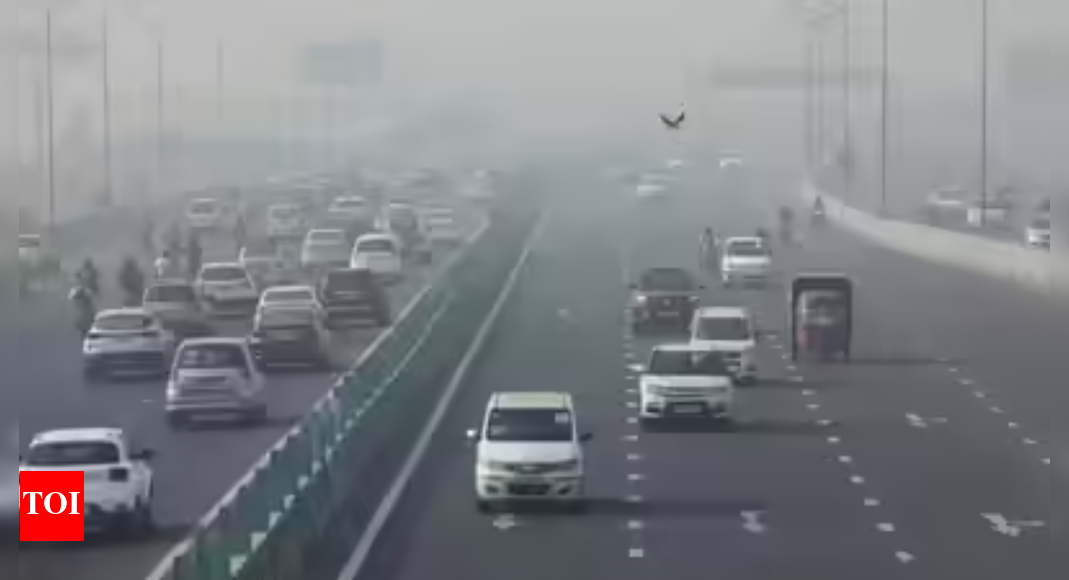
NEW DELHI: As smog thickens in Delhi and people complain of burning eyes, scratchy throats and breathing problems, are the official air quality monitors accurately reflecting the capital’s air quality? A ground check by TOI at several stations found glaring inconsistencies and questionable practices that may be influencing readings. At Anand Vihar – a pollution hot spot – the area around the monitoring unit was being repeatedly doused with water using high-pressure hoses. The practice, officials on site said, was part of routine dust suppression. Experts said such measures can distort readings. At Dilshad Garden, the AQI was in ‘poor’ zone but better than most other spots in the afternoon. The station is deep in a forested patch of a medical institute – covered by trees and away from the city dust and traffic. Sprinkling being done across city to suppress dust: Sirsa Similarly, the Mandir Marg station stood within a green belt and remained largely inaccessible, while at ITO, the monitor was located next to a regularly sprinkled stretch. At Lodhi Road, two stations barely a few blocks from each other, gave readings that differed by as much as 80 points at the same time. These observations raise serious questions over the credibility and representativeness of the capital’s air quality network. Delhi environment minister Manjinder Singh Sirsa, however, defended the data. “How would we suppress the dust? It’s natural, through sprinkling. It is being done throughout the city, including around stations. We are successfully able to control pollution,” he said. Experts, meanwhile, warned that excessive sprinkling near stations is “unethical” and could mislead both policymakers and the public. “These are state-of-the-art stations approved by all relevant agencies, designed to capture air quality over a two to three kilometre radius,” said M P George, former additional director, Delhi Pollution Control Committee (DPCC). “They measure a well-mixed air package, so cleaning one small patch doesn’t change the bigger picture.” He added that while there’s no concrete study linking water sprinkling to altered AQI readings, such actions increase humidity and are more cosmetic than corrective. “In fact, they can be counterproductive – higher humidity promotes secondary particulate formation. Sprinkling near monitors serves no scientific purpose.” Manoj Kumar from the Centre for Research on Energy and Clean Air (CREA) agreed that sprinkling may briefly lower particulate levels near sensors but said it doesn’t change overall air quality. “The worst pollution peaks occur in early morning and late evening, when sprinkling doesn’t happen. So, while readings may look cleaner for a few hours, overall exposure remains hazardous,” he said. Sunil Dahiya, founder of Envirocatalysts, said there was no evidence of post-collection data tampering but the choice of locations – often inside green or shielded areas – and nearby sprinkling clearly influence results. “Such practices give a false sense of safety and prevent citizens, especially vulnerable groups, from taking precautions. They also distort forecasting and policy responses.” Environmental activist Bhavreen Kandhari went a step further, calling it a case of “cleaning data, not air.” “These sensors measure pollution through light scattering. When mist or water is sprayed nearby, it suppresses dust and alters humidity, creating an artificially ‘clean’ AQI that may appear 50-90% better for a few hours. It’s detectable – sudden humidity spikes and abrupt PM2.5 drops are red flags. When this happens under official watch, it’s data distortion, not management,” she said. Lawyer and environmentalist Akash Vashishtha said air pollution control must be rooted in accuracy, not optics. “Prevention, control and abatement can only work when data is truthful. Hiding reality doesn’t bring relief – it delays real solutions. The govt must ensure monitors are placed in representative, high-footfall and industrial areas, not in pockets of greenery,” he said.


