
NEW DELHI: A woman cannot be treated as “untouchable” for three days in a month and then cease to be considered untouchable on the fourth day, Supreme Court judge BV Nagarathna remarked on Tuesday during hearing of cases including Sabarimala issue.The remarks came as solicitor general Tushar Mehta, representing the Centre, said he strongly objected to the 2018 Sabarimala judgment’s observation that barring women aged 10 to 50 from the temple amounted to “untouchability” under Article 17 of the Constitution. “Article 17 in the context of Sabarimala, I don’t know how it can be argued. Speaking as a woman, there can’t be a three-day untouchability every month, and on the fourth day, there is no untouchability,” justice Nagarathna.The observation came in response to Mehta’s statement: “India is not that patriarchal or gender stereotyped in the way that the West understands.”In the Sabarimala case, justice DY Chandrachud held that barring women from Kerala’s Sabarimala temple, whether due to age or menstrual status, amounts to “untouchability,” places them in a “subordinate” position, reinforces “patriarchy,” and undermines their dignity.Mehta said that the ban on women entering Sabarimala temple was not linked to menstruation, but was imposed solely based on a specific age group.”Let us be clear. Sabarimala concerns only a particular age group. There should be no confusion. Lord Ayyappa temples across the country and the world are open to women of all ages. It is only one temple which has this restriction. It is a sui generis case,” he said.A nine-judge bench was hearing petitions concerning discrimination against women at religious sites, including Kerala’s Sabarimala temple, and examining the extent and limits of religious freedom across different faiths. The Constitution bench included Chief Justice Surya Kant and Justices B V Nagarathna, M M Sundresh, Ahsanuddin Amanullah, Aravind Kumar, Augustine George Masih, Prasanna B Varale, R Mahadevan, and Joymalya Bagchi.About the AuthorTOI News DeskThe TOI News Desk comprises a dedicated and tireless team of journalists who operate around the clock to deliver the most current and comprehensive news and updates to the readers of The Times of India worldwide. With an unwavering commitment to excellence in journalism, our team is at the forefront of gathering, verifying, and presenting breaking news, in-depth analysis, and insightful reports on a wide range of topics. The TOI News Desk is your trusted source for staying informed and connected to the ever-evolving global landscape, ensuring that our readers are equipped with the latest developments that matter most.”Read MoreEnd of ArticleFollow Us On Social MediaVideosBJP Calls Kharge’s ‘Snake’ Remark Dangerous, Alleges Communal ProvocationAssam Passport Row Turns Personal: Himanta Sarma Takes ‘Peda’ Jibe At Pawan Khera, Congress Responds’Pakistan Will Be Divided Into…’: Rajnath Singh’s Strong Response To Khawaja Asif’s Kolkata ThreatAhead Of Vikram Misri’s US Visit, Sergio Gor’s High Level Meetings Set Stage For Key Strategic TalksAfter US Rescue Ops Inside Iran, Question Emerges, Could India Have Attempted Such Mission In 2019?’India’s Global Rise Needs Military Edge’: Michael Rubin Urges Delhi To Match Power With CapabilityGovt Boosts 5-Kg LPG Allocation For Migrants As Supply Pressure GrowsPakistan’s Kolkata Threat Row: TMC MP Abhishek Banerjee Slams PM Modi, Shah With Fiery Response“Mad Dog Has Bitten Them”: Assam CM’s Wife Launches Fiery Attack On CongressPM Modi Hails Nuclear Milestone, India’s Fast Breeder Reactor At Kalpakkam Reaches Criticality Stage123Photostories4 non-negotiable rules for a healthy relationship7 career mistakes that stop smart people from growing, and how to fix them6 Japanese ideas that quietly help calm an overthinking mind5 Times Brad Pitt made us fall in love with his characters: Benjamin Button, Lt. Aldo Raine and moreTop 7 investment-friendly cities in India for maximum property returns5 ways Rajasthan breaks every stereotype we grew up believingWhat color reflects your true personality? find out by birth numberPTM Checklist: Don’t walk in unpreparedMumbai Metro gears up for 90km mark with major rolloutFrom teaching son how to perform Namaz to worries about her upcoming treatment: Dipika Kakar shares an update amid her illness123Hot PicksLuka Doncic InjuryUpdated IPL Points TableOil PriceSilver Rate TodayLPG NewsPublic holidays April 2026Bank Holidays AprilTop TrendingRory McilroyBlake LivelyKerala pollsWest Bengal assembly electionEA FC 26 Team of the SeasonKerala ElectionStrait of HormuzIPL Points TableSchool Holidays in AprilKarnataka 2nd PUC Exam Result Date

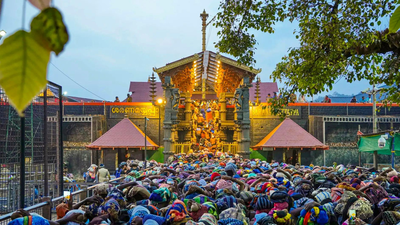
NEW DELHI: A woman cannot be treated as “untouchable” for three days in a month and then cease to be considered untouchable on the fourth day, Supreme Court judge BV Nagarathna remarked on Tuesday during hearing of cases including Sabarimala issue.The remarks came as solicitor general Tushar Mehta, representing the Centre, said he strongly objected to the 2018 Sabarimala judgment’s observation that barring women aged 10 to 50 from the temple amounted to “untouchability” under Article 17 of the Constitution. “Article 17 in the context of Sabarimala, I don’t know how it can be argued. Speaking as a woman, there can’t be a three-day untouchability every month, and on the fourth day, there is no untouchability,” justice Nagarathna.The observation came in response to Mehta’s statement: “India is not that patriarchal or gender stereotyped in the way that the West understands.”In the Sabarimala case, justice DY Chandrachud held that barring women from Kerala’s Sabarimala temple, whether due to age or menstrual status, amounts to “untouchability,” places them in a “subordinate” position, reinforces “patriarchy,” and undermines their dignity.Mehta said that the ban on women entering Sabarimala temple was not linked to menstruation, but was imposed solely based on a specific age group.“Let us be clear. Sabarimala concerns only a particular age group. There should be no confusion. Lord Ayyappa temples across the country and the world are open to women of all ages. It is only one temple which has this restriction. It is a sui generis case,” he said.A nine-judge bench was hearing petitions concerning discrimination against women at religious sites, including Kerala’s Sabarimala temple, and examining the extent and limits of religious freedom across different faiths. The Constitution bench included Chief Justice Surya Kant and Justices B V Nagarathna, M M Sundresh, Ahsanuddin Amanullah, Aravind Kumar, Augustine George Masih, Prasanna B Varale, R Mahadevan, and Joymalya Bagchi.


