
NEW DELHI: A pilot air taxi corridor linking Gurugram, Connaught Place and Jewar International Airport could sharply reduce travel time in the National Capital Region, according to a new report by the Confederation of Indian Industry. The study says Advanced Air Mobility solutions, including Electric Vertical Take Off and Landing aircraft, could help India ease infrastructure bottlenecks by shifting a share of urban travel to low-altitude airspace.The report proposes that air taxis initially operate from rooftops of hospitals and commercial buildings and be deployed for time-sensitive missions such as medical logistics and organ transport. Strategic co-location with hospitals, metro stations and business districts would allow integration with existing transport networks, it said.Citing severe pressure on surface transport, the report argues that Advanced Air Mobility is the logical next step for Indian cities. It suggests setting up a new regulatory body within the Directorate General of Civil Aviation to oversee the rollout of these services. Released by Civil Aviation Minister Rammohan Naidu Kinjarapu, the report outlines a phased plan to safely integrate next-generation air mobility into the aviation ecosystem and address urban congestion.Senior officials including DGCA chief Faiz Ahmed Kidwai and Airports Authority of India chairman Vipin Kumar were present at the launch, along with industry leaders.On infrastructure, the report makes a strong case for rooftop vertiports in major metros. “As India prepares Advanced Air Mobility, rooftop vertiports offer an efficient, scalable, and cost-effective solution, especially in cities like Delhi, Mumbai, and Bengaluru,” it said. With land acquisition for ground-based vertiports proving expensive and slow, rooftops of commercial hubs, hospitals, tech parks and residential towers are seen as a practical alternative using under-utilised real estate.However, regulatory hurdles remain. “Under the current DGCA regulations, routine commercial vertical take-offs and landings from rooftops are not yet permitted, and any future enablement would be subject to the evolution of applicable regulatory frameworks and safety assessments,” the report noted. It proposes a sequenced rollout starting with drone deliveries, followed by medical logistics and organ transport, and later air ambulance services.On funding, the report calls on public financial institutions, including SIDBI, banks and government grant agencies, to create dedicated financing instruments for Advanced Air Mobility. These could include sector-specific infrastructure funds, venture leasing models or credit enhancement facilities to lower investment risk and support long-term capital flows.About the AuthorTOI News DeskThe TOI News Desk comprises a dedicated and tireless team of journalists who operate around the clock to deliver the most current and comprehensive news and updates to the readers of The Times of India worldwide. With an unwavering commitment to excellence in journalism, our team is at the forefront of gathering, verifying, and presenting breaking news, in-depth analysis, and insightful reports on a wide range of topics. The TOI News Desk is your trusted source for staying informed and connected to the ever-evolving global landscape, ensuring that our readers are equipped with the latest developments that matter most.”Read MoreEnd of ArticleFollow Us On Social MediaVideos’Chabahar Port Symbol Of…’: Iranian Envoy Fathali’s Strong Message On India-Iran Partnership“Trade Deal Wouldn’t Happen Without Him”: Goyal Praises US Envoy GorOpposition Parties’ No-Confidence Move Against Om Birla?; ICC Rejects Pak Demand Over India BoycottRajnath Singh, Greek Counterpart Chart Five-Year Defence Cooperation Roadmap’India Must Find Its Own Elon Musk’: Ex-DGMO Emphasises Superiority In Space Tech To Win Future WarsPunjab Law College Horror: Student Shoots Classmate, Turns Gun On SelfBJP Accuses Mamata of Misleading Nation After SC SIR Ruling, TMC Counters ClaimsWatergate Files Reveal Ex-US President Nixon Was Ready To Back China If It Attacked India In 1971How Sanae Takaichi’s Japan Elections Win Could Alter Indo-Pacific Power Balance, India’s StrategyPariksha Pe Charcha 2026: PM Modi Advises Students on Discipline and More for Viksit Bharat 2047123Photostories5 timeless lessons from the Shiv Purana which are the ultimate spiritual guide7 leafy greens you can harvest in a month or less8 baby names about to replace today’s most popular picksValentine’s Week special: Luxury stays for solo reflection and self connection8 easy and delicious ways to add fruit jam to your breakfastExclusive – Laughter Chefs 3’s Arjun Bijlani on pairing up with Tejasswi Prakash: I keep teasing her asking when she’s getting married, planning to have kids. even call her ‘bhabhi’Replace your cookware immediately if you notice these 5 signs (number 3 is a warning)Julia Roberts and Daniel Moder net worth: Inside the couple’s USD 260 million empireChef Sanjeev Kapoor shares 10 smart tips and tricks for deep frying for better taste and nutrition8 techniques to break negative thinking patterns in relationships123Hot PicksUAE Public School RegistrationGold Silver PricesParliament Budget SessionGCC Unified Visa 2026Income Tax CalculatorPublic holidays February 2026Bank Holidays februaryTop TrendingRobert Krafts WifeShai Gilgeous AlexanderBrittany MahomesRobert Kraf WifeCoco JonesCandace OwensSuper Bowl 60 Halftime PerformanceNBA Trade RumorsJutta LeerdamKim Kardashian and Lewis Hamilton Net Worth
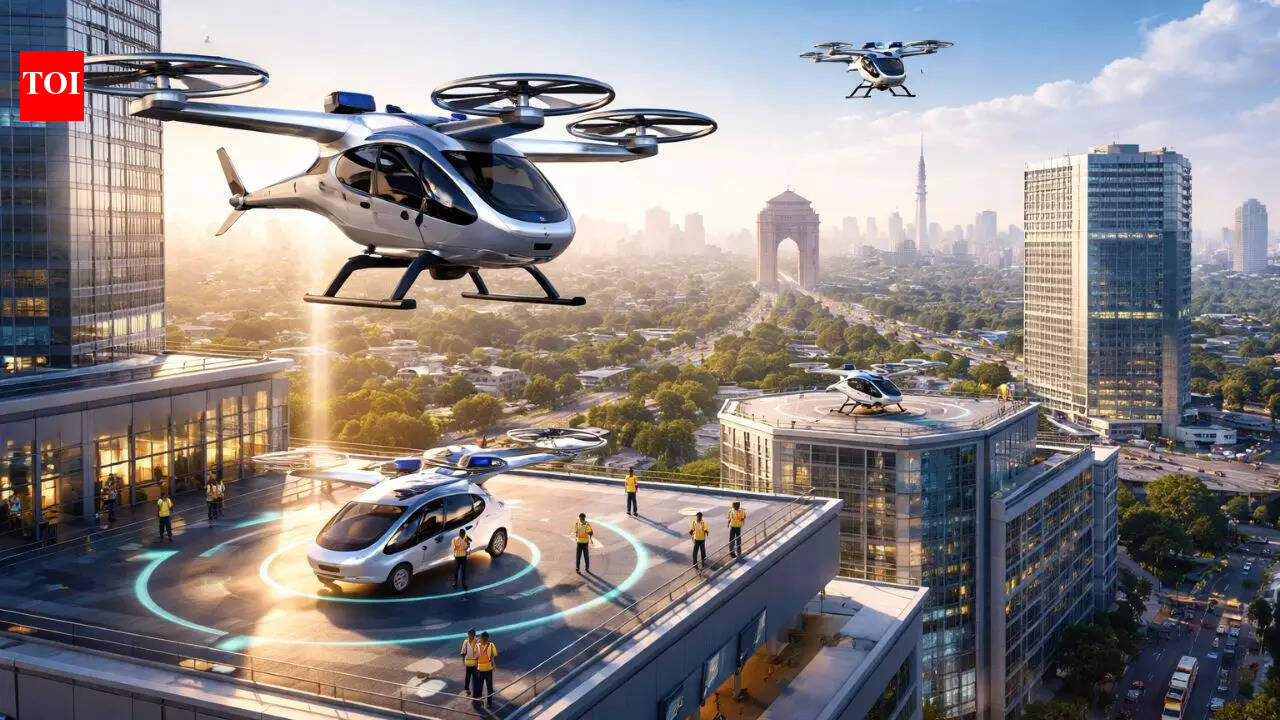

NEW DELHI: A pilot air taxi corridor linking Gurugram, Connaught Place and Jewar International Airport could sharply reduce travel time in the National Capital Region, according to a new report by the Confederation of Indian Industry. The study says Advanced Air Mobility solutions, including Electric Vertical Take Off and Landing aircraft, could help India ease infrastructure bottlenecks by shifting a share of urban travel to low-altitude airspace.The report proposes that air taxis initially operate from rooftops of hospitals and commercial buildings and be deployed for time-sensitive missions such as medical logistics and organ transport. Strategic co-location with hospitals, metro stations and business districts would allow integration with existing transport networks, it said.Citing severe pressure on surface transport, the report argues that Advanced Air Mobility is the logical next step for Indian cities. It suggests setting up a new regulatory body within the Directorate General of Civil Aviation to oversee the rollout of these services. Released by Civil Aviation Minister Rammohan Naidu Kinjarapu, the report outlines a phased plan to safely integrate next-generation air mobility into the aviation ecosystem and address urban congestion.Senior officials including DGCA chief Faiz Ahmed Kidwai and Airports Authority of India chairman Vipin Kumar were present at the launch, along with industry leaders.

On infrastructure, the report makes a strong case for rooftop vertiports in major metros. “As India prepares Advanced Air Mobility, rooftop vertiports offer an efficient, scalable, and cost-effective solution, especially in cities like Delhi, Mumbai, and Bengaluru,” it said. With land acquisition for ground-based vertiports proving expensive and slow, rooftops of commercial hubs, hospitals, tech parks and residential towers are seen as a practical alternative using under-utilised real estate.However, regulatory hurdles remain. “Under the current DGCA regulations, routine commercial vertical take-offs and landings from rooftops are not yet permitted, and any future enablement would be subject to the evolution of applicable regulatory frameworks and safety assessments,” the report noted. It proposes a sequenced rollout starting with drone deliveries, followed by medical logistics and organ transport, and later air ambulance services.On funding, the report calls on public financial institutions, including SIDBI, banks and government grant agencies, to create dedicated financing instruments for Advanced Air Mobility. These could include sector-specific infrastructure funds, venture leasing models or credit enhancement facilities to lower investment risk and support long-term capital flows.


