
NEW DELHI: A new international study involving researchers from Physical Research Laboratory (PRL), IISER and Institute of Remote Sensing, has revealed that water ice deposits in the Moon’s permanently shadowed regions are far more stable than earlier believed.“Moon’s permanently shadowed regions (PSRs) are capable of preserving water-ice and other frozen volatiles for billions of years if temperatures remain sufficiently low. Water ice is preserved on the PSRs of Moon’s South Pole, which have witnessed multiple impacts. (However,) 74% of PSRs are unaffected by impacts,” said the study titled “Impacts into the lunar permanently shadowed regions”, which was published in “Nature” on April 2.The findings have come at a time when countries are racing to launch manned missions, like the ongoing Artemis II mission and India’s crewed lunar landing mission by 2040, to the Moon with an aim to set up lunar bases in future.Using high-resolution orbital imagery and impact modelling, the research team mapped millions of tiny craters, ranging from one to 20 metres in size, across PSRs between 85° and 90° south latitude. The study also took help from data generated by Nasa’s camera and Isro Chandrayaan-2 orbiter. “In this study, 5 m-7 km diameter craters were mapped within the subset of PSRs greater than 1 km2 in area located between 85°–90°S latitude using ShadowCam, 1–20 m craters were mapped within the Connecting Ridge region near lunar south pole using both ShadowCam (Nasa) and Chandrayaan-2 Orbiter High-Resolution Camera (India) and an estimated count was produced,” the study said.“Despite millions of impacts into the PSR and release of volatiles from the crater cavity, the lunar south pole region still has the potential to preserve shallow ice, making it a promising target for future India’s Chandrayaan-5 / LUPEX mission,” the study further said.The study suggests that small craters in these dark regions may have disturbed the ice buried below the surface. It also says that in areas without craters, natural surface churning (called “gardening”) can mix the ice vertically, bringing it closer to the top. This makes such places good targets for future missions to explore and use lunar ice.Chandrayaan missions were the first to confirm the presence of water on the Moon. While Chandrayaan-1 (2008) first detected lunar water, Chandrayaan-2 confirmed its stability in polar regions and Chandrayaan-3 found further evidence of hidden, buried ice, marking a crucial step for future exploration. Chandrayaan-5, also known as the Lunar Polar Exploration (LUPEX) mission, is a joint project between Isro and Japan’s JAXA, scheduled for launch around 2027-28. It aims to land at the South Pole to locate and analyse water ice, employing a heavy Japanese rover and an Indian lander.End of ArticleFollow Us On Social MediaVideos‘Glimmer Of Hope’: Mauritius PM Hails India’s Support Amid Iran Crisis, Eyes Key Oil And Gas DealElection Season Kicks Off With Record Voter Turnout In Assam, Puducherry As Kerala Clocks 77% VotingIndia Withdraws Bid To Host COP33 In 2028 — Here’s Why The Government ReconsideredIndia Ramps Up Gulf Outreach: Hardeep Puri Heads To Qatar, Jaishankar to UAE After US-Iran TruceAre You A ‘Worker’ Or Just An Employee? India’s Labour Codes ExplainedDelhi’s Gas Shift: IGL Asks Residents to Move from LPG to PNG Amid Supply PushIndia Tells Seafarers To Remain Indoors As Iran War Puts Strait of Hormuz On EdgeOperation Sindoor Signals India’s Shift To Multi-Domain, Data-Driven Warfare : General DwivediWorld Bank Raises India’s FY27 Growth Forecast to 6.6%, Flags Global Risks From West Asia Conflict’Topple Didi At Any Cost?’ TMC Releases Viral Sting Video To Target Humayun Kabir, BJP Denies Link123PhotostoriesPlastic vs. stainless steel casserole: Which is healthier and safer for storing rotisKhatron Ke Khiladi 15 probable contestants list: Farrhana Bhat, Gaurav Khanna to Manisha Rani likely to join Rohit Shetty’s showHeavyweights line up to vote as Puducherry holds assembly pollsHeavyweights line up to vote as Puducherry holds assembly polls5 elegant bridal picks for a simple court wedding beyond the lehengaNavi Mumbai’s luxury real estate boom: Developers shaping the premium market7 refreshing chutneys made with vegetable peels to keep the gut cool in summer8 unique animals that exist only in Australia and look unrealBest Hollywood horror movies streaming on OTT right now: ‘Hereditary’ and ‘The Conjuring’ to ‘The Ritual’Your biggest weakness you should never ignore; based on your number123Hot PicksKerala VotingRaghav ChadhaPurple cap winnerOrange cap winnerIPL Points TablePublic holidays April 2026Bank Holidays AprilTop TrendingPope Leo XIVMamata BanerjeeTop Stock RecommendationsCrude Oil PriceMike VrabelMegan Thee StallionSerena WilliamsIPL Points TableSchool Holidays in AprilKarnataka 2nd PUC Exam Result Date

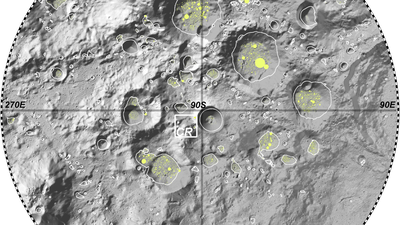
NEW DELHI: A new international study involving researchers from Physical Research Laboratory (PRL), IISER and Institute of Remote Sensing, has revealed that water ice deposits in the Moon’s permanently shadowed regions are far more stable than earlier believed.“Moon’s permanently shadowed regions (PSRs) are capable of preserving water-ice and other frozen volatiles for billions of years if temperatures remain sufficiently low. Water ice is preserved on the PSRs of Moon’s South Pole, which have witnessed multiple impacts. (However,) 74% of PSRs are unaffected by impacts,” said the study titled “Impacts into the lunar permanently shadowed regions”, which was published in “Nature” on April 2.The findings have come at a time when countries are racing to launch manned missions, like the ongoing Artemis II mission and India’s crewed lunar landing mission by 2040, to the Moon with an aim to set up lunar bases in future.Using high-resolution orbital imagery and impact modelling, the research team mapped millions of tiny craters, ranging from one to 20 metres in size, across PSRs between 85° and 90° south latitude. The study also took help from data generated by Nasa’s camera and Isro Chandrayaan-2 orbiter. “In this study, 5 m-7 km diameter craters were mapped within the subset of PSRs greater than 1 km2 in area located between 85°–90°S latitude using ShadowCam, 1–20 m craters were mapped within the Connecting Ridge region near lunar south pole using both ShadowCam (Nasa) and Chandrayaan-2 Orbiter High-Resolution Camera (India) and an estimated count was produced,” the study said.“Despite millions of impacts into the PSR and release of volatiles from the crater cavity, the lunar south pole region still has the potential to preserve shallow ice, making it a promising target for future India’s Chandrayaan-5 / LUPEX mission,” the study further said.The study suggests that small craters in these dark regions may have disturbed the ice buried below the surface. It also says that in areas without craters, natural surface churning (called “gardening”) can mix the ice vertically, bringing it closer to the top. This makes such places good targets for future missions to explore and use lunar ice.Chandrayaan missions were the first to confirm the presence of water on the Moon. While Chandrayaan-1 (2008) first detected lunar water, Chandrayaan-2 confirmed its stability in polar regions and Chandrayaan-3 found further evidence of hidden, buried ice, marking a crucial step for future exploration. Chandrayaan-5, also known as the Lunar Polar Exploration (LUPEX) mission, is a joint project between Isro and Japan’s JAXA, scheduled for launch around 2027-28. It aims to land at the South Pole to locate and analyse water ice, employing a heavy Japanese rover and an Indian lander.


