
NEP does not address inequalities in higher education: Prof Thorat

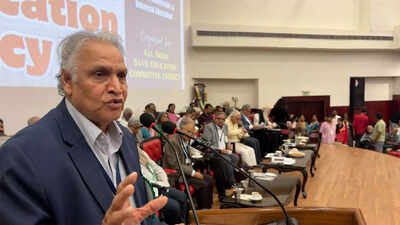
NEP does not adequately address existing inequalities in access to higher education, said Prof. Sukhdeo Thorat, former chairman, University Grants Commission.He noted this while speaking in the inaugural session of People’s Parliament, along with the theme of “Towards People’s Policy on Education 2026 – An alternative to NEP 2020”, organised by All India Save Education Committee at Ramaiah Institute of Technology on Saturday.“Current data show stark disparities across income and social groups. The growing role of private institutions was identified as another major concern,” he said. AISEC released People’s Policy on Education 2026 goal, it’s alternative to National Education Policy.Prof. Thorat also expressed concern over curriculum changes under the “Indian Knowledge System”, warning that increased emphasis on religious texts could undermine secular and scientific education and conflict with constitutional provisions.Former Information & Broadcasting Secretary, Jawahar Sircar, raised concerns over the proposed Vikasit Bharat Shiksha Adhishthan Bill 2025, likely after the Budget Session, warning it centralises control by merging UGC, AICTE, and NCTE under a 12-member body overseeing funding, curriculum, and research. He urged academics to engage MPs, pursue legal scrutiny, push for Standing Committee review, and unite across universities in a “one for all, all for one” effort to safeguard academic autonomy, he said.The People’s Parliament marks a decisive step in challenging NEP 2020, advocating for an inclusive, secular, and equitable education framework. It aims to chart a comprehensive roadmap for the future of India’s education system, said general secretary of the All India Secondary Education Council (AISEC) and Former Professor at Jadavpur University, Prof. Tarunkanti Naskar.Major Highlights of “People’s Policy on Education”The People’s Education Policy 2026 adopts the following core principles, grounded in secular, democratic, scientific, and universal education:1) The primary responsibility for providing education, as well as the financial responsibility for education, must be borne by the govt. Accordingly, both the Central and State Govts must allocate adequate funds for education in their budgets.2) Commercialisation, communalisation, and all forms of discrimination in education are to be completely stopped. A 2-language policy—mother tongue and English—shall be implemented across the entire country.3) Irrespective of social status or economic background, the right to universal education and equity in education must be guaranteed.(With inputs from Akilandeshwari J)


