
NASA tests space sensors for tracking ocean debris
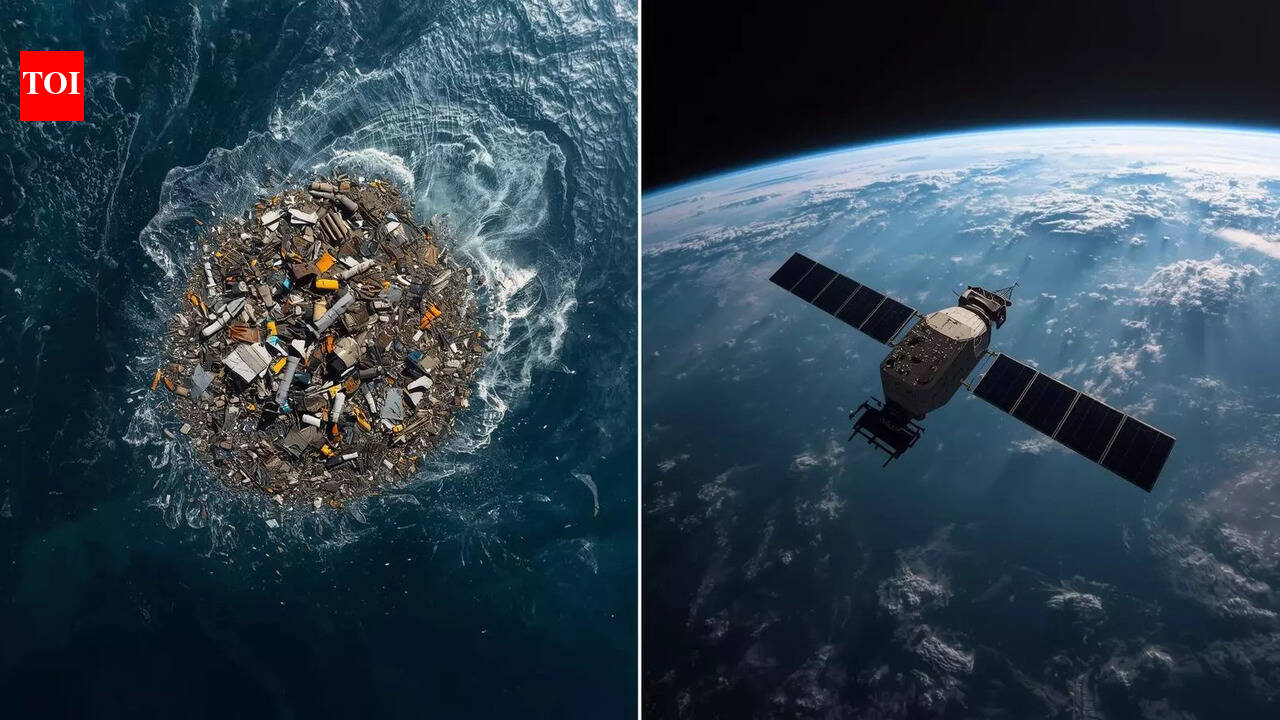
Scientists at NASA are beginning to look at ocean debris from an unfamiliar angle, not from ships or beaches, but from orbit. The work follows a recent finding that space based sensors can detect plastic pollution on land, a result that has quietly shifted expectations. Rather than promising global cleanup maps, researchers are focused on something narrower and more basic. They want to understand whether floating waste leaves any consistent trace when seen from space. That question sits between environmental monitoring and remote sensing, and it comes with limits that are already clear. For now, the effort is less about solving the plastic problem than about learning what satellites might realistically notice. It is slow, careful work, shaped by uncertainty and practical constraints.
NASA experiments hint at new ways to see pollution in oceans
Interest in ocean debris grew after scientists reported success using the EMIT sensor aboard the International Space Station. The instrument was designed to study mineral dust over deserts, not rubbish. Even so, it managed to detect plastic materials in landfills and large agricultural structures. That result did not offer an instant solution, but it suggested that some signals were stronger than expected. It was enough to prompt new questions rather than clear answers.
Building a catalogue of ordinary waste
One of the less visible parts of this work is the creation of a large reference library of debris materials. Led in part by NASA intern Ashley Ohall, the project gathers spectral data from items commonly found in marine litter. Rope, tyres, bottle caps and fragments of packaging are all included. Plastics dominate the list, covering many polymer types and levels of wear. Each item reflects light slightly differently, and those small differences matter.
Ocean water complicates satellite detection
Detecting debris at sea brings its own problems. Water absorbs much of the infrared light that helps identify materials, muting the signals researchers rely on. Movement adds another layer of difficulty. Floating objects rarely stay still, and changing light conditions can alter how they appear. These factors mean that what works on land cannot simply be transferred to open water.
EMIT shows how flexible some sensors can be
Despite its original purpose, EMIT has shown that existing NASA instruments can sometimes do more than planned. From its position on the space station, it scans wide areas and detects chemical patterns in reflected sunlight. Similar techniques have been used elsewhere in space science, including missions that found water related signals on the Moon. That history gives researchers some confidence, even if expectations remain cautious.
Coastal sources draw early attention
Most plastic entering the ocean comes from land, often through rivers and coastal runoff. Because of this, scientists see value in starting close to shore. Mapping pollution near coastlines may be more realistic than tracking debris in the middle of the ocean. It also helps identify where waste enters the system, which matters for prevention as much as monitoring.
Artificial intelligence becomes part of the process
Alongside sensor studies, teams are training AI systems to scan satellite images for possible debris signals. These tools are meant to sift through large volumes of data, highlighting areas that deserve closer inspection. They are not expected to replace direct measurements, but they may help narrow the search. Progress here is uneven, with false positives still a concern.
A slow shift in how oceans are observed
Researchers involved in the work tend to describe it in modest terms. There is no single breakthrough, only gradual improvements in understanding. Satellite detection will not solve marine pollution, and no one involved suggests it will. What it may offer is a broader, less detailed view that complements field studies. For now, the work continues in small steps, with results that raise as many questions as they answer, and room left for future missions to take the idea further.


