
E-3 Sentry explained: How US ‘airborne command centre’ tracks, targets and controls air wars

At least 12 American soldiers were injured after an Iranian missile and drone strike on a key US military facility in Saudi Arabia. This marks one of the most significant escalations in the ongoing conflict in the Gulf region.The attack took place at the Prince Sultan Air Base, a major hub for US operations in Saudi Arabia. According to The New York Times, the strike involved at least one missile and multiple drones. The injured personnel were inside a building when it was hit.
In addition to the casualties, the attack caused damage to military equipment, including at least two KC-135 aerial refuelling aircraft, which are critical for sustaining long-range air operations. The incident is being described as one of the most serious breaches of American air defence systems since the conflict began.The strike comes amid a broader conflict involving Iran, the United States and Israel, which began on February 28 following a joint military operation by Washington and Tel Aviv. Since then, Iran has carried out retaliatory attacks across the Gulf region, accusing neighbouring countries of allowing their territories to be used as launchpads for US strikes.Despite advanced air defence systems deployed by the US and its allies, some Iranian missiles and drones have managed to penetrate defences. The conflict has already resulted in significant casualties. At least 13 US service members have been killed since the fighting began, with more than 300 injured.
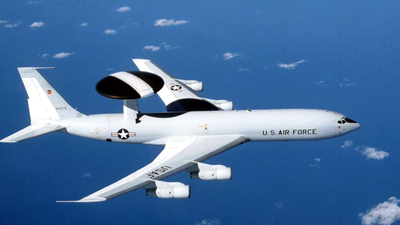
What is the E-3 Sentry and why it matters?
A key element in monitoring and responding to such threats is the E-3 Sentry Airborne Warning and Control System.The E-3 Sentry Airborne Warning and Control System (AWACS) is one of the most important aircraft used by the US military for air surveillance and battle management.Built on a modified Boeing 707 platform, the aircraft is equipped with a large rotating radar dome that allows it to monitor airspace over a radius of more than 250 miles. It can detect, track and identify aircraft, missiles and other threats in real time.Over the years, the platform has undergone several upgrades. Earlier E-3 variants were enhanced to Block 30/35 standards, while the more advanced Block 40/45 configuration introduced major improvements in tracking, identification, system reliability and overall performance, according to Space Airforce magazine. These upgrades included open-architecture computing systems, reduced operator workload, improved electronic support measures and enhanced passive surveillance capabilities. The DRAGON upgrade programme further added a digital cockpit and modern navigation and communication systems.It plays a central role in coordinating air defence responses and managing battlefield operations in real time. However, despite its importance, the platform is increasingly considered outdated amid evolving threats and the US has begun phasing it out in favour of more advanced systems, such as the E-7 Wedgetail.However, the aircraft is increasingly seen as outdated in the face of modern threats. The US Air Force has already begun reducing its E-3 fleet and plans to replace it with the newer E-7 Wedgetail system in the coming years.


