Delhi experienced its coldest November night in three years, with temperatures dropping to 9°C, 4.5 degrees below the seasonal average. Despite the chill, pollution levels remained severe, with the Air Quality Index reaching 377 and several areas in the ‘severe’ category. Authorities have implemented Stage III of the Graded Response Action Plan to combat the worsening air quality. NEW DELHI: The national capital shivered through its coldest November night in three years on Sunday, with temperatures dipping to 9°C — 4.5 degrees below the seasonal average according to the India Meteorological Department. Not since 29 November 2022, when the city recorded 7.3°C, has November felt this cold. In the past two years, the lowest November readings were 9.2°C in 2023 and 9.5°C in 2024.The weather office expects the chill to persist, forecasting a minimum of 9°C and a maximum of around 25°C on Monday, along with shallow fog by early morning. Humidity touched 81 per cent at 8.30am on Sunday, adding to the dense smog that blanketed large parts of the city.AQI still ‘very poor’Even as temperatures plunged, pollution levels remained grim. Delhi’s 24-hour average Air Quality Index stood at 377 on Sunday — firmly in the ‘very poor’ category. At several monitoring stations, conditions were far worse: the CPCB’s Sameer app showed that 11 of 39 sites were in the ‘severe’ bracket with readings above 400. By Sunday morning, 18 stations had slipped into the severe range, while another 20 recorded ‘very poor’ air.Iconic locations such as India Gate, Rajghat and ITO were engulfed in a thick layer of smog, with Rajghat and ITO hitting an alarming AQI of 417. Chandni Chowk touched 420, while Anand Vihar, Alipur and Ashok Vihar hovered between 400 and 415. Even areas with slightly lower levels, such as Dwarka (378) and Dhaula Kuan (338), remained heavily polluted.Authorities said PM2.5 and PM10 particles were the dominant pollutants. With the haze settling deeper as winter begins, the Commission for Air Quality Management has enforced Stage III of the Graded Response Action Plan. Measures include a ban on most non-essential construction, restrictions on BS-III petrol and BS-IV diesel vehicles, suspension of classes up to Class 5, curbs on polluting industrial activity and a ban on non-emergency diesel generator sets.About the AuthorTOI News DeskThe TOI News Desk comprises a dedicated and tireless team of journalists who operate around the clock to deliver the most current and comprehensive news and updates to the readers of The Times of India worldwide. With an unwavering commitment to excellence in journalism, our team is at the forefront of gathering, verifying, and presenting breaking news, in-depth analysis, and insightful reports on a wide range of topics. The TOI News Desk is your trusted source for staying informed and connected to the ever-evolving global landscape, ensuring that our readers are equipped with the latest developments that matter most.”Read MoreEnd of ArticleFollow Us On Social MediaVideosNIA Arrests Alleged Aide Of ‘Suicide Bomber’ Umar Nabi In Delhi Terror AttackEAM Jaishankar Meets Qatar’s Top Leadership In Doha, Reaffirms Commitment To Stronger TiesSGPC Mulls Banning Lone Women In Pilgrim Jathas After ‘Missing’ Punjab Woman Marries Pakistani ManRSS-Linked Youth Shot Dead In Punjab’s Firozpur, Probe UnderwayKerala: RSS Worker Dies By Suicide After BJP Denies Local Body Poll Ticket In Thiruvananthapuram1 Dead, Several Feared Trapped As Portion Of Stone Mine Collapses In UP’s Sonbhadra; Rescue Ops On”I have no family…” Rohini Acharya Cuts Ties With Lalu Clan, Exits Politics Post-RJD DefeatRK Singh Slams Bihar BJP Suspension, Says He Only Opposed Tickets to Criminal Candidates‘Premature to Speculate’: Tharoor Hits Back at Farooq Abdullah Over Operation Sindoor Remarks‘Nitish Still X-Factor’ Pavan Verma Decodes Why Jan Suraaj Couldn’t Break Through in Bihar Polls123PhotostoriesJournaling for beginners: 5 simple ways to start your de-stress journey5 ways to deepen connection without sending long emotional texts7 Cs of a champion mindset to drive success7-day infused water challenge that will reduce blood sugar levelsHow Bollywood actress Deepika Padukone inspires modern moms with grace and strength5 unsung women freedom fighters of the Indian race to Independence5 most expensive foods in the worldUnseen childhood pictures of Shraddha Kapoor with Shakti Kapoor, Siddhant, and Lata Mangeshkar you can’t miss5 timeless Swami Vivekananda quotes to inspire students on their journey10 benefits of playing chess for kids123Hot PicksAlinagar Election ResultRaghopur Election ResultBihar Election Result 2025Gold rate todaySilver rate todayPublic Holidays NovemberBank Holidays NovemberTop TrendingKayla NicoleArjun TendulkarJames Harden girlfriendDubai Prince Sheikh Hamdan Net WorthRCB IPL RetentionBengaluru Techie Shoes MissingUS VisaIslam makhachev net worthDelhi BlastCharlie Mcavoy Injury

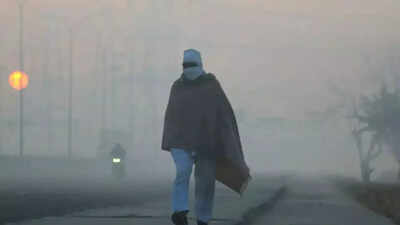
NEW DELHI: The national capital shivered through its coldest November night in three years on Sunday, with temperatures dipping to 9°C — 4.5 degrees below the seasonal average according to the India Meteorological Department. Not since 29 November 2022, when the city recorded 7.3°C, has November felt this cold. In the past two years, the lowest November readings were 9.2°C in 2023 and 9.5°C in 2024.The weather office expects the chill to persist, forecasting a minimum of 9°C and a maximum of around 25°C on Monday, along with shallow fog by early morning. Humidity touched 81 per cent at 8.30am on Sunday, adding to the dense smog that blanketed large parts of the city.
AQI still ‘very poor’
Even as temperatures plunged, pollution levels remained grim. Delhi’s 24-hour average Air Quality Index stood at 377 on Sunday — firmly in the ‘very poor’ category. At several monitoring stations, conditions were far worse: the CPCB’s Sameer app showed that 11 of 39 sites were in the ‘severe’ bracket with readings above 400. By Sunday morning, 18 stations had slipped into the severe range, while another 20 recorded ‘very poor’ air.Iconic locations such as India Gate, Rajghat and ITO were engulfed in a thick layer of smog, with Rajghat and ITO hitting an alarming AQI of 417. Chandni Chowk touched 420, while Anand Vihar, Alipur and Ashok Vihar hovered between 400 and 415. Even areas with slightly lower levels, such as Dwarka (378) and Dhaula Kuan (338), remained heavily polluted.Authorities said PM2.5 and PM10 particles were the dominant pollutants. With the haze settling deeper as winter begins, the Commission for Air Quality Management has enforced Stage III of the Graded Response Action Plan. Measures include a ban on most non-essential construction, restrictions on BS-III petrol and BS-IV diesel vehicles, suspension of classes up to Class 5, curbs on polluting industrial activity and a ban on non-emergency diesel generator sets.