
BENGALURU: Isro Thursday said it successfully conducted a sea-level hot test of its CE20 cryogenic engine at 22-tonne thrust at the Isro Propulsion Complex on March 10.The CE20 engine powers the upper cryogenic stage of the LVM-3 launch vehicle. The latest test was carried out using a nozzle protection system and a multi-element igniter.“Earlier, sea-level tests using the nozzle protection system were conducted at a thrust level of 19 tonnes. The latest trial qualifies sea-level testing of the engine at the higher 22-tonne thrust level. The test lasted 165 seconds,” Isro said.Isro plans to operate future LVM-3 missions with an uprated C32 cryogenic stage delivering 22-tonne thrust from the CE20 engine in order to enhance the rocket’s payload capability. Israel Iran WarUS-Israel-Iran War News Live Updates: Saudi intercepts drone headed to Shaybah oil field; Israeli strikes 10 Hezbollah targets in Beirut’Legitimate targets’: Iran issues warning to US tech firms including Google, Amazon, Microsoft, NvidiaSafe Passage For Indian Vessels: Iran clears Indian-flagged ships in Hormuz; US, Europe, Israel face curbs“As a result, the flight acceptance test of the CE20 engine will also need to be conducted at the higher thrust level,” Isro said.The space agency said testing the CE20 engine at sea level poses significant challenges due to the engine’s high area-ratio nozzle, which has an exit pressure of about 50 mbar. A key concern during such tests is flow separation inside the nozzle, which can cause severe vibrations and thermal stress at the separation point and potentially damage the nozzle.According to Isro, the cryogenic engine used in the latest trial has undergone a record 20 successful hot tests. These tests have enabled the demonstration of several technologies using a single engine.“These include ignition using a multi-element igniter, ignition margin demonstration for Gaganyaan mission across a wide range of propellant tank pressures and pre-ignition chamber pressures, and engine qualification for Gaganyaan at 20-tonne thrust level,” Isro added.The tests also demonstrated and qualified operation at 22-tonne thrust, the boot-strap mode start of the CE20 engine without a start-up system to enable in-flight restart, qualification of indigenous turbopump bearings and sensors, and qualification of the nozzle protection system for hot tests of a high area-ratio nozzle at sea level.Isro said the performance of the engine and the test facility remained as expected throughout the test duration.About the AuthorChethan KumarChethan Kumar is a Senior Assistant Editor with the Times of India. Aside from specialising in Space & Science, he has reported extensively on varied topics, with special focus on defence, policy and data stories. He has covered multiple elections, too. As a young democracy grows out of adolescence, Chethan feels, there are reels of tales emerging which need to be captured. To do this, he alternates between the mundane goings-on of the Common Man and the wonder-filled worlds of scientists and scamsters, politicians and soldiers. In a career spanning nearly 18 years, he has reported from multiple datelines — Houston, Florida, Kochi, Hyderabad, Chennai, Sriharikota (AP), NH-1 (J&K Highway), New Delhi, Ahmedabad, Raichur, Bhatkal, Mysuru, Chamarajanagar, to name a few — but is based out of Bengaluru, India’s science capital that also hosts the ISRO HQ.Read MoreEnd of ArticleFollow Us On Social MediaVideos“Energy Security Compromised”: Rahul Gandhi Sounds Alarm In Parliament’India’s Fuel Supply Stable’: Hardeep Singh Puri Rejects LPG Shortage, Oil Crisis Fears In Lok Sabha’I Heard A Cracker Sound…’: Farooq Abdullah Opens Up About Assassination AttemptRahul Gandhi Warns Of Fuel Crisis Amid Middle East Conflict, BJP MP Dubey Hits Back With Soros JibeAmid US-Iran War, First Crude Tanker Shenlong Safely Reaches Mumbai Port Through Strait Of HormuzIndian Ship Safety To Energy Crisis: MEA Reveals Details On Talks Between Jaishankar And Iran FM’Farooq’s Killing Intention Of Govt?’: Kharge Asks In Parl; Nadda Hits Back, Slams ‘Politics’Mahakumbh Girl Monalisa Marries Farman Khan In Kerala, Rejects Love Jihad Charges Amid Family RowIran Breaks Silence After Reports Claim Tehran Allowed Indian Oil Tanker Through Strait Of Hormuz’I Have Always Tried To…’: LS Speaker Om Birla’s First Remarks After No-Confidence Motion Fails123PhotostoriesNormal cholesterol but early heart attack risk? Doctors say Lipoprotein(a) test can reveal hidden danger6 superbikes famous for their thrilling engine roarAhead of ‘Dhurandhar: The Revenge’ release, revisiting Ranveer Singh’s iconic characters like Khilji, Bajirao, Rocky Randhawa9 effective ways to fix excess salt in curries and sabziWhatsApp launches parent-managed accounts for pre-teens: Step-by-step guide to control contacts, privacy, and group access safely8 rattlesnake facts that explain how these venomous snakes hunt, strike and surviveMemory loss in your 40s may signal early-onset Dementia: Doctors explain symptoms, causes, and prevention tips6 common rental scams and how to avoid them7 signs you are forcing a dead relationshipHow to make Bread Paneer Pakoda for evening snacking with chai123Hot PicksStrait of Hormuz naval minesChina Yj-12 missileUCC gender biasCovid vaccine compensation policyIncome Tax CalculatorPublic holidays March 2026Bank Holidays MarchTop TrendingCardi BIPL Teams Match ScheduleThe RockMumbai TemperatureLPG Shortage in MumbaiMadhya Pradesh Student RapeIransoleimani class warshipsIran US WarReliance Oil Refinery in USMiddle East War

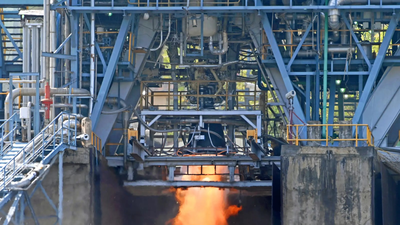
BENGALURU: Isro Thursday said it successfully conducted a sea-level hot test of its CE20 cryogenic engine at 22-tonne thrust at the Isro Propulsion Complex on March 10.The CE20 engine powers the upper cryogenic stage of the LVM-3 launch vehicle. The latest test was carried out using a nozzle protection system and a multi-element igniter.“Earlier, sea-level tests using the nozzle protection system were conducted at a thrust level of 19 tonnes. The latest trial qualifies sea-level testing of the engine at the higher 22-tonne thrust level. The test lasted 165 seconds,” Isro said.Isro plans to operate future LVM-3 missions with an uprated C32 cryogenic stage delivering 22-tonne thrust from the CE20 engine in order to enhance the rocket’s payload capability. “As a result, the flight acceptance test of the CE20 engine will also need to be conducted at the higher thrust level,” Isro said.The space agency said testing the CE20 engine at sea level poses significant challenges due to the engine’s high area-ratio nozzle, which has an exit pressure of about 50 mbar. A key concern during such tests is flow separation inside the nozzle, which can cause severe vibrations and thermal stress at the separation point and potentially damage the nozzle.According to Isro, the cryogenic engine used in the latest trial has undergone a record 20 successful hot tests. These tests have enabled the demonstration of several technologies using a single engine.“These include ignition using a multi-element igniter, ignition margin demonstration for Gaganyaan mission across a wide range of propellant tank pressures and pre-ignition chamber pressures, and engine qualification for Gaganyaan at 20-tonne thrust level,” Isro added.The tests also demonstrated and qualified operation at 22-tonne thrust, the boot-strap mode start of the CE20 engine without a start-up system to enable in-flight restart, qualification of indigenous turbopump bearings and sensors, and qualification of the nozzle protection system for hot tests of a high area-ratio nozzle at sea level.Isro said the performance of the engine and the test facility remained as expected throughout the test duration.


