
Astrophysicist Priyamvada (Priya) Natarajan Priyamvada (Priya) Natarajan is a distinguished astrophysicist and the inaugural Joseph S. and Sophia S. Fruton Professor of Astronomy and Physics at Yale University. She also serves as an external Principal Investigator at Harvard’s Black Hole Initiative. Professor Natarajan has made seminal contributions to our understanding of the cosmos, specifically in dark matter and supermassive black holes. A celebrated figure in the scientific community, her honours include the 2022 Liberty Science Center Genius Award and the prestigious 2025 Dannie Heineman Prize in Astrophysics. In 2024, she was named to the TIME100 list of the world’s most influential people for her path-breaking contributions to the field. A member of the Yale faculty since 2000, Professor Natarajan serves as a key advisor to Nasa, the National Science Foundation (NSF), and the Department of Energy (DoE). During a recent visit to Bengaluru for the Indiaspora Forum—a gathering of global Indian leaders—she sat down with Ishani Duttagupta to discuss her enduring ties to India, the transformative role of AI in astrophysics, and the future of cosmic exploration. The following are edited excerpts from their conversation.There are many students from India going for higher education to the US, especially in the area of science. Are there any challenges that they are facing? The increasing strain on the United States science and technology research funding systems is deeply concerning. For decades, the research model that has worked really well in the United States is federal funding for basic sciences, supporting graduate students and post-doctoral researchers. It fosters a unique ecosystem of intense mentoring and expertise-building anchored by well-resourced universities and faculty involved in cutting edge research. The flow of international students was very critical to keeping this kind of engine going. As funding shrinks, the US may lose its status as the premier destination and not appear attractive for the world’s brightest young minds. I think that’s a worry. Also, there’s a fundamental transformation in the research landscape driven by AI, which is both exciting and unknown. While the initial ‘LLM revolution’ in AI catered to specific commercial use cases, it also necessitated a shift in the research fulcrum. And universities abdicated the research in that kind of cutting-edge AI to the corporate sector because of the massive requirement for computation. However, as we pivot toward ‘AI for science’ — where short-term monetary returns may not be very clear — the intellectual work may get centred back into the universities. These are the big uncertainties. Despite some scepticism that I have seen among some of my colleagues, we are on the precipice of a fundamental shift in scientific method, with AI. Ultimately what really counts is achieving breakthroughs that constitute truly ‘good science’.As a distinguished scholar in the field of astrophysics, please provide an overview of the most significant paradigm shifts and technological advances currently reshaping our understanding of the cosmos?Astrophysics is the original ‘big data’ science. Since the first systematic mapping of the entire night sky in the 1920s and 30s, the field has evolved from physical photographic plates to massive digitised datasets. It’s a discipline where discovery is technology-intensive, with massive computing and better cameras. And the new instruments don’t just provide better views—they spark radical new ideas.Over the last five years, we have witnessed an amazing convergence of ideas, instruments and computational power. This alignment has opened up our understanding of the cosmos in previously unimagined ways. My own work is centred on new ideas around the big cosmic questions like why are we here and how did we get here? And I’m not talking about the psychology of being, but I’m talking about the material universe. How is it enabled? How has the existence of the universe, as it is unfolded, the way it has? That is what drives me, those big, seductive and exciting questions. My mind is driven by a detective like curiosity in trying to figure out with clues. A lot of the times we lack direct data and we have to infer from indirect data what is really going on in terms of physics. But we are lucky to be firmly anchored in this pursuit by the laws of physics that are universal. In this age of AI, we are fortunate to have the unique advantage of the laws of physics that provide a rigorous order to guide and validate machine learning, ensuring that our computational leaps remain grounded in universal truth.Please share some of the milestones of your journey, especially the journey from India to the US. I have extreme gratitude for a lot of the opportunities and conditions that I absolutely had no hand in. I had a very big advantage of being born in a home full of books where learning was encouraged and curiosity admired in a child. I got a lot of support from both my parents to do exactly what I wanted. They were academics, though not in science. My father was trained as a civil engineer and then moved into engineering education. My mother is a sociologist. My parents worked in Delhi and I grew up there. My parents’ home was an intellectual ‘salon’ where all kinds of people including scientists, artists, writers and poets would converge. I was very privileged growing up amidst this huge social circle, I had the permission to dream and soar. And then there are serendipities – you meet people that kind of change your life in some way, mentors and teachers. It was very rare at that time to go as an undergraduate to the United States from India and I had to get a full scholarship. I got into several top places with fellowships and fully paid studentships. I chose MIT because they had an undergraduate research opportunities programme. Once one big door opened for me it put me in a different orbit. Looking back, I have some personal qualities such as enormous mental discipline. and focus. And there’s ambition – but what drives my ambition is something very innocent and childlike. It is joy of figuring things out. I was always that kid who would try to solve a problem three different ways, to understand better for myself. Often in our educational landscape, that childlike joy gets killed by the years you spend in school. But I am very fortunate that I still have that, at my age – I am past 50 now. And that’s the motivation for my work. For me, the central challenge is how to remain a lifelong learner without letting the scale of what I don’t know intimidate me. To this day, I view every scientific paper I write as a learning exercise. The journey is about refusing to be sidelined by frustration and instead pivoting those challenges into something positive.I’ve been fortunate to work in environments that pushed me into new orbits. The first was MIT; the second was the University of Cambridge, where I attended the Institute of Astronomy at Trinity College. Immersed in that enormous legacy, I took full advantage of every opportunity. In 1997, I was elected a Fellow of Trinity College—the first woman in astrophysics to achieve that distinction. These years were transformative, not just for my PhD, but for my growth as an interdisciplinary thinker. Engaging with minds across different fields is what truly gives me ‘life juice’. This momentum eventually led to a faculty position at Yale University, which I secured even before defending my PhD thesis.I think one of the most cherished things for a scientist like me is to propose a brand-new idea and to work on the entire arc of bringing that idea of an abstract kind to a point where you can directly compare with observational data whether it’s correct or not. I feel very fortunate that over the past five years, I’ve had multiple of the ideas that I proposed actually being validated. This is what a scientist dreams of, that in one’s own lifetime, the whole cycle gets completed. How do you balance between your mentorship role and your research role?It’s very tricky. I’m not particularly interested in an administrative career and I really want to be able to do research and teach and mentor. And now as the chair of the department, I have a lot of responsibilities and sometimes I find that taxing. It requires a lot of intention and deliberate planning and prioritising. I have learnt with time how to do this well, but it’s still very challenging. I think one of the advantages has been that there are no demands from my domestic life. So that has freed me up to live a life of the mind. And that helps. How are you connected with India, both professionally and personally?My mother and brothers are in India; I lost my father a couple of years back. And, so, I always maintain a very strong connection with India. I come from a middle-class Tamil Brahmin family and I’m still very traditional. I think we imbibe the wonderful values of growing up in Indian families and understanding the power of intergenerational connection. I was very fortunate that my formative years were in India, and I carry all of those values. In terms of professional connections, I don’t have a lot of Indian collaborators in the areas that I work in; but I’m on the advisory board for science at Ashoka University. I don’t have many professional deep-rooted connections because I didn’t study in India, except school. I have been thinking a lot about what I can do to give back and try to do what I can. I give a lot of public talks and meet with young aspiring students. I have had many Indian students come to work with me. But I think what has been great to watch for me is how, when I was growing up, the scientific research environment in India was really marked by scarcity of resources. Now we have moved to abundance. I think we should spend more on fundamental basic sciences research. But I think that the transformation that has happened is demand. About the AuthorIshani DuttaguptaI’ve been a journalist with The Economic Times for 25+ years; first at the newsdesk of ET, Kolkata & then as a feature writer with the ET Magazine on Sunday in Delhi. I write largely on immigration policy issues and overseas Indians. I also write on entrepreneurs in food & beverages; crafts and education sectors. I’m a Jefferson Fellow 2019 of the East-West Center, Hawaii.Read MoreEnd of ArticleFollow Us On Social MediaVideosPM Modi Assures No Seat Cut For Southern States, Pushes Women’s Quota Bill‘Will Take It To Kolkata’: Pak Minister Khawaja Asif’s Fresh Threat After Rajnath’s Stern WarningBig Reveal: ISI Behind Chandigarh Attack, Global Terror Links Surface”Living In Fear”: Indian Family In Bahrain Amid Escalating Iran War‘Genius Move’: Ex-US Pilot Hails India’s Ploy To Use Rafale Decoys In Op Sindoor To Fool PakistanIndia Buys Iranian Oil After 7 Years, No Payment Hurdles Reported“Violation Of Article 21”: Owaisi Slams UCC, Says It Interferes With Religious FreedomAmid Strait Of Hormuz Tensions, Iran Calls India A ‘Cherished Partner’ As Ships Transit Safely‘Three Allegations, Zero Truth’: Raghav Chadha Counters AAP After Shock Deputy Leader Snub‘Came Through Solidly’: S Jaishankar Flags Global Risks, Says India Emerged Resilient Amid Crisis123PhotostoriesRashmika Mandanna birthday special: Best performances to watch on OTT, from ‘Animal’ to ‘Chhaava’Stephen Colbert, Steve Carell and more: 6 Hollywood icons who shared apartments before hitting it big10 summer-friendly beetroot dishes to keep the gut cool and digestive system healthy’Crash Landing on You’, ‘Goblin’ and more: K-drama on-screen couples who redefined romance7 cost-effective renovation strategies to maximise your property’s market value200 kg of artificially ripened mangoes seized in Hyderabad: FSSAI’s guidelines on artificial fruit ripening and 8 smart ways to check purity at homeHailee Steinfeld and Josh Allen’s love story: Inside their journey from first sightings to family of threeTop vegetarian sources of vitamin D and how to eat them to gain maximum benefits7 indoor herbs you can grow near a sunny windowBaby names inspired by virtues123Hot PicksPakistan Petrol CrisisRuturaj GaikwadKick StreamerShashi TharoorStephen CurryPublic holidays April 2026Bank Holidays AprilTop TrendingYesterday IPL match resultVaibhav SooryavanshiStrait of HormuzIPL 2026Saudi Arabia travel ban rulesToll PaymentIran Drone StrikeHailee SteinfeldSchool Holidays in AprilIran war news

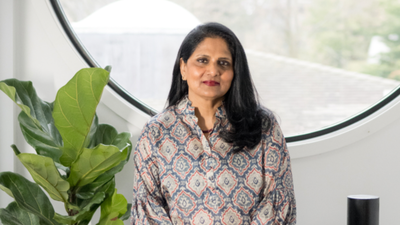
Priyamvada (Priya) Natarajan is a distinguished astrophysicist and the inaugural Joseph S. and Sophia S. Fruton Professor of Astronomy and Physics at Yale University. She also serves as an external Principal Investigator at Harvard’s Black Hole Initiative. Professor Natarajan has made seminal contributions to our understanding of the cosmos, specifically in dark matter and supermassive black holes. A celebrated figure in the scientific community, her honours include the 2022 Liberty Science Center Genius Award and the prestigious 2025 Dannie Heineman Prize in Astrophysics. In 2024, she was named to the TIME100 list of the world’s most influential people for her path-breaking contributions to the field. A member of the Yale faculty since 2000, Professor Natarajan serves as a key advisor to Nasa, the National Science Foundation (NSF), and the Department of Energy (DoE). During a recent visit to Bengaluru for the Indiaspora Forum—a gathering of global Indian leaders—she sat down with Ishani Duttagupta to discuss her enduring ties to India, the transformative role of AI in astrophysics, and the future of cosmic exploration. The following are edited excerpts from their conversation.There are many students from India going for higher education to the US, especially in the area of science. Are there any challenges that they are facing? The increasing strain on the United States science and technology research funding systems is deeply concerning. For decades, the research model that has worked really well in the United States is federal funding for basic sciences, supporting graduate students and post-doctoral researchers. It fosters a unique ecosystem of intense mentoring and expertise-building anchored by well-resourced universities and faculty involved in cutting edge research. The flow of international students was very critical to keeping this kind of engine going. As funding shrinks, the US may lose its status as the premier destination and not appear attractive for the world’s brightest young minds. I think that’s a worry. Also, there’s a fundamental transformation in the research landscape driven by AI, which is both exciting and unknown. While the initial ‘LLM revolution’ in AI catered to specific commercial use cases, it also necessitated a shift in the research fulcrum. And universities abdicated the research in that kind of cutting-edge AI to the corporate sector because of the massive requirement for computation. However, as we pivot toward ‘AI for science’ — where short-term monetary returns may not be very clear — the intellectual work may get centred back into the universities. These are the big uncertainties. Despite some scepticism that I have seen among some of my colleagues, we are on the precipice of a fundamental shift in scientific method, with AI. Ultimately what really counts is achieving breakthroughs that constitute truly ‘good science’.As a distinguished scholar in the field of astrophysics, please provide an overview of the most significant paradigm shifts and technological advances currently reshaping our understanding of the cosmos?Astrophysics is the original ‘big data’ science. Since the first systematic mapping of the entire night sky in the 1920s and 30s, the field has evolved from physical photographic plates to massive digitised datasets. It’s a discipline where discovery is technology-intensive, with massive computing and better cameras. And the new instruments don’t just provide better views—they spark radical new ideas.Over the last five years, we have witnessed an amazing convergence of ideas, instruments and computational power. This alignment has opened up our understanding of the cosmos in previously unimagined ways. My own work is centred on new ideas around the big cosmic questions like why are we here and how did we get here? And I’m not talking about the psychology of being, but I’m talking about the material universe. How is it enabled? How has the existence of the universe, as it is unfolded, the way it has? That is what drives me, those big, seductive and exciting questions. My mind is driven by a detective like curiosity in trying to figure out with clues. A lot of the times we lack direct data and we have to infer from indirect data what is really going on in terms of physics. But we are lucky to be firmly anchored in this pursuit by the laws of physics that are universal. In this age of AI, we are fortunate to have the unique advantage of the laws of physics that provide a rigorous order to guide and validate machine learning, ensuring that our computational leaps remain grounded in universal truth.Please share some of the milestones of your journey, especially the journey from India to the US. I have extreme gratitude for a lot of the opportunities and conditions that I absolutely had no hand in. I had a very big advantage of being born in a home full of books where learning was encouraged and curiosity admired in a child. I got a lot of support from both my parents to do exactly what I wanted. They were academics, though not in science. My father was trained as a civil engineer and then moved into engineering education. My mother is a sociologist. My parents worked in Delhi and I grew up there. My parents’ home was an intellectual ‘salon’ where all kinds of people including scientists, artists, writers and poets would converge. I was very privileged growing up amidst this huge social circle, I had the permission to dream and soar. And then there are serendipities – you meet people that kind of change your life in some way, mentors and teachers. It was very rare at that time to go as an undergraduate to the United States from India and I had to get a full scholarship. I got into several top places with fellowships and fully paid studentships. I chose MIT because they had an undergraduate research opportunities programme. Once one big door opened for me it put me in a different orbit. Looking back, I have some personal qualities such as enormous mental discipline. and focus. And there’s ambition – but what drives my ambition is something very innocent and childlike. It is joy of figuring things out. I was always that kid who would try to solve a problem three different ways, to understand better for myself. Often in our educational landscape, that childlike joy gets killed by the years you spend in school. But I am very fortunate that I still have that, at my age – I am past 50 now. And that’s the motivation for my work. For me, the central challenge is how to remain a lifelong learner without letting the scale of what I don’t know intimidate me. To this day, I view every scientific paper I write as a learning exercise. The journey is about refusing to be sidelined by frustration and instead pivoting those challenges into something positive.I’ve been fortunate to work in environments that pushed me into new orbits. The first was MIT; the second was the University of Cambridge, where I attended the Institute of Astronomy at Trinity College. Immersed in that enormous legacy, I took full advantage of every opportunity. In 1997, I was elected a Fellow of Trinity College—the first woman in astrophysics to achieve that distinction. These years were transformative, not just for my PhD, but for my growth as an interdisciplinary thinker. Engaging with minds across different fields is what truly gives me ‘life juice’. This momentum eventually led to a faculty position at Yale University, which I secured even before defending my PhD thesis.I think one of the most cherished things for a scientist like me is to propose a brand-new idea and to work on the entire arc of bringing that idea of an abstract kind to a point where you can directly compare with observational data whether it’s correct or not. I feel very fortunate that over the past five years, I’ve had multiple of the ideas that I proposed actually being validated. This is what a scientist dreams of, that in one’s own lifetime, the whole cycle gets completed. How do you balance between your mentorship role and your research role?It’s very tricky. I’m not particularly interested in an administrative career and I really want to be able to do research and teach and mentor. And now as the chair of the department, I have a lot of responsibilities and sometimes I find that taxing. It requires a lot of intention and deliberate planning and prioritising. I have learnt with time how to do this well, but it’s still very challenging. I think one of the advantages has been that there are no demands from my domestic life. So that has freed me up to live a life of the mind. And that helps. How are you connected with India, both professionally and personally?My mother and brothers are in India; I lost my father a couple of years back. And, so, I always maintain a very strong connection with India. I come from a middle-class Tamil Brahmin family and I’m still very traditional. I think we imbibe the wonderful values of growing up in Indian families and understanding the power of intergenerational connection. I was very fortunate that my formative years were in India, and I carry all of those values. In terms of professional connections, I don’t have a lot of Indian collaborators in the areas that I work in; but I’m on the advisory board for science at Ashoka University. I don’t have many professional deep-rooted connections because I didn’t study in India, except school. I have been thinking a lot about what I can do to give back and try to do what I can. I give a lot of public talks and meet with young aspiring students. I have had many Indian students come to work with me. But I think what has been great to watch for me is how, when I was growing up, the scientific research environment in India was really marked by scarcity of resources. Now we have moved to abundance. I think we should spend more on fundamental basic sciences research. But I think that the transformation that has happened is demand.


