
A trans-state white-collar terror module involving doctors, clerics, and professionals, linked to Jaish-e-Mohammed and Ansar Ghazwat-ul-Hind, was unearthed after a high-intensity explosion near Delhi’s Red Fort. Joint operations led to the arrest of seven suspects and the recovery of over 2,900 kg of explosives and firearms. NEW DELHI: The high-intensity explosion near Delhi’s Red Fort that killed at least 12 people and injured several others has led to the unearthing of a trans-state “white-collar terror module” involving doctors, clerics, and radicalised professionals. According to officials, the accused were linked to banned terror outfits Jaish-e-Mohammed (JeM) and Ansar Ghazwat-ul-Hind (AGuH).Joint operations by the Jammu & Kashmir Police, Haryana Police, Uttar Pradesh Police, and central agencies resulted in the arrest of at least seven suspects — including doctors from Al-Falah University in Faridabad and other parts of India — and the recovery of more than 2,900 kilograms of explosives and firearms across multiple states.The National Investigation Agency (NIA) has now taken over the probe.Who is Dr Muzammil GanaieDr Muzammil Ganaie, 35, from Koil in Pulwama, Jammu and Kashmir, worked at Al-Falah University in Faridabad as a doctor and taught MBBS students. Police identified him as one of the key figures in the terror module.Following his arrest, officials recovered 358 kg of suspected ammonium nitrate, a Krinkov assault rifle, three magazines, 91 live rounds, a pistol with cartridges, timers, batteries, remote controls, and other bomb-making material from his rented accommodation in Dhauj, Faridabad.Police told agencies that Muzammil conducted multiple reconnaissance visits of the Red Fort area in January, mapping crowd movements and security positions. “These visits were part of a detailed reconnaissance ahead of a planned attack on January 26,” a senior police officer told PTI. According to the Forensic Science Laboratory (FSL) team, around 40 samples collected from the Red Fort blast site indicated that one explosive sample was likely ammonium nitrate.Who is Dr Adeel Ahmad RatherDr Adeel Ahmad Rather, from Kulgam in Kashmir, was arrested from Saharanpur, Uttar Pradesh. He was also employed at Al-Falah University, working closely with Dr Muzammil and Dr Umar Un Nabi.Police sources told PTI that an AK-47 rifle was recovered from his locker at GMC Srinagar, where he had earlier worked as a senior resident. He is accused of being part of the Faridabad module that stockpiled explosives and weapons.Adeel’s arrest came after Muzammil’s interrogation, which revealed their collaboration in transporting and concealing explosives across multiple sites.Who is Dr Umar Un Nabi Dr Umar Un Nabi, from Pulwama, was also associated with Al-Falah University and was reportedly driving the i20 car that exploded near the Red Fort, killing over 10 people.Sources told PTI that Dr Umar had been under surveillance but changed locations frequently. “He maintained close ties with Dr Muzammil and Dr Adeel, coordinating logistics and storage of explosives,” an official said.Authorities confirmed that Umar was present in the vehicle during the blast. His alleged role as the executioner of the attack places him among the most critical suspects in the ongoing probe.Who is Dr Shaheen SayeedDr Shaheen Sayeed, a doctor from Lucknow, is alleged to be an active associate and close confidant of Dr Muzammil. She was brought by air to Srinagar for custodial interrogation after an assault rifle was recovered from her car in Faridabad.Police said she panicked following Muzammil’s arrest and discarded the weapon in a dustbin. Dr Shaheen reportedly maintained communication between members in Faridabad and contacts in Kashmir.Investigators believe she played a role in logistical coordination for the group’s operations and possibly helped procure chemical materials.Who is Dr Ahmed Mohiyuddin SaiyedDr Ahmed Mohiyuddin Saiyed, a Hyderabad-based doctor with an MBBS degree from China, was arrested by Gujarat ATS on November 8.He had been running a shawarma business in Rajendranagar, where he was allegedly radicalised through Telegram and social media. Authorities claim he was in contact with a handler named Abu Khadija linked to Islamic State-Khorasan Province (ISKP).Police seized two Glock pistols, a Beretta, live ammunition, and 4 kg of castor-bean mash (used to extract ricin poison). Officials said he conducted reconnaissance of security-sensitive sites in Delhi, Lucknow, and Ahmedabad, with weapons possibly delivered via drones from Pakistan.Two of his aides, Azad Suleman Sheikh (20) and Mohammad Suhail Khan (23), were also arrested.Who is Irfan AhmadIrfan Ahmad, a cleric and Imam from Shopian, is accused of radicalising several members of the module, including young doctors. Police said he was responsible for motivating recruits and connecting them with militant networks in Kashmir.He was arrested during follow-up raids in Shopian after Dr Muzammil’s confession pointed to his involvement.Who is Maulvi Hafeez Mohammad IshtiaqMaulvi Ishtiaq, a native of Mewat, Haryana, served as Imam at Al-Falah Mosque in Faridabad’s Dhera Colony. Police recovered over 2,500 kilograms of explosives from his residence within the Al-Falah University complex.Officials said he had been staying on campus under the guise of a religious teacher and was detained by Jammu and Kashmir Police before being brought to Srinagar for questioning.He is suspected of providing logistical support, including safe houses and connections to financial channels.Who is Dr Sajad MalikPolice on Tuesday took another Pulwama doctor, Sajad Malik, into custody for questioning, bringing the number of Kashmir-born doctors linked to the Delhi blast case to four.It remained unclear whether Malik’s detention was aimed at gathering information about his friend Umar Un Nabi or if he was also being held as a suspect in the broader terrorism conspiracy.Network and recovery operationsAccording to police and intelligence agencies, the seven-member module used encrypted channels for communication, coordination, and movement of explosives.In Faridabad, questioning of over 52 individuals, including faculty and students of Al-Falah University, led to the recovery of the explosive materials and firearms.Subsequent raids in Shopian, Ganderbal, and Anantnag uncovered additional weapons, including an AK-56 rifle, pistols, and large quantities of IED components.Officials confirmed that Dr Muzammil and Dr Umar Un Nabi had plotted an attack during Republic Day celebrations, but the plan was delayed due to heightened security.Massive crackdown and heightened securityAfter the Red Fort blast, the Delhi Police and paramilitary forces tightened security across the national capital. All entry and exit points were sealed, and vehicles were thoroughly checked.Senior officers supervised searches at interstate borders — including Ghazipur, Singhu, Tikri, and Badarpur — while sniffer dogs, anti-sabotage squads, and metal detectors were deployed at crowded locations.A senior police officer said, “We are taking no chances. The focus is on maintaining public confidence and ensuring that the city remains secure.”A thwarted network of radical professionalsOfficials described the module as a “white-collar terror network” that exploited academic institutions for recruitment and logistics.“The arrests have prevented a major conspiracy aimed at causing large-scale damage in the country,” an intelligence official said, adding that several Pakistani phone numbers were found on seized devices linked to the doctors.Investigations continue across Delhi, Jammu and Kashmir, Haryana, and Uttar Pradesh, with more arrests expected in the coming days.(With inputs from PTI, Naseer Ganai and Nikhil Sharma)About the AuthorTOI News DeskThe TOI News Desk comprises a dedicated and tireless team of journalists who operate around the clock to deliver the most current and comprehensive news and updates to the readers of The Times of India worldwide. With an unwavering commitment to excellence in journalism, our team is at the forefront of gathering, verifying, and presenting breaking news, in-depth analysis, and insightful reports on a wide range of topics. The TOI News Desk is your trusted source for staying informed and connected to the ever-evolving global landscape, ensuring that our readers are equipped with the latest developments that matter most.”Read MoreEnd of ArticleFollow Us On Social MediaVideos‘Only Agencies Know the Truth’: Brother of Delhi Blast Accused Breaks SilenceSlow Traffic, Then Sudden Fireball: CCTV Captures The Delhi Red Fort Blast That Killed At Least 10Modern Warfare Has Changed: Indian Army Chief General Dwivedi Calls To Redefine Air Defence DoctrineOperation Sindoor Redefined India’s Warfare With Cyber Resilience And Electronic Dominance: IAFWatch: Khawaja Asif Shocked as Journalist Informs Him TTP Claimed Islamabad Blast’India Won’t Be A Dumping Ground’: Piyush Goyal Blasts China For Unfair And Unethical Trade PracticePiyush Goyal Sends Strong Reply To Donald Trump, Says India Wants Fair But Balanced Trade AgreementIndia Hits Back at Pak Over Baseless Islamabad Blast AllegationsTTP Owns Up to Islamabad Attack, Pak PM Points Finger at India & AfghanistanMaha Gajraj Exercise: IAF Conducts Highway Landing Operations Near Barmer-Jalore Border123PhotostoriesAryan Khan birthday special: Rare family photos of ‘The Ba***ds of Bollywood’ directorBaby boy names inspired by the UK Royal familyWhy Delhi’s Jawaharlal Nehru stadium (JLN) faces demolition — Inside the plan for a sports cityNorthern lights: How to explain this celestial phenomenon to your childWhat should be the ideal heart rate and what is its link with cardiovascular health?Delhi Red Fort car blast: When, How & Who?How to handle dirty office politics: 5 Bhagavad Gita quotes to survive it gracefullyBaby names inspired by snow, ice, and winter’s magic7 subtle signs of dementia most people missChildren’s Day 2025: How to make this day truly special for your kids123Hot PicksBihar Election CandidatesBihar Election ConstituenciesBihar Election 2025Gold rate todaySilver rate todayPublic Holidays NovemberBank Holidays NovemberTop TrendingBabar AzamActor GovindaMLB Trade RumorsStephen Curry WifeDelhi GRAP 3Michael Willis Cause of DeathDelhi BlastStephen CurryJerry JonesMichael Duarte Cause of Death
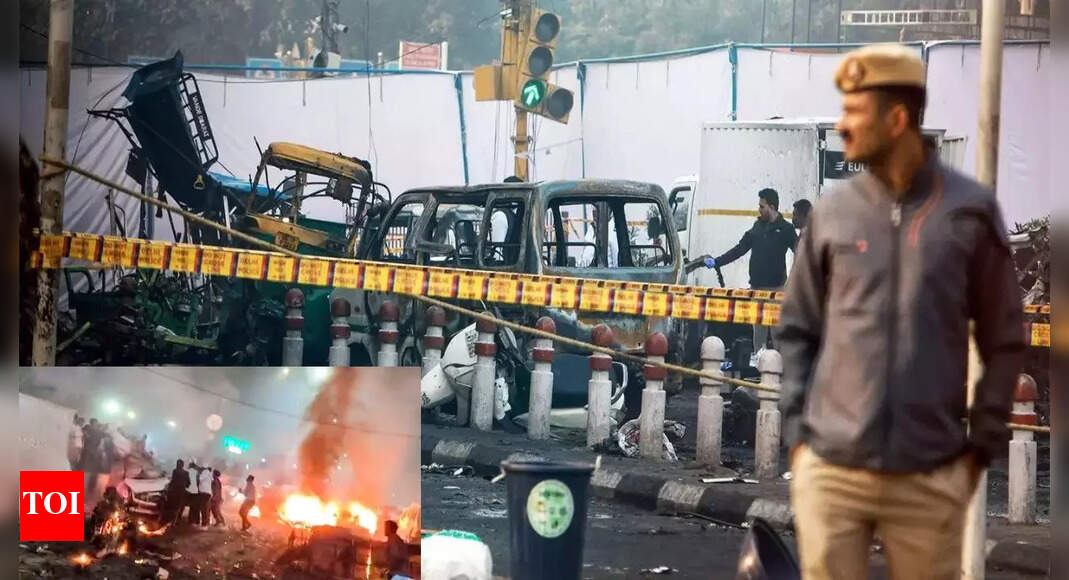
NEW DELHI: The high-intensity explosion near Delhi’s Red Fort that killed at least 12 people and injured several others has led to the unearthing of a trans-state “white-collar terror module” involving doctors, clerics, and radicalised professionals. According to officials, the accused were linked to banned terror outfits Jaish-e-Mohammed (JeM) and Ansar Ghazwat-ul-Hind (AGuH).Joint operations by the Jammu & Kashmir Police, Haryana Police, Uttar Pradesh Police, and central agencies resulted in the arrest of at least seven suspects — including doctors from Al-Falah University in Faridabad and other parts of India — and the recovery of more than 2,900 kilograms of explosives and firearms across multiple states.
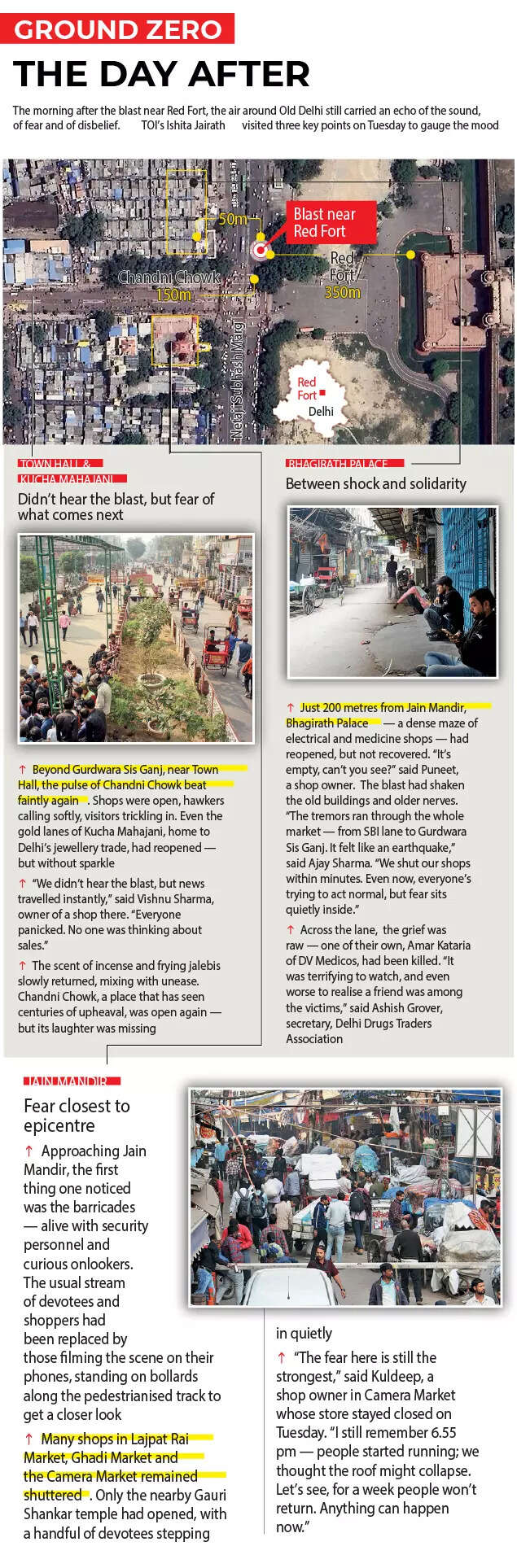
The National Investigation Agency (NIA) has now taken over the probe.
Who is Dr Muzammil Ganaie
Dr Muzammil Ganaie, 35, from Koil in Pulwama, Jammu and Kashmir, worked at Al-Falah University in Faridabad as a doctor and taught MBBS students. Police identified him as one of the key figures in the terror module.Following his arrest, officials recovered 358 kg of suspected ammonium nitrate, a Krinkov assault rifle, three magazines, 91 live rounds, a pistol with cartridges, timers, batteries, remote controls, and other bomb-making material from his rented accommodation in Dhauj, Faridabad.Police told agencies that Muzammil conducted multiple reconnaissance visits of the Red Fort area in January, mapping crowd movements and security positions. “These visits were part of a detailed reconnaissance ahead of a planned attack on January 26,” a senior police officer told PTI. According to the Forensic Science Laboratory (FSL) team, around 40 samples collected from the Red Fort blast site indicated that one explosive sample was likely ammonium nitrate.
Who is Dr Adeel Ahmad Rather
Dr Adeel Ahmad Rather, from Kulgam in Kashmir, was arrested from Saharanpur, Uttar Pradesh. He was also employed at Al-Falah University, working closely with Dr Muzammil and Dr Umar Un Nabi.Police sources told PTI that an AK-47 rifle was recovered from his locker at GMC Srinagar, where he had earlier worked as a senior resident. He is accused of being part of the Faridabad module that stockpiled explosives and weapons.Adeel’s arrest came after Muzammil’s interrogation, which revealed their collaboration in transporting and concealing explosives across multiple sites.
Who is Dr Umar Un Nabi
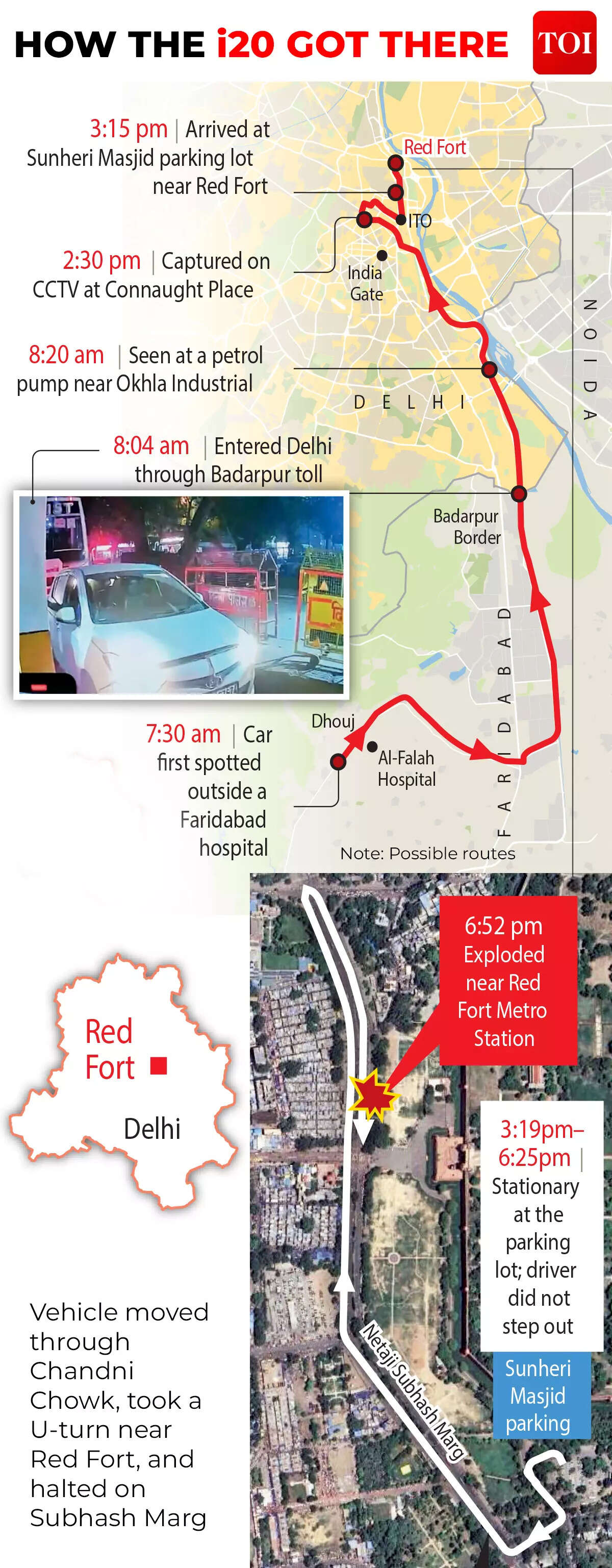
Dr Umar Un Nabi, from Pulwama, was also associated with Al-Falah University and was reportedly driving the i20 car that exploded near the Red Fort, killing over 10 people.Sources told PTI that Dr Umar had been under surveillance but changed locations frequently. “He maintained close ties with Dr Muzammil and Dr Adeel, coordinating logistics and storage of explosives,” an official said.Authorities confirmed that Umar was present in the vehicle during the blast. His alleged role as the executioner of the attack places him among the most critical suspects in the ongoing probe.
Who is Dr Shaheen Sayeed
Dr Shaheen Sayeed, a doctor from Lucknow, is alleged to be an active associate and close confidant of Dr Muzammil. She was brought by air to Srinagar for custodial interrogation after an assault rifle was recovered from her car in Faridabad.Police said she panicked following Muzammil’s arrest and discarded the weapon in a dustbin. Dr Shaheen reportedly maintained communication between members in Faridabad and contacts in Kashmir.Investigators believe she played a role in logistical coordination for the group’s operations and possibly helped procure chemical materials.
Who is Dr Ahmed Mohiyuddin Saiyed
Dr Ahmed Mohiyuddin Saiyed, a Hyderabad-based doctor with an MBBS degree from China, was arrested by Gujarat ATS on November 8.He had been running a shawarma business in Rajendranagar, where he was allegedly radicalised through Telegram and social media. Authorities claim he was in contact with a handler named Abu Khadija linked to Islamic State-Khorasan Province (ISKP).Police seized two Glock pistols, a Beretta, live ammunition, and 4 kg of castor-bean mash (used to extract ricin poison). Officials said he conducted reconnaissance of security-sensitive sites in Delhi, Lucknow, and Ahmedabad, with weapons possibly delivered via drones from Pakistan.Two of his aides, Azad Suleman Sheikh (20) and Mohammad Suhail Khan (23), were also arrested.
Who is Irfan Ahmad
Irfan Ahmad, a cleric and Imam from Shopian, is accused of radicalising several members of the module, including young doctors. Police said he was responsible for motivating recruits and connecting them with militant networks in Kashmir.He was arrested during follow-up raids in Shopian after Dr Muzammil’s confession pointed to his involvement.
Who is Maulvi Hafeez Mohammad Ishtiaq
Maulvi Ishtiaq, a native of Mewat, Haryana, served as Imam at Al-Falah Mosque in Faridabad’s Dhera Colony. Police recovered over 2,500 kilograms of explosives from his residence within the Al-Falah University complex.Officials said he had been staying on campus under the guise of a religious teacher and was detained by Jammu and Kashmir Police before being brought to Srinagar for questioning.He is suspected of providing logistical support, including safe houses and connections to financial channels.
Who is Dr Sajad Malik
Police on Tuesday took another Pulwama doctor, Sajad Malik, into custody for questioning, bringing the number of Kashmir-born doctors linked to the Delhi blast case to four.It remained unclear whether Malik’s detention was aimed at gathering information about his friend Umar Un Nabi or if he was also being held as a suspect in the broader terrorism conspiracy.
Network and recovery operations
According to police and intelligence agencies, the seven-member module used encrypted channels for communication, coordination, and movement of explosives.In Faridabad, questioning of over 52 individuals, including faculty and students of Al-Falah University, led to the recovery of the explosive materials and firearms.Subsequent raids in Shopian, Ganderbal, and Anantnag uncovered additional weapons, including an AK-56 rifle, pistols, and large quantities of IED components.Officials confirmed that Dr Muzammil and Dr Umar Un Nabi had plotted an attack during Republic Day celebrations, but the plan was delayed due to heightened security.
Massive crackdown and heightened security
After the Red Fort blast, the Delhi Police and paramilitary forces tightened security across the national capital. All entry and exit points were sealed, and vehicles were thoroughly checked.Senior officers supervised searches at interstate borders — including Ghazipur, Singhu, Tikri, and Badarpur — while sniffer dogs, anti-sabotage squads, and metal detectors were deployed at crowded locations.A senior police officer said, “We are taking no chances. The focus is on maintaining public confidence and ensuring that the city remains secure.”
A thwarted network of radical professionals
Officials described the module as a “white-collar terror network” that exploited academic institutions for recruitment and logistics.“The arrests have prevented a major conspiracy aimed at causing large-scale damage in the country,” an intelligence official said, adding that several Pakistani phone numbers were found on seized devices linked to the doctors.Investigations continue across Delhi, Jammu and Kashmir, Haryana, and Uttar Pradesh, with more arrests expected in the coming days.(With inputs from PTI, Naseer Ganai and Nikhil Sharma)


