
Signalling a more transactional and interest-driven focus in its ties with India, the US has said that its objective is to work with India to ensure peace and stability in the Indo-Pacific that is not founded in naivete or “gauzy abstractions” like the rules-based international order, but in strength, reason, and hard-nosed collaboration. As he laid out the US approach to ties with India in geopolitical and defence spheres, undersecretary of war for policy Elbridge Colby said Tuesday no single no single country can maintain a stable balance of power in Asia. Watch Iran Threats Undermine 10 Million Indian Lives, Israel’s ‘Great Plans With India’: Envoy Azar Instead, he said, stability will depend on the collective contributions of capable states that share an interest in maintaining a free and open Indo-Pacific. Significantly, while he underlined India’s “indispensable” role in maintaining a free and open Indo-Pacific, Colby made no mention in his speech of Quad, the flagship US Indo-Pacific initiative revived by the first Trump administration. Israel Iran WarUS-Israel-Iran War News Live Updates: Amazon Web Services ‘disrupted’ following drone attack in Bahrain; Saudi, UAE mull joining Iran warGulf Allies Edge Toward Conflict: Saudi grants US base access; UAE shuts Iranian assetsPossible US-Iran Talks In Islamabad: White House calls situation ‘sensitive’ and ‘fluid’; oil prices tumbleThe mechanism, however, seems to have lost some of its salience with Washington after the president’s return to the White House as the US focus shifts from soft power initiatives to shared security outcomes and burden-sharing. The top US official was addressing an event at the Ananta Centre. As there’s no word yet on whether Trump would visit India this year for the Quad summit, hopes of a leaders’ meeting now rest on the France G7 summit in June that may see participation by leaders of all Quad countries. Colby took a swipe at Europe as he stressed that the US is still a rising power under Trump’s leadership but the same could not be said about some of Washington’s traditional partners, even as the US urges them to reinvigorate themselves. India, he said, was far different as a “waxing power”. “As a result, the United States believes that India will play a central role in ensuring a favorable balance of power in the Indo-Pacific. In this context, a strong, confident India is not only good for the Indian people. It is good for Americans as well,” said Colby, who is in India to discuss implementation of the Framework for the US-India Major Defense Partnership. The official suggested that the US may not be interested in framing of the relationship as one based just on shared democratic values, as he said the Indian-American partnership has its roots in practicality. “In line with this, the US approach to the strategic partnership is interests-based and realistic, shaped by geopolitics and incentives as opposed to gauzy aspirations or detached idealism,” said Colby, adding that Washington wants partnerships with vigorous, self-assured states, not with dependencies. Colby also backed external affairs minister S Jaishankar’s remarks that a nationalistic foreign policy outlook is likely to approach the world with more confidence and greater realism, saying this approach resonates with the US. Underlining the significance of “strategic candor” in ties, Colby said strong partnerships benefit from honesty, respect, and strategic clarity. As the bilateral relationship shows signs of recovery after one of its worst phases in recent times, Colby also said that the US and India do not need to agree on everything to cooperate effectively, as long as their interests and objectives increasingly converge on the most fundamental issues. Differences and even disputes are fully compatible with deepening alignment and cooperation on strategic matters, he said. The official also underscored the strategic centrality of military power for a stable balance in the region and the significance of defence industrial collaboration between India and the US.End of ArticleFollow Us On Social MediaVideosIndia Built A Naval Network But Missed The Red Sea’s Key ChokepointLPG Ships Pine Gas And Jag Vasant Safely Cross Hormuz, Crew Hails Indian NavyIran Threats Undermine 10 Million Indian Lives, Israel’s ‘Great Plans With India’: Envoy AzarVessels ‘Going Dark’ In EEZ: Navy Chief Tripathi On ‘Emerging Flash Points’ In Indo-PacificAre Trump’s Iran Announcements Driven By Market Manipulation?; Trump Calls Modi To Discuss Iran WarIAF’s Biggest Aircraft Deal Progress To Replace Aging Fleet , C-130J, C-390 And A400M In RaceUS President Trump Dials PM Modi Amid West Asia Conflict, Discusses Strait Of HormuzIndia’s Rafale Marine Deal May Move Faster Than Planned With Trainer Arrival: Reports’India Indispensable To Asia’: Donald Trump’s War Envoy Colby Signals US Shift Amid West Asia CrisisGovt Calls All-Party Meeting To Discuss West Asia Conflict Amid Opposition Uproar123PhotostoriesFrom Saif Ali Khan-Amrita Singh to Bhagyashree-Himalaya Dasani: 5 famous Indian celebrities who eloped and got marriedExclusive – ‘The 50’ Winner Shiv Thakare opens up about his journey, Prince sacrificing his Ticket To Finale for him and his team distracting Faisu during finale taskStop Frying: Chef Sanjeev Kapoor shares 3 ways to prepare sweet potato in an air fryer6 kg vs 10 kg washing machine: How many clothes can your machine handle at a timeWhy women need to think about calcium much earlier than they usually doChennai airport phase-2 international terminal to open by December, set to handle 35 million passengers annually10 foods that were once illegal around the world and why they were bannedDivyanka Tripathi-Vivek Dahiya to become parents after 10 years of marriage: From meeting when she was heartbroken to becoming life partners–Their love storyFrom gold to copper: 5 smart metal investments to make this NavratriRanveer Singh’s Car Collection: Top 5 cars owned by the actor123Hot PicksTrump Iran DealMohammad Bagher GhalibafSan Francisco AirportGold rate todayIncome Tax CalculatorPublic holidays March 2026Bank Holidays MarchTop TrendingGolden state warriors vs dallas mavericks injury reportPatrick MahomesJoe MazzullaColombian Military Plane CrashBrittany MahomesWWE Raw News RoundupSilver Rate TodayRajasthan 8th Class ResultTrump Iran DealBihar Board Science Topper

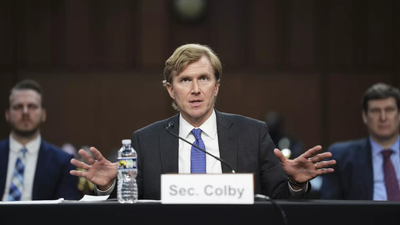
Signalling a more transactional and interest-driven focus in its ties with India, the US has said that its objective is to work with India to ensure peace and stability in the Indo-Pacific that is not founded in naivete or “gauzy abstractions” like the rules-based international order, but in strength, reason, and hard-nosed collaboration. As he laid out the US approach to ties with India in geopolitical and defence spheres, undersecretary of war for policy Elbridge Colby said Tuesday no single no single country can maintain a stable balance of power in Asia.
Instead, he said, stability will depend on the collective contributions of capable states that share an interest in maintaining a free and open Indo-Pacific. Significantly, while he underlined India’s “indispensable” role in maintaining a free and open Indo-Pacific, Colby made no mention in his speech of Quad, the flagship US Indo-Pacific initiative revived by the first Trump administration. The mechanism, however, seems to have lost some of its salience with Washington after the president’s return to the White House as the US focus shifts from soft power initiatives to shared security outcomes and burden-sharing. The top US official was addressing an event at the Ananta Centre. As there’s no word yet on whether Trump would visit India this year for the Quad summit, hopes of a leaders’ meeting now rest on the France G7 summit in June that may see participation by leaders of all Quad countries. Colby took a swipe at Europe as he stressed that the US is still a rising power under Trump’s leadership but the same could not be said about some of Washington’s traditional partners, even as the US urges them to reinvigorate themselves. India, he said, was far different as a “waxing power”. “As a result, the United States believes that India will play a central role in ensuring a favorable balance of power in the Indo-Pacific. In this context, a strong, confident India is not only good for the Indian people. It is good for Americans as well,” said Colby, who is in India to discuss implementation of the Framework for the US-India Major Defense Partnership. The official suggested that the US may not be interested in framing of the relationship as one based just on shared democratic values, as he said the Indian-American partnership has its roots in practicality. “In line with this, the US approach to the strategic partnership is interests-based and realistic, shaped by geopolitics and incentives as opposed to gauzy aspirations or detached idealism,” said Colby, adding that Washington wants partnerships with vigorous, self-assured states, not with dependencies. Colby also backed external affairs minister S Jaishankar’s remarks that a nationalistic foreign policy outlook is likely to approach the world with more confidence and greater realism, saying this approach resonates with the US. Underlining the significance of “strategic candor” in ties, Colby said strong partnerships benefit from honesty, respect, and strategic clarity. As the bilateral relationship shows signs of recovery after one of its worst phases in recent times, Colby also said that the US and India do not need to agree on everything to cooperate effectively, as long as their interests and objectives increasingly converge on the most fundamental issues. Differences and even disputes are fully compatible with deepening alignment and cooperation on strategic matters, he said. The official also underscored the strategic centrality of military power for a stable balance in the region and the significance of defence industrial collaboration between India and the US.


