
NEW DELHI: After days of protracted negotiations marked by visible tension and hard bargaining, the Congress and the Dravida Munnetra Kazhagam (DMK) on Monday finalised their seat-sharing arrangement for the April 9 Puducherry Assembly elections, with the Congress set to contest 16 seats and the DMK 14.Confirming the development, the DMK said, “Seat sharing for the Puducherry Assembly Elections has been finalised; Congress to contest on 16 seats and DMK on 14 seats.”The agreement brings to a close a high-stakes tussle between the alliance partners over their respective shares in the Union Territory’s 30 directly elected Assembly seats, even as the clock ticks down to polling day.Talks marked by frictionThe negotiations had stretched over several days, with both sides staking aggressive claims. Israel Iran WarUS-Israel-Iran War News Live Updates: Iran vows tit-for-tat strike after Trump’s 48hr ultimatum, threatens to hit US-Israel energy facilityIf America strikes us, we should attack Indian cities like Delhi and Mumbai: Ex-Pak envoyTrump Pauses Planned Strikes: US halts Iran attack plan for 5 days; talks called very good and productiveThe Congress had pushed for a significantly larger share of 21 seats—leaving just nine for the DMK—while the DMK held firm on a demand for at least 15 seats, citing its stronger performance in the last Assembly elections.The back-and-forth underscored simmering tensions within the alliance, with neither side willing to easily уступ ground in a politically crucial contest.A look at past seat-sharing and performanceIn the 2021 Assembly elections, the Congress had contested 14 seats while the DMK fielded candidates in 13 constituencies. Two junior allies were accommodated with one seat each, and an independent candidate rounded out the alliance’s arrangement.However, the results tilted decisively in favour of the DMK. The party won six seats, while the Congress managed to secure only two. This performance not only boosted the DMK’s standing within the alliance but also enabled it to claim the post of Leader of the Opposition in the Assembly under the leadership of M.K. Stalin.With Puducherry’s Assembly comprising 33 members—30 elected and three nominated by the Centre—the DMK’s relatively stronger showing in 2021 became a key factor shaping its negotiating stance this time.Alliance’s rollercoaster trajectoryThe Congress-DMK alliance has had a fluctuating electoral journey in Puducherry. The two parties first joined hands in 2006, five years after being part of rival fronts. In that election, they fielded 16 candidates from the Congress and 11 from the DMK, while allocating three seats to junior allies, and went on to sweep to power.They repeated a similar arrangement in 2011, with the Congress contesting 17 seats and the DMK 10. However, the alliance lost that election to the AINRC-AIADMK combine.In 2016, the partners expanded their contest to all 30 seats—21 for the Congress and nine for the DMK—and successfully reclaimed power in the Union Territory.The 2021 elections, however, proved to be a setback, with the AINRC-BJP alliance emerging victorious despite the Congress-DMK combine putting up a united front.Leverage and pushbackGiven its relatively better strike rate in 2021, the DMK entered the current negotiations with greater leverage and was seen as unlikely to concede significant ground to a partner that underperformed in the last polls.At the same time, the Congress’s insistence on a larger share reflected its intent to retain primacy within the alliance in Puducherry, where it has traditionally been a dominant force.Countdown to polling dayWith the seat-sharing formula now sealed, both parties are expected to quickly shift gears towards finalising candidates and coordinating campaign efforts, as the window before polling narrows.Voting for the Puducherry Assembly elections is scheduled for April 9, while counting of votes will take place on May 4. The results will be declared alongside those from key states including Tamil Nadu, Kerala, Assam and West Bengal, making it part of a broader, high-stakes electoral cycle.While the agreement averts a potential rupture in the alliance, the hard-fought negotiations highlight underlying strains that could shape campaign dynamics in the days ahead.About the AuthorTOI News DeskThe TOI News Desk comprises a dedicated and tireless team of journalists who operate around the clock to deliver the most current and comprehensive news and updates to the readers of The Times of India worldwide. With an unwavering commitment to excellence in journalism, our team is at the forefront of gathering, verifying, and presenting breaking news, in-depth analysis, and insightful reports on a wide range of topics. The TOI News Desk is your trusted source for staying informed and connected to the ever-evolving global landscape, ensuring that our readers are equipped with the latest developments that matter most.”Read MoreEnd of ArticleFollow Us On Social MediaVideos’India Moving Ahead With Resolve’: PM Modi’s Big Message On West Asia Conflict’Never Faced Such Humiliation’: Jaya Bachchan Slams VIP Culture In RS, Flags Traffic DisruptionsUS Finally Ready For De-Escalation? Iran Says Trump’s Threat To Blow Up Its Power Grid Was ‘Bluff’’100% Under Control Of Trump’: Rahul Gandhi Slams PM Modi Over West Asia Remarks In Lok Sabha’India Should Put House In Order First: Gita Gopinath’s Big Warning To Modi Govt Amid Iran WarIndia’s Nuclear Submarine Trio Is What China and Pakistan Should Pay Attention ToQawwali Meets Politics: LJP MP Shambhavi Chaudhary’s Dhurandhar Dig Targets Opposition In Lok Sabha‘Your Kindness Won’t Be Forgotten’: Iran Thanks Kashmir Donors For War Relief’India Shining Speech’: Oppn Hits Out At PM Modi’s Remarks On West Asia, Demands Discussion In Parl’India Deserves Deepest Respect: Russia Praises Delhi’s Strategic Autonomy, Confirms PM Modi’s Visit123PhotostoriesOrdering food gets costlier: Under 20 minutes easy dinner ideas for busy weeknights9 animals living in the wettest place on Earth: From a venomous snake and a creature that smells like popcornAneet Padda to Ananya Panday: Celebrity showstoppers who owned the ramp at Lakmē Fashion Week 20265 most magnificent palaces of South India worth travelling forWhy you stretch unconsciously: The hidden stress signal your body uses, and how to fix itHow to make Amla Turmeric Juice at home and 3 reasons to drink it before your breakfast dailyInside Axar Patel’s Luxury Car Collection: Top 3 cars owned by the cricketer7 science-backed reasons soaked walnuts are great for your brain and heart, and beyondMaharashtra’s top 5 Tier III cities attracting real estate investors and home buyers in 2026Harbhajan Singh and Geeta Basra’s ₹7 crore bungalow in Jalandhar, Punjab is a personalised sanctuary rooted in cricket, memories and family values123Hot PicksIran newsStock Market todayLaGuardia AirportGold rate todayIncome Tax CalculatorPublic holidays March 2026Bank Holidays MarchTop TrendingBSEB Class 12th ResultJason GarrettBengaluru MurderKochi Vaduthala Family IncidentBengaluru Pink MetroConor McGregor Next FightSilver Rate TodayHDFC Bank ShareDonald TrumpBihar Board Science Topper

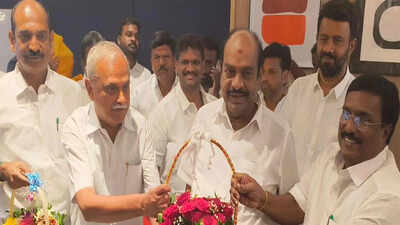
NEW DELHI: After days of protracted negotiations marked by visible tension and hard bargaining, the Congress and the Dravida Munnetra Kazhagam (DMK) on Monday finalised their seat-sharing arrangement for the April 9 Puducherry Assembly elections, with the Congress set to contest 16 seats and the DMK 14.Confirming the development, the DMK said, “Seat sharing for the Puducherry Assembly Elections has been finalised; Congress to contest on 16 seats and DMK on 14 seats.”The agreement brings to a close a high-stakes tussle between the alliance partners over their respective shares in the Union Territory’s 30 directly elected Assembly seats, even as the clock ticks down to polling day.
Talks marked by friction
The negotiations had stretched over several days, with both sides staking aggressive claims. The Congress had pushed for a significantly larger share of 21 seats—leaving just nine for the DMK—while the DMK held firm on a demand for at least 15 seats, citing its stronger performance in the last Assembly elections.The back-and-forth underscored simmering tensions within the alliance, with neither side willing to easily уступ ground in a politically crucial contest.
A look at past seat-sharing and performance
In the 2021 Assembly elections, the Congress had contested 14 seats while the DMK fielded candidates in 13 constituencies. Two junior allies were accommodated with one seat each, and an independent candidate rounded out the alliance’s arrangement.However, the results tilted decisively in favour of the DMK. The party won six seats, while the Congress managed to secure only two. This performance not only boosted the DMK’s standing within the alliance but also enabled it to claim the post of Leader of the Opposition in the Assembly under the leadership of M.K. Stalin.With Puducherry’s Assembly comprising 33 members—30 elected and three nominated by the Centre—the DMK’s relatively stronger showing in 2021 became a key factor shaping its negotiating stance this time.
Alliance’s rollercoaster trajectory
The Congress-DMK alliance has had a fluctuating electoral journey in Puducherry. The two parties first joined hands in 2006, five years after being part of rival fronts. In that election, they fielded 16 candidates from the Congress and 11 from the DMK, while allocating three seats to junior allies, and went on to sweep to power.They repeated a similar arrangement in 2011, with the Congress contesting 17 seats and the DMK 10. However, the alliance lost that election to the AINRC-AIADMK combine.In 2016, the partners expanded their contest to all 30 seats—21 for the Congress and nine for the DMK—and successfully reclaimed power in the Union Territory.The 2021 elections, however, proved to be a setback, with the AINRC-BJP alliance emerging victorious despite the Congress-DMK combine putting up a united front.
Leverage and pushback
Given its relatively better strike rate in 2021, the DMK entered the current negotiations with greater leverage and was seen as unlikely to concede significant ground to a partner that underperformed in the last polls.At the same time, the Congress’s insistence on a larger share reflected its intent to retain primacy within the alliance in Puducherry, where it has traditionally been a dominant force.
Countdown to polling day
With the seat-sharing formula now sealed, both parties are expected to quickly shift gears towards finalising candidates and coordinating campaign efforts, as the window before polling narrows.Voting for the Puducherry Assembly elections is scheduled for April 9, while counting of votes will take place on May 4. The results will be declared alongside those from key states including Tamil Nadu, Kerala, Assam and West Bengal, making it part of a broader, high-stakes electoral cycle.While the agreement averts a potential rupture in the alliance, the hard-fought negotiations highlight underlying strains that could shape campaign dynamics in the days ahead.


