
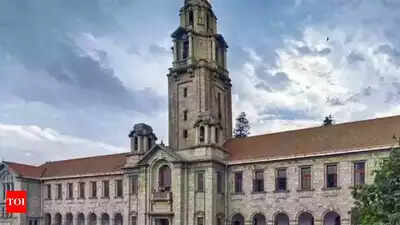
IISC Bengaluru (File photo) Bengaluru: The Indian Institute of Science (IISc) Wednesday said it has launched a “moonshot” project to develop brain co-processors that combine neuromorphic hardware with AI algorithms to enhance or restore brain function. The initiative is funded by the Pratiksha Trust, founded by Kris Gopalakrishnan and his wife Sudha.An MoU formalising the partnership was signed at IISc in the presence of Gopalakrishnan, Prof G Rangarajan, Director of IISc, and Prof B Gurumoorthy, chief executive, Foundation for Science, Innovation and Development (FSID), along with other faculty members and deans.“The project aims to develop both implantable and non-invasive brain co-processors capable of decoding neural activity from brain recordings, processing these signals using AI algorithms, and re-encoding them into the brain through neural stimulation or neurofeedback,” IISc said. Israel attacks IranUS-Israel-Iran War Live Updates: Iran launches ‘massive missile’ strike at US airbase in Bahrain; Israel bombs BeirutWest Asia crisis: 38 Indian ships stuck in Persian Gulf; 3 sailors dead’Safety risks’: US orders non-emergency staff in Pakistan to leave Karachi, Lahore consulatesThe devices are expected to support cognitive rehabilitation, particularly for stroke survivors who have lost functions such as goal-directed reach and grasp.Gopalakrishnan said: “India is emerging as a global leader in neuroscience by uniting foundational research with clinical applications through collaborative, international partnerships. Supported significantly by the Pratiksha Trust, the Brain Co-Processors Moonshot Project accelerates the development of innovative medical technologies.”Ultimately, he said, these innovations aim to provide world-class transformative neurological treatments to the global population. The initiative builds on a pilot effort under IISc’s Brain, Computation and Data Science programme, a cross-departmental initiative involving more than 20 faculty members. That programme is also supported by the Pratiksha Trust.According to IISc, brain co-processors represent an emerging class of technologies designed to augment or restore the brain’s natural functions in real-world contexts. The current project seeks to build an AI-driven, closed-loop device that interfaces with different regions of the brain to restore coordinated movement.A key focus of the project is to develop indigenous capacity. The team plans to indigenise implant design, hardware systems and AI software stacks compatible with clinical infrastructure in low-resource settings. It also aims to create India-specific databases of stereo EEG and ECoG recordings, and to develop open-source AI tools, datasets and visualisation platforms as digital public goods.“In its first phase, the team will develop and validate a non-invasive neural co-processor to provide sensorimotor feedback for goal-directed reaching in stroke survivors. Parallel groundwork will be laid for an invasive implantable version,” IISc said.The second phase will focus on developing a minimally invasive embedded co-processor intended to restore sensorimotor coordination in individuals with chronic, multi-domain deficits following middle cerebral artery stroke.The IISc team will collaborate with medical professionals and researchers across India to clinically validate and deploy the devices in line with national and international standards, IIScs said, adding that feedback from neurologists, therapists, patients and caregivers will be incorporated throughout development. The institute will also work with research partners in India and abroad.Prof Rangarajan said the moonshot project brings together expertise across neuroscience, electrical engineering, bioelectronics and neuromorphic computing to address stroke rehabilitation.About the AuthorChethan KumarChethan Kumar is a Senior Assistant Editor with the Times of India. Aside from specialising in Space & Science, he has reported extensively on varied topics, with special focus on defence, policy and data stories. He has covered multiple elections, too. As a young democracy grows out of adolescence, Chethan feels, there are reels of tales emerging which need to be captured. To do this, he alternates between the mundane goings-on of the Common Man and the wonder-filled worlds of scientists and scamsters, politicians and soldiers. In a career spanning nearly 18 years, he has reported from multiple datelines — Houston, Florida, Kochi, Hyderabad, Chennai, Sriharikota (AP), NH-1 (J&K Highway), New Delhi, Ahmedabad, Raichur, Bhatkal, Mysuru, Chamarajanagar, to name a few — but is based out of Bengaluru, India’s science capital that also hosts the ISRO HQ.Read MoreEnd of ArticleFollow Us On Social MediaVideosRahul Gandhi, Kejriwal, BJP Leaders Mix Festive Wishes With Sharp Attacks Amid Holi CelebrationsPakistan President Asif Zardari Claims India Preparing For War, Calls For DialogueIndia Set To Double S-400 Fleet But Is It Worth Against Israel’s Iron DomeFamilies Overjoyed as 200 Stranded Indians Land Home Safely Amid Middle East TensionsMeta Blocks Social Media Pages Of Kashmiri Newspapers As Protests Over Khamenei’s Death SpreadPM Modi Welcomes Finnish President Stubb As India Expands Strategic Reach Amid Global TensionsAs Israel’s Iron Dome Falters In Iran War, India Opts For Five More Russian S-400 Air Defence System’48 Hours After Modi Left…’: Israel Envoy Reuven Azar Reveals When Netanyahu Approved Iran Strike’It Was Terrifying…’: Indian Badminton Star PV Sindhu Recalls Scary Dubai Transit Amid US Iran WarIndia Confident To Evade Fuel Crisis Amid War As Russia Offers Energy Support Despite Trump Threats123PhotostoriesFrom mandap to majesty: Rashmika Mandanna and Vijay Deverakonda turn Hyderabad reception into a royal South Indian fashion momentHow to make high-protein Instant Sprout Chaat at home7 festive and colourful cocktails perfect for your Holi celebration5 air fryer mistakes that ruin textureHow to verify land records before buying a plotPost-Holi detox meal plan for 24 hours to cleanse the bodyYour HbA1c is normal, so why are you still tired?” Doctors explain the hidden insulin resistance stageHollywood movies with colourful Holi scenes: ‘Eat, Pray, Love,’ ‘Bride and Prejudice,’ ‘Outsourced,’ and moreEast Delhi’s top 5 real estate streets attracting buyers and investors in 2026From a luxurious house in Mumbai to a high-end car collection: Comedian Bharti Singh’s lavish lifestyle123Hot PicksIran droneUS Iran War Impact on Stock MarketMiddle East CrisisGulf Flights UpdateIncome Tax CalculatorPublic holidays March 2026Bank Holidays MarchTop TrendingNBA Injury UpdateUS Israel Strike IranUS Attack on IranCBSE postpones Class 10 and 12 board examsUS Strike IranLG Hospital AhmedabadMiddle East CrisisIsrael Iran ConflictChandra Grahan 2026 TimeSchool Holiday in March

Bengaluru: The Indian Institute of Science (IISc) Wednesday said it has launched a “moonshot” project to develop brain co-processors that combine neuromorphic hardware with AI algorithms to enhance or restore brain function. The initiative is funded by the Pratiksha Trust, founded by Kris Gopalakrishnan and his wife Sudha.An MoU formalising the partnership was signed at IISc in the presence of Gopalakrishnan, Prof G Rangarajan, Director of IISc, and Prof B Gurumoorthy, chief executive, Foundation for Science, Innovation and Development (FSID), along with other faculty members and deans.“The project aims to develop both implantable and non-invasive brain co-processors capable of decoding neural activity from brain recordings, processing these signals using AI algorithms, and re-encoding them into the brain through neural stimulation or neurofeedback,” IISc said. The devices are expected to support cognitive rehabilitation, particularly for stroke survivors who have lost functions such as goal-directed reach and grasp.Gopalakrishnan said: “India is emerging as a global leader in neuroscience by uniting foundational research with clinical applications through collaborative, international partnerships. Supported significantly by the Pratiksha Trust, the Brain Co-Processors Moonshot Project accelerates the development of innovative medical technologies.”Ultimately, he said, these innovations aim to provide world-class transformative neurological treatments to the global population. The initiative builds on a pilot effort under IISc’s Brain, Computation and Data Science programme, a cross-departmental initiative involving more than 20 faculty members. That programme is also supported by the Pratiksha Trust.According to IISc, brain co-processors represent an emerging class of technologies designed to augment or restore the brain’s natural functions in real-world contexts. The current project seeks to build an AI-driven, closed-loop device that interfaces with different regions of the brain to restore coordinated movement.A key focus of the project is to develop indigenous capacity. The team plans to indigenise implant design, hardware systems and AI software stacks compatible with clinical infrastructure in low-resource settings. It also aims to create India-specific databases of stereo EEG and ECoG recordings, and to develop open-source AI tools, datasets and visualisation platforms as digital public goods.“In its first phase, the team will develop and validate a non-invasive neural co-processor to provide sensorimotor feedback for goal-directed reaching in stroke survivors. Parallel groundwork will be laid for an invasive implantable version,” IISc said.The second phase will focus on developing a minimally invasive embedded co-processor intended to restore sensorimotor coordination in individuals with chronic, multi-domain deficits following middle cerebral artery stroke.The IISc team will collaborate with medical professionals and researchers across India to clinically validate and deploy the devices in line with national and international standards, IIScs said, adding that feedback from neurologists, therapists, patients and caregivers will be incorporated throughout development. The institute will also work with research partners in India and abroad.Prof Rangarajan said the moonshot project brings together expertise across neuroscience, electrical engineering, bioelectronics and neuromorphic computing to address stroke rehabilitation.


