
Supreme Court NEW DELHI: The Supreme Court on Thursday raised serious concerns over the growing culture of ‘freebies’ across states , warning that indiscriminate distribution of such benefits could hamper economic development and strain state finances. The top court also cautioned states and asked whether such a culture, without drawing a distinction between the haves and the have-nots, would amount to an “appeasing policy.”Hearing a plea by Tamil Nadu Power Distribution Ltd, which plans to provide free electricity to all consumers regardless of their financial status, the court said welfare measures are justified for the poor, but extending them to everyone could weaken development efforts.Why SC flagged freebiesA bench led by Chief Justice India Surya Kant, along with Justices Joymalya Bagchi and Vipul M Pancholi, pointed out that many states already face revenue deficits yet continue to announce large-scale free schemes.“Most of the states in the country are revenue deficit states and yet they are offering such freebies” overlooking development, the bench said.The judges stressed that excessive spending on freebies could slow economic progress and reduce funds available for infrastructure, jobs, and long-term growth.”The economic development of the nation will be hampered by this kind of largesse distribution. Yes, it is the State’s duty to provide, but the ones who are enjoying freebies… is it not something that should be looked at?” Chief Justice of India Surya Kant verbally observed.The CJI also questioned whether states were using their revenue wisely.”States are running into deficit but still giving freebies. See, 25 per cent of the revenue you collect in a year, why can it not be used for the development of the State?”Concern over impact on work culture &financesThe bench warned that indiscriminate distribution of benefits could affect productivity and reduce incentives to work.“What kind of culture are we developing in India? It is understandable that as part of the welfare measure you want to provide to those who are incapable of pay the electricity charges,” the bench asked.“But without drawing a distinction between those who can afford and those who cannot, you start distributing. Will it not amount to an appeasing policy,” the CJI asked.The court also questioned the timing of the Tamil Nadu power firm’s proposal.“The states should work to open avenues for employment. If you start giving free food from morning to evening then free cycle, then free electricity then who will work and then what will happen to the work culture,” the CJI said.JusticeBagchi added that states must properly justify such spending in their budgets.”It’s not one State we are talking about, it’s about all States. It is planned expenditure. Why don’t you make Budget proposals and give justification that this is my outlay on unemployment of people?”Court issues notice but clarifies wider concernDespite its sharp observations, the Suprme Court issued notice to the Centre and other parties on the petition filed by the DMK government-run power utility challenging electricity rules.The court clarified that its concern was not limited to Tamil Nadu but applied to all states offering similar schemes without proper financial planning.Freebies: New currency of political power?A report by Aequitas Investments noted that freebies have increasingly become a major electoral strategy.”As political parties compete in what appears to be a race to the bottom, welfare schemes and ‘freebies’ have evolved from mere campaign promises to the new currency of political power,” the report said.About the AuthorTOI News DeskThe TOI News Desk comprises a dedicated and tireless team of journalists who operate around the clock to deliver the most current and comprehensive news and updates to the readers of The Times of India worldwide. With an unwavering commitment to excellence in journalism, our team is at the forefront of gathering, verifying, and presenting breaking news, in-depth analysis, and insightful reports on a wide range of topics. The TOI News Desk is your trusted source for staying informed and connected to the ever-evolving global landscape, ensuring that our readers are equipped with the latest developments that matter most.”Read MoreEnd of ArticleFollow Us On Social MediaVideos’India Well Positioned To Lead The World In AI’: OpenAI CEO Sam Altman At AI Impact SummitAI Rivals Altman, Amodei Snub Each Other, Turns India AI Impact Summit Photo Op With PM Modi AwkwardPakistan Faces Mockery On Social Media As PM Shehbaz Sharif’s US Trip Statement Carries Glaring TypoPM Modi Pushes Human Centric AI Model, Launches MANAV Framework At Mega AI Impact Summit 2026Pak Defence Minister Khawaja Asif Claims India, Afghanistan On Same Page, Raises War ConcernsGoogle CEO Pichai Hails India’s AI Rise, Highlights Vizag Investment, Warns Against AI Divide’India Built What No Other Country Could’: Macron Praises India’s Digital Rise At AI Summit’Future Of AI Cannot Be Left To Whims Of Few Billionaires’: UN Chief Guterres Pushes Global AI FundBangladesh PM Tarique Rahman Makes BIG Promise To Hindus As India Detains Hindu Cop Killer In Delhi’If I Can Survive Family Dinner With My In-Laws…’: Rishi Sunak’s Witty Remark At AI Impact Summit123PhotostoriesPM Narendra Modi’s India-AI Impact Summit-2026 dinner celebrated Shishir Ritu: Look what was served to delegatesFrom Riteish Deshmukh to Rishab Shetty: Actors who portrayed and are set to depict Chhatrapati Shivaji Maharaj on screen62,000 motorists ticketed: Massive traffic crackdown on Mumbai Coastal Road5 things that make Kashmir a great March destinationFrom divorce to deadly revenge: Pregnant Hyderabad techie’s murder shocks Hyderabad IT communityTop 5 real estate hubs in Indore in 2026: A guide for investors and homebuyersMarriage Horoscope 2026: Who may take the next stepSpider-Man movies to watch on OTT in India before ‘Spider-Man – Brand New Day’ releasesWhich Hindu demon energy you have according to your birth number’Chhaava’, ‘Tanhaji-The Unsung Warrior’: Bollywood films that glorify Chhatrapati Shivaji Maharaj’s bravery123Hot PicksCigarette price hikeGold rate todayITC shareMadhya Pradesh budget 2026–27Income Tax CalculatorPublic holidays February 2026Bank Holidays februaryTop TrendingIndia T20 World CupLarry WheelsMikaela ShiffrinNPCIL admit cardGate 2026 Answer KeyDTU ResultMukesh AmbaniBasit AliNBA Trade NewsTamil Nadu Free Electricity

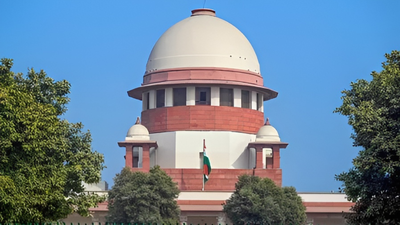
NEW DELHI: The Supreme Court on Thursday raised serious concerns over the growing culture of ‘freebies’ across states , warning that indiscriminate distribution of such benefits could hamper economic development and strain state finances. The top court also cautioned states and asked whether such a culture, without drawing a distinction between the haves and the have-nots, would amount to an “appeasing policy.”Hearing a plea by Tamil Nadu Power Distribution Ltd, which plans to provide free electricity to all consumers regardless of their financial status, the court said welfare measures are justified for the poor, but extending them to everyone could weaken development efforts.Why SC flagged freebiesA bench led by Chief Justice India Surya Kant, along with Justices Joymalya Bagchi and Vipul M Pancholi, pointed out that many states already face revenue deficits yet continue to announce large-scale free schemes.“Most of the states in the country are revenue deficit states and yet they are offering such freebies” overlooking development, the bench said.The judges stressed that excessive spending on freebies could slow economic progress and reduce funds available for infrastructure, jobs, and long-term growth.“The economic development of the nation will be hampered by this kind of largesse distribution. Yes, it is the State’s duty to provide, but the ones who are enjoying freebies… is it not something that should be looked at?” Chief Justice of India Surya Kant verbally observed.The CJI also questioned whether states were using their revenue wisely.“States are running into deficit but still giving freebies. See, 25 per cent of the revenue you collect in a year, why can it not be used for the development of the State?”Concern over impact on work culture &financesThe bench warned that indiscriminate distribution of benefits could affect productivity and reduce incentives to work.“What kind of culture are we developing in India? It is understandable that as part of the welfare measure you want to provide to those who are incapable of pay the electricity charges,” the bench asked.“But without drawing a distinction between those who can afford and those who cannot, you start distributing. Will it not amount to an appeasing policy,” the CJI asked.The court also questioned the timing of the Tamil Nadu power firm’s proposal.“The states should work to open avenues for employment. If you start giving free food from morning to evening then free cycle, then free electricity then who will work and then what will happen to the work culture,” the CJI said.JusticeBagchi added that states must properly justify such spending in their budgets.“It’s not one State we are talking about, it’s about all States. It is planned expenditure. Why don’t you make Budget proposals and give justification that this is my outlay on unemployment of people?”Court issues notice but clarifies wider concernDespite its sharp observations, the Suprme Court issued notice to the Centre and other parties on the petition filed by the DMK government-run power utility challenging electricity rules.The court clarified that its concern was not limited to Tamil Nadu but applied to all states offering similar schemes without proper financial planning.Freebies: New currency of political power?A report by Aequitas Investments noted that freebies have increasingly become a major electoral strategy.“As political parties compete in what appears to be a race to the bottom, welfare schemes and ‘freebies’ have evolved from mere campaign promises to the new currency of political power,” the report said.


