Who is Matteo Paz: A teenager who lead the discovery of 1.5 million space objects
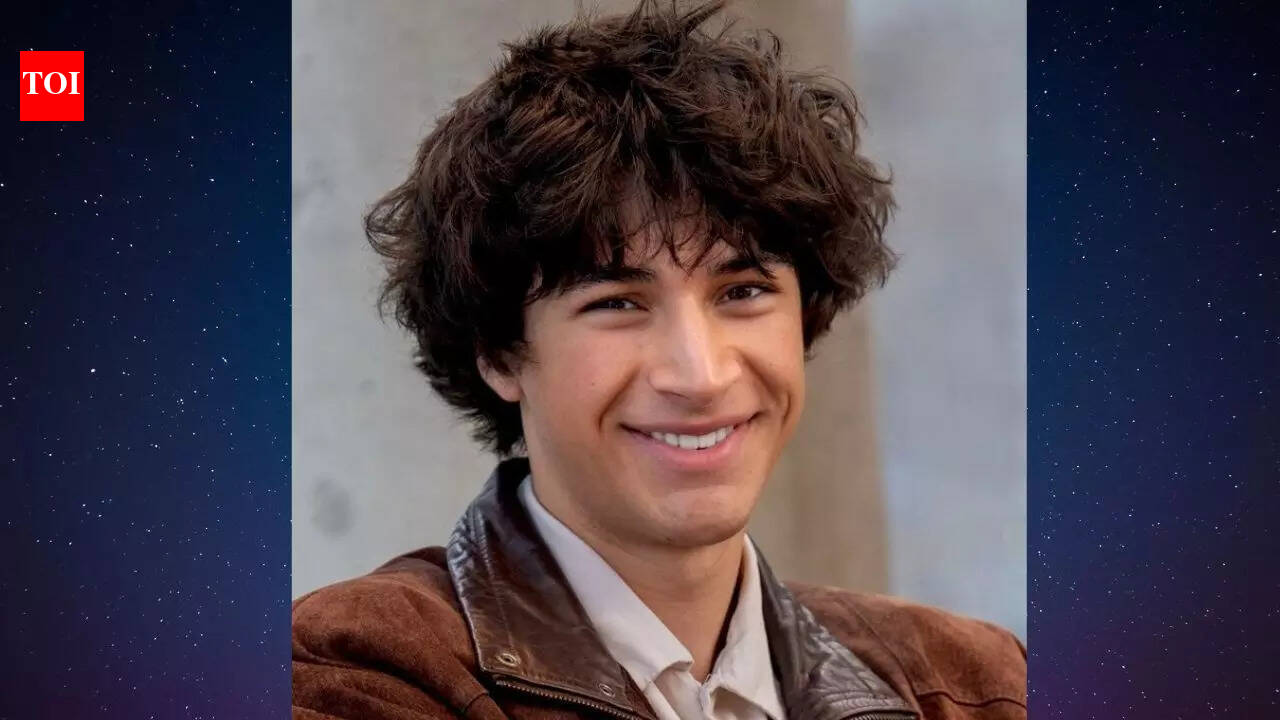
Matteo Paz, son of Amy and Pedro Paz, attends Pasadena High School. He is 18 years old. He is the president and founder of the research club, where he mentors students in science competitions. Matteo also served in his district’s first unified student council and as a student assembly representative to the school board.Matteo was not looking through a telescope when he made his discovery. He was sitting in front of a computer, working through an ocean of numbers collected far above Earth. At 18, the Pasadena student became known for helping identify 1.5 million previously unknown variable objects in space, drawn from more than a decade of observations by NASA’s WISE space telescope. The work came from a science competition project, but it quickly grew beyond that frame. Using artificial intelligence and advanced mathematics, Paz found a way to sort patterns hidden inside one of the largest astronomical datasets ever assembled. The results point to black holes, newborn stars and distant explosions, quietly expanding what scientists know about a changing sky.
1.5 million space discoveries by Matteo Paz emerged from infrared data
NASA’s WISE and later NEOWISE missions have been scanning the entire sky in infrared light for over ten years. The telescope gathered nearly 200 billion individual observations, creating a dataset so large that most of it remained untouched. Paz saw an opening there. Rather than inspect objects one by one, he designed a system that could scan the full archive for changes in brightness over time. These changes often signal rare or energetic events. His approach turned raw data into something workable, even searchable, at a scale few individuals have attempted.
Matteo Paz’s life beyond astronomy research
Paz is active in school leadership and mentoring. He founded a research club to support other students entering science competitions and served on his district’s student council and school board assembly. He also runs a programme called Money Matters, which introduces middle school students to basic financial literacy. These efforts sit alongside his research rather than beneath it, suggesting a pattern of steady curiosity rather than a single moment of achievement.
VARnet and the role of machine learning
At the centre of the project is a machine learning model Paz named VARnet. It combines signal processing, wavelet analysis and deep learning to recognise faint or irregular patterns in light curves. The model was trained using simulated data and known infrared variables, then tested on real observations. According to the published research, VARnet processes each source in a fraction of a millisecond using modern GPUs. That speed made it possible to analyse the entire NEOWISE single exposure database. The system identified 1.9 million variable objects, most of them not previously catalogued.
What the new catalogue contains
The newly identified objects span a wide range. Some are supermassive black holes actively feeding at the centres of galaxies. Others are young stars still forming, or supernovae briefly flaring before fading. Variable objects are especially valuable because they reveal motion, growth or sudden change. Paz’s catalogue provides a more complete map of this activity across the infrared sky. Researchers can now use it as a starting point rather than searching blindly through raw observations.
Learning pathways that shaped the work
Paz attends Pasadena High School and has studied advanced mathematics through the district’s Math Academy, completing high level coursework years ahead of schedule. He developed an interest in artificial intelligence through an elective that blended coding, theory and formal maths. According to Caltech, this background helped him recognise that large, well ordered datasets are ideal for machine learning. The project was carried out under NASA funding, with Paz working as a staff researcher rather than a casual intern.