
. In a sweeping overhaul of America’s global footprint, President Donald Trump has authorised the withdrawal of US from 66 international organisations, marking one of the most significant retreats from multilateralism in modern history.The pullout is from all major climate-linked global bodies, including India-headquartered International Solar Alliance and UN Framework Convention on Climate Change. Though the withdrawal from ISA, a collaborative initiative of India and France to increase solar footprints globally, will not affect the alliance’s key goal, the move came as a surprise as the Trump administration had never hinted at it after withdrawing from the Paris agreement on climate change. Donald Trump Pulls US Out Of India-Led Solar Alliance In Sweeping Exit From 66 Global Agencies US move coincides with call for defence budget riseThe withdrawal, announced on Jan 7 via a presidential memorandum, affects 31 United Nations entities and 35 non-UN groups, including key bodies focused on health and education. This action coincides with Trump’s call for a $1.5 trillion defence budget in fiscal year 2027, a staggering 50% increase over current levels, fuelling debates about a shift towards a “Fortress America” doctrine that prioritises domestic strength, protectionism over global engagement.The withdrawals build on an executive order issued shortly after Trump’s inauguration in Jan 2025, which directed a review of US participation in international bodies deemed contrary to national interests. Prominent targets include Unesco, which the US had briefly rejoined under the previous administration; and potentially WHO, echoing Trump’s first-term defunding over alleged biases toward China.Other entities span trade, human rights, and environmental forums, with the state department citing a total of 66 as “wasteful, ineffective, or harmful”. In some cases, Washington has formally withdrawn; in others, it has suspended funding, reduced diplomatic engagement or signalled an intention to exit when legal timelines allow.Administration officials say these organisations “no longer serve American interests” and often promote policies seen as hostile or inefficient. For instance, climate-related bodies are criticised for imposing undue burdens on US business and industry without reciprocal commitments from “major emitters” like China and India, even though their per capita emission is a fraction of American emissions. Unesco and similar groups face accusations of waste and mismanagement, with secretary of state Marco Rubio highlighting redundancy and a lack of tangible benefits for US taxpayers.Trump himself has framed the decisions as part of his “America First” agenda, arguing that funds previously allocated to these entities – estimated at billions annually – should be redirected domestically to address border security, infrastructure, and economic recovery. Supporters, including Republican lawmakers, applaud the move as a correction to decades of overcommitment, freeing resources amid a national debt heading towards $40 trillion.Foreign policy experts point to the Dec 2025 National Security Strategy, which critiques US allies in Europe and Asia for insufficient burden-sharing while prioritising unilateral actions. The document, released under Trump’s direction, describes an “America First” framework that sceptics label as neo-isolationist, though administration officials insist it avoids outright withdrawal from core alliances like Nato, which is also under siege from Washington over the Greenland issue.This approach is straining US ties across the globe: European leaders have decried the US exits as a blow to collective security, while adversaries like Russia and China are relishing the perceived vacuum. Partners like India, Japan, and Australia have been hung out to dry. Analysts argue the policy fosters adversity by undermining multilateralism, with some of them warning that Trump’s strategy risks damaging US power, economy, and security through hostility toward global cooperation.The proposed $1.5 trillion defence budget, unveiled on Jan 7, underscores this pivot. Trump justified the hike – up from the current $1 trillion – as essential for building a “dream military”, with allocations for nuclear modernisation, missile defence, and cyber capabilities. End of ArticleFollow Us On Social MediaVideos‘Trump’s Carnival Of Chaos’: Newsom Goes Ballistic Over ICE, National Guard In State Of State SpeechMinnesota $250 MN Fraud Bomb Explodes In US Congress; Jim Jordan YELLS At Dems In Fiery Hearing‘FACTS AREN’T RACIST!’: Senator Kennedy Reveals Shocking Minnesota Fraud Details, TORCHES Tim Walz‘Won’t Stay Silent’: Macron Issues Big Warning To US As Trump Mulls Greenland InvasionRussia-Bound Oil Tanker Hit In Black Sea; Putin Fumes Over Shocking Drone Attack’Can’t Use US Troops…’: Trump In Shock As Republicans Join Dems To Block War Powers In VenezuelaJD Vance Loses Cool, Lashes Reporters Over Minneapolis ICE Shooting | ‘Be Ashamed…’Kristi Noem Clashes With Reporter In Heated Presser Over Minneapolis Shooting | ‘ICE Followed…’Russia’s Second Warning To US In Under 24 Hours Over Ship Marinera’s Seizure‘I DON’T CARE!’: CHILLING Minneapolis Clip Shows ICE Agents Turning Doctor Away After Shooting Woman123PhotostoriesFarhan Akhtar birthday special: ‘Dil Chahta Hai’ ,‘Rock On!!’ to ‘Toofaan’, 5 inspiring films to stream on OTTFrom Nayanthara to Sai Pallavi: Kasavu saree inspiration from South Indian actresses for Pongal 2026How to deal with difficult people without losing your cool: 5 effective psychology-based tipsBirthday Special: Farhan Akhtar’s movies to watch on OTTFarhan Akhtar’s social media moments with wife and kids10 smart and comforting sooji dishes to enjoy for breakfastExclusive: Viraj Bahl on the public admiration he’s been getting due to Shark Tank India; says ‘I still feel embarrassed when people ask me for selfies’‘Toxic’: Kiara Advani, Nayanthara to Rukmini Vasanth: Meet the leading ladies of Yash’s highly anticipated comeback filmHow to make comforting Gajar Matar Ki Sabzi at home10 most democratic countries in the world123Hot PicksMinneapolis Woman ShootMaharashtra civic pollsGold rate todayUAE citizenshipCigarette price hikePublic holidays January 2026Bank Holidays JanuaryTop TrendingCandace OwensTommy Fleetwood and Clare Fleetwood Net WorthTravis KelceBrandon TatumQuinn HutsonRic Flair Net Worth in 2025Rashee RiceMarshon Lattimore ArrestAnthony EdwardsStefon Diggs
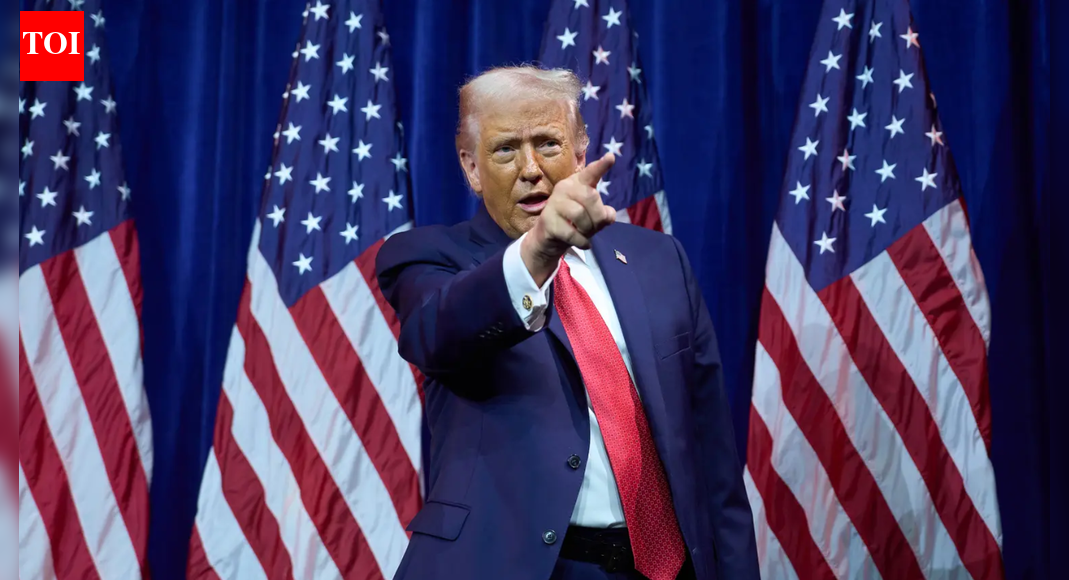
In a sweeping overhaul of America’s global footprint, President Donald Trump has authorised the withdrawal of US from 66 international organisations, marking one of the most significant retreats from multilateralism in modern history.The pullout is from all major climate-linked global bodies, including India-headquartered International Solar Alliance and UN Framework Convention on Climate Change. Though the withdrawal from ISA, a collaborative initiative of India and France to increase solar footprints globally, will not affect the alliance’s key goal, the move came as a surprise as the Trump administration had never hinted at it after withdrawing from the Paris agreement on climate change.
US move coincides with call for defence budget riseThe withdrawal, announced on Jan 7 via a presidential memorandum, affects 31 United Nations entities and 35 non-UN groups, including key bodies focused on health and education. This action coincides with Trump’s call for a $1.5 trillion defence budget in fiscal year 2027, a staggering 50% increase over current levels, fuelling debates about a shift towards a “Fortress America” doctrine that prioritises domestic strength, protectionism over global engagement.The withdrawals build on an executive order issued shortly after Trump’s inauguration in Jan 2025, which directed a review of US participation in international bodies deemed contrary to national interests. Prominent targets include Unesco, which the US had briefly rejoined under the previous administration; and potentially WHO, echoing Trump’s first-term defunding over alleged biases toward China.Other entities span trade, human rights, and environmental forums, with the state department citing a total of 66 as “wasteful, ineffective, or harmful”. In some cases, Washington has formally withdrawn; in others, it has suspended funding, reduced diplomatic engagement or signalled an intention to exit when legal timelines allow.Administration officials say these organisations “no longer serve American interests” and often promote policies seen as hostile or inefficient. For instance, climate-related bodies are criticised for imposing undue burdens on US business and industry without reciprocal commitments from “major emitters” like China and India, even though their per capita emission is a fraction of American emissions. Unesco and similar groups face accusations of waste and mismanagement, with secretary of state Marco Rubio highlighting redundancy and a lack of tangible benefits for US taxpayers.Trump himself has framed the decisions as part of his “America First” agenda, arguing that funds previously allocated to these entities – estimated at billions annually – should be redirected domestically to address border security, infrastructure, and economic recovery. Supporters, including Republican lawmakers, applaud the move as a correction to decades of overcommitment, freeing resources amid a national debt heading towards $40 trillion.Foreign policy experts point to the Dec 2025 National Security Strategy, which critiques US allies in Europe and Asia for insufficient burden-sharing while prioritising unilateral actions. The document, released under Trump’s direction, describes an “America First” framework that sceptics label as neo-isolationist, though administration officials insist it avoids outright withdrawal from core alliances like Nato, which is also under siege from Washington over the Greenland issue.This approach is straining US ties across the globe: European leaders have decried the US exits as a blow to collective security, while adversaries like Russia and China are relishing the perceived vacuum. Partners like India, Japan, and Australia have been hung out to dry. Analysts argue the policy fosters adversity by undermining multilateralism, with some of them warning that Trump’s strategy risks damaging US power, economy, and security through hostility toward global cooperation.The proposed $1.5 trillion defence budget, unveiled on Jan 7, underscores this pivot. Trump justified the hike – up from the current $1 trillion – as essential for building a “dream military”, with allocations for nuclear modernisation, missile defence, and cyber capabilities.


