
NEW DELHI: Union agriculture minister Shivraj Singh Chouhan on Sunday released 184 new varieties of 25 different crops to increase productivity, reduce input costs and address the challenges of climate change. The new varieties included 122 of cereal crops, 22 of Bt cotton, the only genetically modified crop whose commercial cultivation is allowed in India, and 13 of oilseeds, among others.The new Bt cotton varieties are updated transgenic versions that will not only increase yield but also guard crops against pests, insects and weeds, reducing the overall input cost for farmers.The 184 new varieties, developed by Indian Council of Agricultural Research institutions (60 varieties), state and central agriculture universities (62 varieties) and private seed companies (62 varieties), will reach farmers for commercial cultivation within three years.Among the 122 new varieties of cereal crops, 60 are of rice, 50 of maize, four of sorghum, five of pearl millet, and one each of ragi, small millet and proso millet. More than 50% (62) of the new cereal varieties belong to the coarse grains category, in sync with the govt’s plan to focus more on nutri-cereals and climate-resilient crops.Underlining India’s transformation from “a food-deficit country to a global food provider” over the years, Chouhan noted on the occasion that the country surpassed China in rice production and became the world’s largest producer. He said India’s rice production reached 150 million tonnes while China’s production was 145 million tonnes. “This has also strengthened India’s role as the world’s food supplier,” said the minister.The list of new varieties comprises six of pulses (1 pigeon pea, 2 green gram and 3 black gram); 13 of oilseeds (3 mustard, 4 safflower, 2 sesame and one each of til, groundnut, gobhi sarson and castor); 11 fodder crops (2 each of oats and fodder sorghum, 1 fodder maize and 6 fodder pearl millet); six of sugarcane; 24 of cotton including 22 Bt cotton; and one variety each of jute and tobacco.The release of new varieties of crops continued a “lab to land” approach of the govt so that farmers could get direct benefit of what the country’s farm scientists have been doing in a targeted manner.“Research is meaningful only when its benefits reach fields on time,” said Chouhan, directing officials to ensure that the newly released varieties should reach farmers within three years.The newly developed varieties are climate-friendly, high-yielding and resistant to major pests and diseases. They were developed to tackle challenges such as climate change, soil salinity, drought and other biotic and abiotic stresses, while also supporting natural and organic farming methods.Since the notification of seed varieties began in 1969, a total of 7,205 crop varieties have been notified in the country. Of these, 3,236 varieties were notified in the last 11-12 years alone, including 1,661 varieties in the last five years, showing increasing focus of scientists on developing climate-friendly, high-yielding, and pest and disease resistant varieties suitable for India’s diverse agro-climatic zones.About the AuthorVishwa MohanVishwa Mohan is Senior Editor at The Times of India. He writes on environment, climate change, agriculture, water resources and clean energy, tracking policy issues and climate diplomacy. He has been covering Parliament since 2003 to see how politics shaped up domestic policy and India’s position at global platform. Before switching over to explore sustainable development issues, Vishwa had covered internal security and investigative agencies for more than a decade.Read MoreEnd of ArticleFollow Us On Social MediaVideosProbe Reveals Red Fort Blast Module Used ‘Ghost’ SIM Cards For Encrypted ChatsMatter Of Deep Concern: MEA Reacts To US Strikes On Venezuela, Urges Restraint’Lunatic Rulers’: Shashi Tharoor, Singhvi, Owaisi, Other Indian Leaders On US Strikes In VenezuelaIndian Army Raises Bhairav Special Force With Over One Lakh Drone Operatives For Modern WarfareCM Revanth Reddy’s Remarks In Telangana Assembly Sparks Row, BRS Slams ‘Filthy Language’‘If Trump Can Capture Maduro, Why Can’t Modi Bring Back 26/11 Mastermind From Pakistan’: Owaisi‘Avoid All Non-Essential Travel To Venezuela’: India Issues Advisory For Citizens After US Strikes”No Control Over Minority Violence In Bangladesh…”: Former Indian Envoy Slams Yunus Govt“Infamous For His Tour With Anti-National Propaganda”: BJP Rips Rahul Gandhi Over Vietnam VisitInqilab Moncho To March Nationwide Seeking Justice For Sharif Osman Hadi123PhotostoriesBeyond the Birkin: 5 times Aishwarya Rai Bachchan proved the ‘Mom Bag’ is the ultimate luxury flex8 common Japanese words and phrases worth learningNayanthara to Tara Sutaria: Decoding first looks of ‘Toxic’s female cast – Who understood the assignment best?Vaginal health: NHS doc debunks popular myths women still believe6 places where the world’s deadliest snakes are found7 fascinating creatures with blue-coloured bloodJay Bhanushali and Mahhi Vij: Tracing the former couple’s journey from love to amicable separationVaishno Devi Yatra 2025–26: RFID card rules, smart lockers, helpline numbers and helicopter fare revisionRelief for Pune commuters: Double-decker flyover at SPPU Chowk nears completion; Metro Line-3 trial beginsThe right daily walking distance to improve fitness, according to research123Hot PicksUS strikes VenezuelaVande Bharat Sleeper TrainPublic holidays January 2026Gold rate todayDelcy RodríguezVivek RamaswamyBank Holidays JanuaryTop TrendingSan Francisco 49ersBrittany MahomesNoah Lyles and Junelle Bromfield Net WorthWayne Gretzky Daughter Net WorthSidney Crosby LifestyleLeBron James vs Stephen Curry Net WorthTom BradyLeBron James WifeCam ThomasCharlie Kirk
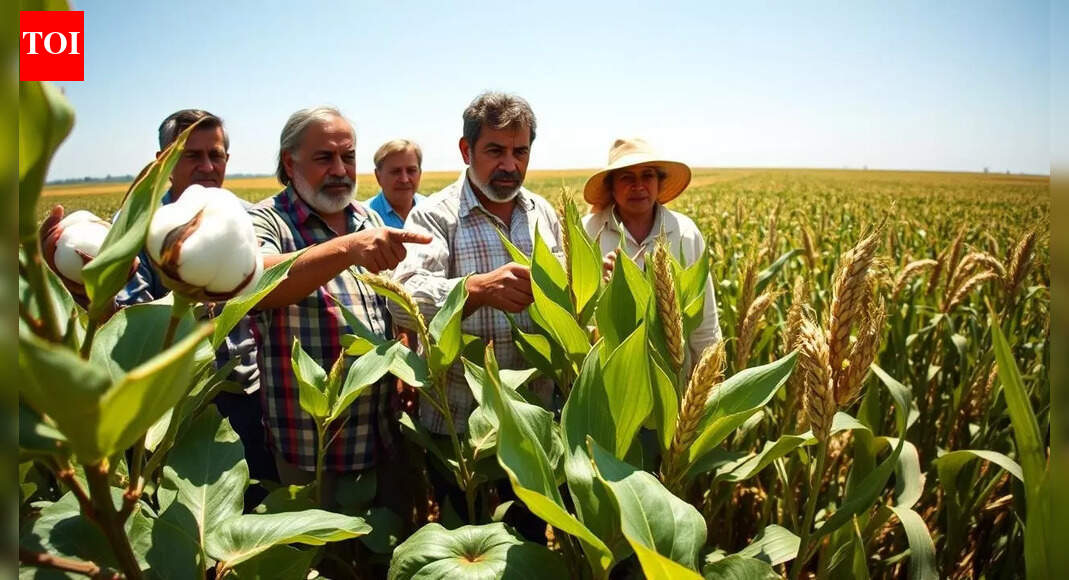
NEW DELHI: Union agriculture minister Shivraj Singh Chouhan on Sunday released 184 new varieties of 25 different crops to increase productivity, reduce input costs and address the challenges of climate change. The new varieties included 122 of cereal crops, 22 of Bt cotton, the only genetically modified crop whose commercial cultivation is allowed in India, and 13 of oilseeds, among others.The new Bt cotton varieties are updated transgenic versions that will not only increase yield but also guard crops against pests, insects and weeds, reducing the overall input cost for farmers.The 184 new varieties, developed by Indian Council of Agricultural Research institutions (60 varieties), state and central agriculture universities (62 varieties) and private seed companies (62 varieties), will reach farmers for commercial cultivation within three years.Among the 122 new varieties of cereal crops, 60 are of rice, 50 of maize, four of sorghum, five of pearl millet, and one each of ragi, small millet and proso millet. More than 50% (62) of the new cereal varieties belong to the coarse grains category, in sync with the govt’s plan to focus more on nutri-cereals and climate-resilient crops.Underlining India’s transformation from “a food-deficit country to a global food provider” over the years, Chouhan noted on the occasion that the country surpassed China in rice production and became the world’s largest producer. He said India’s rice production reached 150 million tonnes while China’s production was 145 million tonnes. “This has also strengthened India’s role as the world’s food supplier,” said the minister.The list of new varieties comprises six of pulses (1 pigeon pea, 2 green gram and 3 black gram); 13 of oilseeds (3 mustard, 4 safflower, 2 sesame and one each of til, groundnut, gobhi sarson and castor); 11 fodder crops (2 each of oats and fodder sorghum, 1 fodder maize and 6 fodder pearl millet); six of sugarcane; 24 of cotton including 22 Bt cotton; and one variety each of jute and tobacco.The release of new varieties of crops continued a “lab to land” approach of the govt so that farmers could get direct benefit of what the country’s farm scientists have been doing in a targeted manner.“Research is meaningful only when its benefits reach fields on time,” said Chouhan, directing officials to ensure that the newly released varieties should reach farmers within three years.The newly developed varieties are climate-friendly, high-yielding and resistant to major pests and diseases. They were developed to tackle challenges such as climate change, soil salinity, drought and other biotic and abiotic stresses, while also supporting natural and organic farming methods.Since the notification of seed varieties began in 1969, a total of 7,205 crop varieties have been notified in the country. Of these, 3,236 varieties were notified in the last 11-12 years alone, including 1,661 varieties in the last five years, showing increasing focus of scientists on developing climate-friendly, high-yielding, and pest and disease resistant varieties suitable for India’s diverse agro-climatic zones.


