
Activists protest against bail to Sengar outside Parliament NEW DELHI: Invoking Supreme Court’s verdict in L K Advani case in which it was ruled that anyone who holds public office, like MPs or MLAs, would be deemed a public servant, CBI has told Supreme Court that Delhi high court erred by declaring that Kuldeep Singh Sengar, an MLA when the offence was committed, was not a public servant to be prosecuted under Pocso and granted him bail, reports Amit Anand Choudhary. A vacation bench will take up CBI’s plea Dec 29.Seeking quashing of HC’s order, CBI said when lawmakers can be prosecuted under the Prevention of Corruption Act for being a public authority, then they should be deemed public servants to be prosecuted under Pocso. HC had ruled that Sengar’s case was not covered under Section 5(c), which talks about aggravated penetrative sexual assault. CBI: HC ignored MLA vested with public trust, authorityThe provision says the offence becomes severe when penetrative sexual assault is committed by specific individuals like police officers, armed forces, public servants, or staff of educational institutions/hospitals, leading to stricter penaltiesCBI said, “The HC failed to consider that a sitting MLA, by virtue of holding a constitutional office, is vested with public trust and authority over the electorate and that such position carries heightened responsibility arising from duties owed to the state and society… It has erred in law by failing to adopt a purposive interpretation that advances the object and intent of the Pocso Act…”It said HC “failed to correctly appreciate the judgment of this Hon’ble Court in the case of L K Advani v CBI wherein the accused MLA was held to be a public servant within the meaning of Section 2 (c) (viii) of Prevention of Corruption Act…”“It is submitted that the offences under Section 5(c) of the Pocso Act are of greater gravity than corruption offences by MP’s/MLA’s… The legislature has therefore provided for stringent mandatory penalties, protective procedural safeguards, and enhanced liability for persons in positions of trust or authority, reflecting the higher societal interest in protecting the vulnerable over abstract institutional harm,” the appeal said.“A comprehensive and meaningful reading of section 5(c) the Pocso Act leads to an irrefutable conclusion that it seeks to punish exploitation and sexual abuse of children from public servants, owing to use of their power, position or status be it political or otherwise,” it said.CBI said a life convict can be given the benefit of suspension of sentence only if, prima facie, the conviction appears unsustainable and there is a high chance of success in appeal. “Mere long incarceration or delay in hearing the appeal, by itself, does not automatically justify suspension in heinous offences; courts must balance individual liberty with societal interest and the gravity of the crime,” it said.End of ArticleFollow Us On Social MediaVideos’MGNREGA Bachao Abhiyan’: Congress Announces Nationwide Protest Against VB-G RAM G ActShimla Hospital Assault: Doctors’ Strike Cripples OPDs, Surgeries Across Himachal PradeshCongress Rift Out In Open? Digvijaya Singh’s Modi-RSS Praise Draws Jibes From BJP Amid CWC MeetMass Exodus Of Skilled Professionals In Pakistan: Report Exposes Asim Munir’s ‘Brain Gain’ ClaimBJP Alleges Anti-India Global Nexus As Congress Leader Rahul Gandhi’s Germany Visit Sparks Fresh RowIndia, Asia Are Rising As Global Epicentres While US, Europe Lose Grip On Power: Russian AmbassadorCWC Meet: Top Congress Leaders Huddle Up In Delhi, Discuss Action Against Govt On G RAM G LawOperation Aaghat 3.0 Crushes Crime As Delhi Police Arrest 660 Accused Ahead Of New Year CelebrationsBJP MP Anurag Thakur Links Ram Name Objection to Congress Decline, Defends New Rural Jobs LawNew Zealand PM Defends India FTA as Economic Game Changer Despite Sharp Objections from Ally123PhotostoriesSelf-care Sunday: When self-care means saying no (even to people you love)6 authentic Italian vegetarian pizzas you need to try at least onceExclusive – Priyanka Chahar Choudhary breaks silence on ‘going under the knife’ rumours, Naagin comparisons, and her Naagin 7 lookDementia symptoms: The Quiet Red Flags That Have Nothing to Do With Memory LossTop medical advice from doctors that went viral in 2025The Inner Strength You Discovered This Year Based On Your Birth DatePull&Bear to Bershka: We bet you didn’t know Zara has these sister brandsSaffron, dates, and almonds: The holy trinity to help boost your immunity in winterPsychology reveals: People raised in lower-middle-class families often develop these 5 habits and qualities the rich don’t5 life-threatening diseases linked to air pollution123Hot PicksUAE WeatherPAN-Aadhaar linkingAmrit MondalGold rate todayIncome Tax RefundIndian Railways fareBank Holidays DecemberTop TrendingFrank Lampard and Christine Lampard Net WorthJordan Spieth Net WorthRicky Tiedemann InjuryBode Miller Net WorthTravis KelceAnthony JoshuaPatrick MahomesRaghav ChadhaBryan Woo Net WorthNBA Playoff
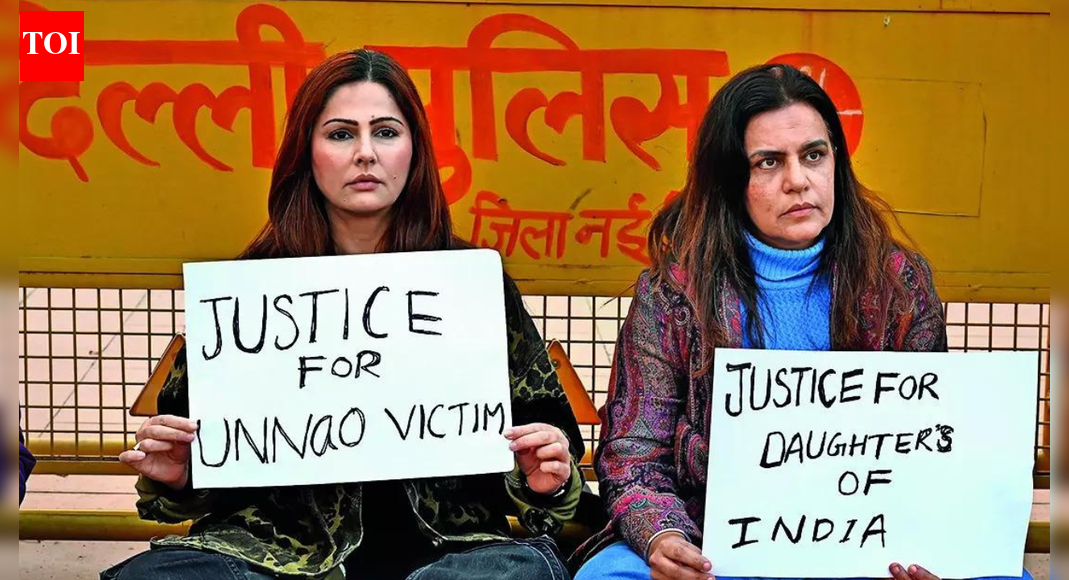
Activists protest against bail to Sengar outside Parliament
NEW DELHI: Invoking Supreme Court’s verdict in L K Advani case in which it was ruled that anyone who holds public office, like MPs or MLAs, would be deemed a public servant, CBI has told Supreme Court that Delhi high court erred by declaring that Kuldeep Singh Sengar, an MLA when the offence was committed, was not a public servant to be prosecuted under Pocso and granted him bail, reports Amit Anand Choudhary. A vacation bench will take up CBI’s plea Dec 29.Seeking quashing of HC’s order, CBI said when lawmakers can be prosecuted under the Prevention of Corruption Act for being a public authority, then they should be deemed public servants to be prosecuted under Pocso. HC had ruled that Sengar’s case was not covered under Section 5(c), which talks about aggravated penetrative sexual assault. CBI: HC ignored MLA vested with public trust, authorityThe provision says the offence becomes severe when penetrative sexual assault is committed by specific individuals like police officers, armed forces, public servants, or staff of educational institutions/hospitals, leading to stricter penaltiesCBI said, “The HC failed to consider that a sitting MLA, by virtue of holding a constitutional office, is vested with public trust and authority over the electorate and that such position carries heightened responsibility arising from duties owed to the state and society… It has erred in law by failing to adopt a purposive interpretation that advances the object and intent of the Pocso Act…”It said HC “failed to correctly appreciate the judgment of this Hon’ble Court in the case of L K Advani v CBI wherein the accused MLA was held to be a public servant within the meaning of Section 2 (c) (viii) of Prevention of Corruption Act…”“It is submitted that the offences under Section 5(c) of the Pocso Act are of greater gravity than corruption offences by MP’s/MLA’s… The legislature has therefore provided for stringent mandatory penalties, protective procedural safeguards, and enhanced liability for persons in positions of trust or authority, reflecting the higher societal interest in protecting the vulnerable over abstract institutional harm,” the appeal said.“A comprehensive and meaningful reading of section 5(c) the Pocso Act leads to an irrefutable conclusion that it seeks to punish exploitation and sexual abuse of children from public servants, owing to use of their power, position or status be it political or otherwise,” it said.CBI said a life convict can be given the benefit of suspension of sentence only if, prima facie, the conviction appears unsustainable and there is a high chance of success in appeal. “Mere long incarceration or delay in hearing the appeal, by itself, does not automatically justify suspension in heinous offences; courts must balance individual liberty with societal interest and the gravity of the crime,” it said.


