
Ashwagandha took center stage at the 2nd WHO Global Traditional Medicine Summit in Delhi, where international experts discussed its safe integration into modern healthcare. Discussions focused on its global use for stress, brain health, and immunity, emphasizing the need for rigorous research, standardized formulations, and strong safety monitoring to ensure its wider acceptance and credibility. NEW DELHI: Ashwagandha, a staple of Ayurveda and a familiar household remedy, moved into the global health spotlight at the 2nd WHO Global Traditional Medicine Summit, 2025, as international experts debated how traditional herbs can be safely integrated into modern healthcare.The summit was inaugurated on Wednesday at Bharat Mandapam by Union Minister of Health and Family Welfare J.P. Nadda, in the presence of Union Minister Prataprao Jadhav, marking the start of the three-day global scientific congregation being held from December 17 to 19. Prime Minister Shri Narendra Modi is expected to grace the closing ceremony on December 19.Against this backdrop, a high-level side event organised by the WHO Global Traditional Medicine Centre in collaboration with the Ministry of Ayush brought Ashwagandha into sharp focus. Scientists, regulators and policymakers from across the world examined its growing international use for stress management, brain health and immunity, and discussed how centuries-old traditional knowledge can be aligned with modern scientific evidence.Addressing the gathering, Jadhav said India is steadily expanding international cooperation in traditional medicine through education, research and capacity building. He noted that India offers 104 scholarships annually to foreign nationals, has signed 26 country-level memoranda of understanding, collaborates with more than 50 institutions globally, and has set up Ayush Chairs in 15 universities and Ayush Information Cells in 43 countries. He added that collaborative research — including Ashwagandha trials in the United Kingdom, Guduchi studies in Germany and Ayurveda-based diabetes research in Latvia — is generating a growing body of scientific evidence.Speakers stressed that wider global acceptance of Ashwagandha depends on rigorous clinical research, standardised formulations and strong safety monitoring. While traditional use provides a strong foundation, experts cautioned that herbal products must meet the same quality and safety benchmarks as conventional medicines as their reach expands beyond India.International regulators shared how markets in Europe and the United States are evaluating Ashwagandha, underlining the need for clear dosage guidance and reliable quality testing to prevent misuse and misinformation.Participants agreed that sustained global collaboration is essential to ensure Ashwagandha’s benefits reach people safely without diluting the credibility of Ayurveda. The discussion reflected a broader shift in global health thinking — recognising traditional medicine as a credible, evidence-based partner in public healthcare rather than an informal alternative.About the AuthorAnuja JaiswalAnuja Jaiswal is a Senior Assistant Editor at The Times of India, with an impressive 18-year career in narrative journalism. She specializes in health and heritage reporting, expertly simplifying complex health information to make it engaging and understandable for readers. Her deep dives into heritage topics are well-researched, resulting in captivating narratives that resonate with her audience. Over the years, she has worked in Chandigarh, Chhattisgarh and West UP, gaining diverse on-ground experience that shapes her storytelling.Read MoreEnd of ArticleFollow Us On Social MediaVideos“SHANTI Is A Cruel irony”: Tharoor Tears Into Modi Govt Over Nuclear Bill’Vande Mataram’ Chants Echo As Indian Diaspora Welcomes PM Modi In Oman’India-Oman FTA To Open Major Opportunities Across Key Sectors’: Commerce Minister Piyush GoyalBangladesh Leader’s Seven Sisters Remark Triggers Diplomatic Row, India Summons Envoy Issues WarningBusiness Leaders See Major Growth Potential In India-Oman Ties As PM Modi Visits Muscat‘Might Never See Him Again’: Imran Khan’s Sons Claim ‘Psychological Torture’ In Pak’s Adiala JailDelhi Pollution: China Shares Playbook On How To Fix Air Quality Amid Politics Over AccountabilityExplained: The ₹30 Crore Film Deal That Led To Bollywood Director Vikram Bhatt And His Wife’s ArrestIndia Strengthens Maritime Dominance As Second MH-60R Squadron Joins Indian Navy At INS HansaViksit Bharat Shiksha Adhishthan Bill Explained: Education Reform Or A Quiet Erosion Of Federalism123PhotostoriesBaby names for girls born on Thursday7 kitchen spices to help manage PCOS naturallyShah Rukh Khan, Ranbir Kapoor, Alia Bhatt, Deepika Padukone: Bollywood’s A-listers who had no theatrical release in 20257 aesthetically pleasing plants perfect for hanging baskets in balcony gardenRulers of the lizard world: 5 lizards that dominate the wild5 trending bracelet designs for Indian bridesRecurring acidity: When simple gas becomes chronic GERD and damages your food pipe9 things to keep at home to clear energy and attract positivity in 2026Rob Reiner, Zubeen Garg, Matthew Perry: Mysterious celebrity deaths that sparked murder investigationsBollywood book adaptations from Devdas, Maqbool, Badlapur that shine on screen123Hot PicksBomb Threat AhmedabadPark Medi World sharesPunjab election result 2025Gold rate todaySilver rate todayPublic Holidays DecemberBank Holidays DecemberTop TrendingKyrie IrvingBrian SmithSarfaraz KhanThe UndertakerPatrick Mahomes InjuryTravis KelceChris PaulEthan McLeodStephen Curry NBA ContractNBA Cup Banner
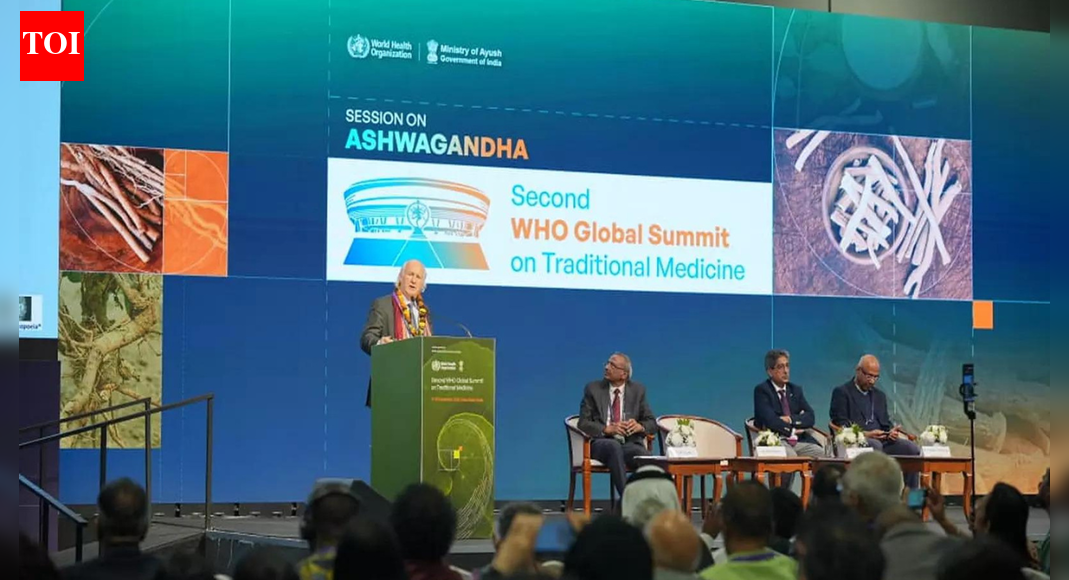
NEW DELHI: Ashwagandha, a staple of Ayurveda and a familiar household remedy, moved into the global health spotlight at the 2nd WHO Global Traditional Medicine Summit, 2025, as international experts debated how traditional herbs can be safely integrated into modern healthcare.The summit was inaugurated on Wednesday at Bharat Mandapam by Union Minister of Health and Family Welfare J.P. Nadda, in the presence of Union Minister Prataprao Jadhav, marking the start of the three-day global scientific congregation being held from December 17 to 19. Prime Minister Shri Narendra Modi is expected to grace the closing ceremony on December 19.Against this backdrop, a high-level side event organised by the WHO Global Traditional Medicine Centre in collaboration with the Ministry of Ayush brought Ashwagandha into sharp focus. Scientists, regulators and policymakers from across the world examined its growing international use for stress management, brain health and immunity, and discussed how centuries-old traditional knowledge can be aligned with modern scientific evidence.Addressing the gathering, Jadhav said India is steadily expanding international cooperation in traditional medicine through education, research and capacity building. He noted that India offers 104 scholarships annually to foreign nationals, has signed 26 country-level memoranda of understanding, collaborates with more than 50 institutions globally, and has set up Ayush Chairs in 15 universities and Ayush Information Cells in 43 countries. He added that collaborative research — including Ashwagandha trials in the United Kingdom, Guduchi studies in Germany and Ayurveda-based diabetes research in Latvia — is generating a growing body of scientific evidence.Speakers stressed that wider global acceptance of Ashwagandha depends on rigorous clinical research, standardised formulations and strong safety monitoring. While traditional use provides a strong foundation, experts cautioned that herbal products must meet the same quality and safety benchmarks as conventional medicines as their reach expands beyond India.International regulators shared how markets in Europe and the United States are evaluating Ashwagandha, underlining the need for clear dosage guidance and reliable quality testing to prevent misuse and misinformation.Participants agreed that sustained global collaboration is essential to ensure Ashwagandha’s benefits reach people safely without diluting the credibility of Ayurveda. The discussion reflected a broader shift in global health thinking — recognising traditional medicine as a credible, evidence-based partner in public healthcare rather than an informal alternative.


