
NEW DELHI: : Lok Sabha on Wednesday passed the nuclear energy bill that seeks to open the civil nuclear sector to private players, even as opposition members strongly opposed it in its present form over safety and liability concerns while seeking its further scrutiny. The govt, however, defended the proposed legislation, saying it retains “strong safety and liability safeguards”. The bill was passed by voice vote amid a walkout by most of the opposition members with Union minister Jitendra Singh during his reply assuring the House that the proposed legislation seeks to “modernise India’s nuclear framework in line with contemporary technological, economic and energy realities, while retaining and strengthening core safety, security and regulatory safeguards that have been in place since the Atomic Energy Act of 1962”. He emphasised that private participation is needed to meet India’s 2047 clean energy goals. From Vande Mataram To Shared Roots: Highlights Of PM Modi’s Historic Speech In Ethiopian Parliament Removal of the clause related to liability of suppliers of nuclear equipment was the main concern of most of the opposition members as they argued that the omission of such liability would prove to be harmful for India in case of a nuclear disaster.Singh, however, said the bill – Sustainable Harnessing and Advancement of Nuclear Energy for Transforming India (SHANTI) Bill – does not dilute compensation to victims and the operator liability has been rationalised through graded caps linked to reactor size to encourage newer technologies such as small modular reactors, while ensuring that full compensation is available to affected persons through a multi-layered mechanism.He maintained that supplier liability was removed after detailed consideration of global practices and advances in reactor safety, while negligence and penal provisions remain enforceable under the law.Referring to the opposition members’ concerns, the minister clarified that private entities will not have control over sensitive materials, and that spent fuel management will continue to be handled by the govt, as has been the practice for decades.Noting India’s efforts to move towards non-fossil fuel energy sources, Singh said the scaling up of nuclear energy is essential to meet rising demand from sectors such as data processing, healthcare and industry, alongside renewables. The bill, he said, enables responsible private and joint venture participation to bridge resource constraints, shorten gestation periods and support the national goal of 100 GW nuclear capacity by 2047, without compromising national security or public interest.Though most of the opposition members from the Congress and other parties walked out of the House when the minister moved the bill for passing, TMC MPs remained inside with party veteran Saugata Roy moving certain amendments, which were eventually negated by voice vote.During the discussion, Congress MP Shashi Tharoor described the bill as a “dangerous leap into privatised nuclear expansion” with inadequate safeguards. “We cannot allow the pursuit of capital to override the non-negotiable requirements of public safety, environmental protection and victim justice,” the MP from Kerala’s Thiruvananthapuram said.Another Congress MP Gaddam Vamsi Krishna accused the Centre of shirking accountability and endangering national security by handing over critical responsibilities to private players. He termed as ironic the name “SHANTI” for a bill that he said has “very dangerous” implications for national safety.“Who will be liable when an accident or incident happens in the nuclear space,” he asked, even as he questioned privatisation of the nuclear sector by underlining that countries like France, Russia, China and South Korea maintain state-owned nuclear sectors.About the AuthorVishwa MohanVishwa Mohan is Senior Editor at The Times of India. He writes on environment, climate change, agriculture, water resources and clean energy, tracking policy issues and climate diplomacy. He has been covering Parliament since 2003 to see how politics shaped up domestic policy and India’s position at global platform. Before switching over to explore sustainable development issues, Vishwa had covered internal security and investigative agencies for more than a decade.Read MoreEnd of ArticleFollow Us On Social MediaVideos’Vande Mataram’ Chants Echo As Indian Diaspora Welcomes PM Modi In Oman’India-Oman FTA To Open Major Opportunities Across Key Sectors’: Commerce Minister Piyush GoyalBangladesh Leader’s Seven Sisters Remark Triggers Diplomatic Row, India Summons Envoy Issues WarningBusiness Leaders See Major Growth Potential In India-Oman Ties As PM Modi Visits Muscat‘Might Never See Him Again’: Imran Khan’s Sons Claim ‘Psychological Torture’ In Pak’s Adiala JailDelhi Pollution: China Shares Playbook On How To Fix Air Quality Amid Politics Over AccountabilityExplained: The ₹30 Crore Film Deal That Led To Bollywood Director Vikram Bhatt And His Wife’s ArrestIndia Strengthens Maritime Dominance As Second MH-60R Squadron Joins Indian Navy At INS HansaViksit Bharat Shiksha Adhishthan Bill Explained: Education Reform Or A Quiet Erosion Of FederalismNational Herald Case: Kharge Alleges ED Misuse, BJP Strikes Back With ‘Most Corrupt Family’ Dig123PhotostoriesCatching the vibe of the ‘grey’ season: 5 animals that are grey in colourChristmas 2025: How to make moist Eggless Chocolate Cake in a pressure cooker5-minute brain workouts that work: Memory-boosting moves for all agesJohn Abraham birthday special: ‘Dhoom’, ‘Force’, ‘The Diplomat’, films with career-defining roles that made him Bollywood’s ultimate action star to watch on OTT platforms5 upcoming sneaker releases of 2026 that will be worth the hype7 US destinations with Christmas names you never knew existed5 foods to combine with amla during winter season and whyWhat is ‘food noise’ and how it may be impacting your appetite and behavior10 books that ruled google searches in 20257 skin symptoms that may signal uncontrolled diabetes123Hot PicksBomb Threat AhmedabadPark Medi World sharesPunjab election result 2025Gold rate todaySilver rate todayPublic Holidays DecemberBank Holidays DecemberTop TrendingLuka DoncicStephen CurryMegan Thee StallionStephen Curry and Ayesha Curry RumorsConnor McDavid Luxury Car CollectionGoverment Job VacanciesBukayo Saka and Tolami Benson Net WorthSSN College AdmissionsFortnite Winterfest Release DateRussell Wilson Wife
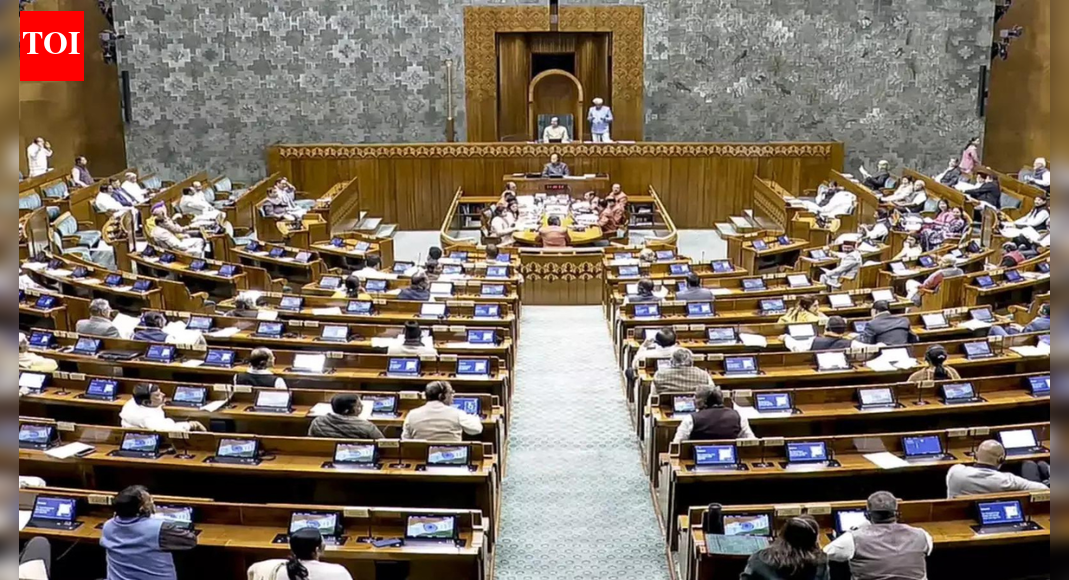
NEW DELHI: : Lok Sabha on Wednesday passed the nuclear energy bill that seeks to open the civil nuclear sector to private players, even as opposition members strongly opposed it in its present form over safety and liability concerns while seeking its further scrutiny. The govt, however, defended the proposed legislation, saying it retains “strong safety and liability safeguards”. The bill was passed by voice vote amid a walkout by most of the opposition members with Union minister Jitendra Singh during his reply assuring the House that the proposed legislation seeks to “modernise India’s nuclear framework in line with contemporary technological, economic and energy realities, while retaining and strengthening core safety, security and regulatory safeguards that have been in place since the Atomic Energy Act of 1962”. He emphasised that private participation is needed to meet India’s 2047 clean energy goals.
Removal of the clause related to liability of suppliers of nuclear equipment was the main concern of most of the opposition members as they argued that the omission of such liability would prove to be harmful for India in case of a nuclear disaster.Singh, however, said the bill – Sustainable Harnessing and Advancement of Nuclear Energy for Transforming India (SHANTI) Bill – does not dilute compensation to victims and the operator liability has been rationalised through graded caps linked to reactor size to encourage newer technologies such as small modular reactors, while ensuring that full compensation is available to affected persons through a multi-layered mechanism.He maintained that supplier liability was removed after detailed consideration of global practices and advances in reactor safety, while negligence and penal provisions remain enforceable under the law.Referring to the opposition members’ concerns, the minister clarified that private entities will not have control over sensitive materials, and that spent fuel management will continue to be handled by the govt, as has been the practice for decades.Noting India’s efforts to move towards non-fossil fuel energy sources, Singh said the scaling up of nuclear energy is essential to meet rising demand from sectors such as data processing, healthcare and industry, alongside renewables. The bill, he said, enables responsible private and joint venture participation to bridge resource constraints, shorten gestation periods and support the national goal of 100 GW nuclear capacity by 2047, without compromising national security or public interest.Though most of the opposition members from the Congress and other parties walked out of the House when the minister moved the bill for passing, TMC MPs remained inside with party veteran Saugata Roy moving certain amendments, which were eventually negated by voice vote.During the discussion, Congress MP Shashi Tharoor described the bill as a “dangerous leap into privatised nuclear expansion” with inadequate safeguards. “We cannot allow the pursuit of capital to override the non-negotiable requirements of public safety, environmental protection and victim justice,” the MP from Kerala’s Thiruvananthapuram said.Another Congress MP Gaddam Vamsi Krishna accused the Centre of shirking accountability and endangering national security by handing over critical responsibilities to private players. He termed as ironic the name “SHANTI” for a bill that he said has “very dangerous” implications for national safety.“Who will be liable when an accident or incident happens in the nuclear space,” he asked, even as he questioned privatisation of the nuclear sector by underlining that countries like France, Russia, China and South Korea maintain state-owned nuclear sectors.


