
. . New Delhi: Supreme Court on Wednesday agreed to examine Allahabad high court judge Justice Yashwant Varma’s plea challenging validity of Lok Sabha speaker’s decision to constitute a three-member committee for his impeachment initiated in the aftermath of the discovery of unaccounted cash currencies at his official residence. It issued notices to Lok Sabha and Rajya Sabha secretariats.The HC judge pointed out a procedural lapse on the part of the speaker to constitute a three-member committee against him. Appearing before a bench of Justices Dipankar Datta and A G Masih, former attorney general Mukul Rohatgi submitted that despite impeachment notices being moved both in the LS and RS, the speaker proceeded to constitute the committee on his own, without waiting for the Rajya Sabha chairman’s decision on admission of the motion or holding the mandatory joint consultation.IPL Auction 2026IPL Auction 2026: Full list of sold and unsold players for all teamsIPL 2026 team and squad List: Updated players for all 10 Teams; who got whomReferring to The Judges (Inquiry) Act, Rohatgi said the committee has to be constituted jointly by the speaker and the chairman when notices of an impeachment motion are given to both the Houses on the same day.As per the Act, “Where notices of a motion (for the removal of a Judge) referred to in sub-section (1) are given on the same day in both Houses of Parliament, no committee shall be constituted unless the motion has been admitted in both Houses and where such motion has been admitted in both Houses, the committee shall be constituted jointly by the speaker and the chairman”. It also said where notices of a motion are given in the Houses of Parliament on different dates, the notice which is given later shall stand rejected. The bench, after going through the provision, observed why this point was not raised by legal experts who are members of Parliament. “So many MPs and legal experts but no one pointed this out?” SC said. The judge in his petition filed through advocate Vaibhav Niti, said the speaker acted in clear derogation of the proviso to Section 3(2) of the Judges (Inquiry) Act, 1968, by unilaterally constituting a committee on Aug 12 after admitting a motion given before LS on July 21 as on the very same day a separate motion was given in RS which had not been admitted.”In brief, the above action and all consequential actions are impugned as being contrary to the peremptory prescription contained in the first proviso to Section 3(2) Judges (Inquiry) Act, 1968 because although notices of motion under Section 3(1) of the Judges (Inquiry) Act, 1968 were given in both Houses of Parliament on the same day, the speaker constituted the committee unilaterally without awaiting admission of the motion by the chairman and the joint consultation with the chairman as contemplated in that statute,” it said. MPs gave separate motions before LS and RS on July 27, seeking removal of the petitioner as a judge. Both motions met the statutory numerical requirement.Thereafter, on Aug 12 the speaker said he was admitting the motion given before him and constituting a three-member committee as envisaged under the Judges (Inquiry) Act, 1968 to conduct the statutory inquiry.End of ArticleFollow Us On Social MediaVideosPM Modi Holds Talks With Abiy Ahmed Ali, India-Ethiopia Ties Elevated To Strategic PartnershipLok Sabha Erupts Over MGNREGA: Priyanka Gandhi, Tharoor Slam VB‑G RAM G Bill, Shivraj Singh RespondsEx-Maharashtra CM Prithviraj Chavan’s ‘Op Sindoor’ Remark Sparks Row, BJP Hits BackFrom Jordan To Ethiopia: How PM Modi’s Viral Car Diplomacy Is Redefining Diplomatic OpticsBondi Beach Shooting: Terrorists’ Origin Mystery Deepens As Indian Passport, Hyderabad Link EmergesIn Israel, Jaishankar Condoles Sydney Attack Targeting Jews, Sends Zero Tolerance on Terror MessagePM Modi Lands In Addis Ababa, Indian Diaspora In Ethiopia Awaits To Meet PMFrom Kolkata Chaos to Delhi Celebration: Lionel Messi’s G.O.A.T India Tour At A GlancePM Modi Pitches New Economic Corridor As King Abdullah Praises India’s Growth At Jordan Forum MeetPriyanka Gandhi Targets VB-G RAM G Bill Over MGNREGA, Blasts Centre’s Name Change Tactics123PhotostoriesBaghban, Hum Saath Saath Hain, Kabhi Alvida Naa Kehna where family and love demand courage and sacrifice4 common fruits and their parts to avoid and why9 fruits and vegetables that are the best sources of ironFrom frilled lizards to Mandrills: 5 cool animals that stand out from the othersHow to make Beetroot Pulao for weekday dinner during winterIs Your Ruling Planet Upset With You? Watch These Warning SignsShakira makes a case for sustainable fashion as she re-wears Gaurav Gupta couture for a milestone performanceFrom a walk-in wardrobe to a bathtub: Debinna Bonnerjee and Gurmeet Choudhary give a glimpse into their aesthetically done white havenTop 10 fastest wealth creators: Which stocks have grown your money the most in the last 5 years? Check List10 world leaders and their favourite foods123Hot Picksilia TopuriaCorona RemediesJetBlue flight VenezuelaGold rate todaySilver rate todayPublic Holidays NovemberBank Holidays NovemberTop TrendingRams Fan FallGabrielle UnionVanessa BryantNicholas HumTyreek HillCBSE Class 10 Biology Exam Preparation 2026Bukayo Saka and Tolami Benson Net WorthConnor McDavidZac TaylorTyler Glasnow
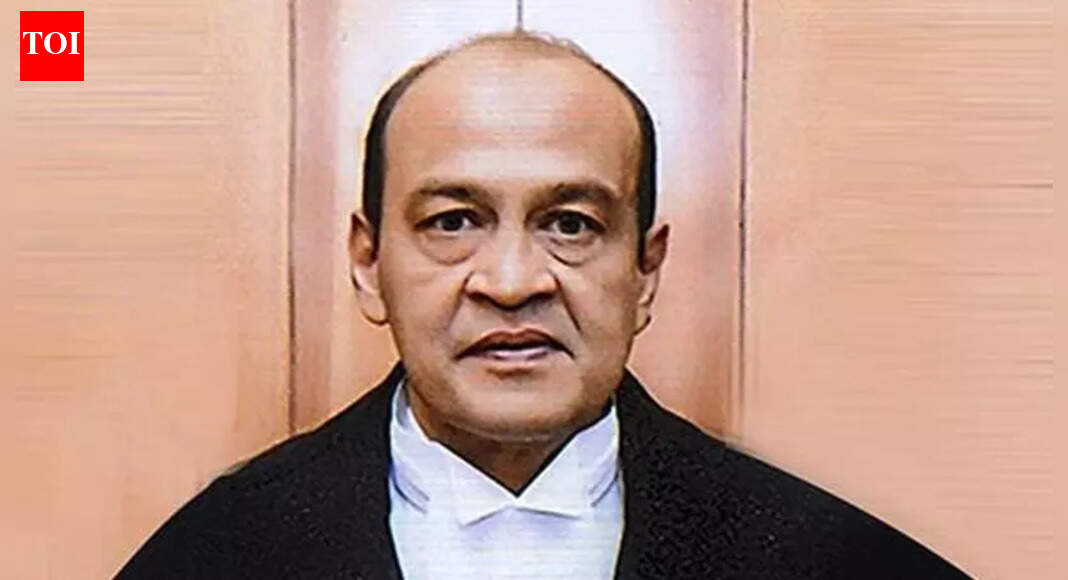
New Delhi: Supreme Court on Wednesday agreed to examine Allahabad high court judge Justice Yashwant Varma’s plea challenging validity of Lok Sabha speaker’s decision to constitute a three-member committee for his impeachment initiated in the aftermath of the discovery of unaccounted cash currencies at his official residence. It issued notices to Lok Sabha and Rajya Sabha secretariats.The HC judge pointed out a procedural lapse on the part of the speaker to constitute a three-member committee against him. Appearing before a bench of Justices Dipankar Datta and A G Masih, former attorney general Mukul Rohatgi submitted that despite impeachment notices being moved both in the LS and RS, the speaker proceeded to constitute the committee on his own, without waiting for the Rajya Sabha chairman’s decision on admission of the motion or holding the mandatory joint consultation.Referring to The Judges (Inquiry) Act, Rohatgi said the committee has to be constituted jointly by the speaker and the chairman when notices of an impeachment motion are given to both the Houses on the same day.As per the Act, “Where notices of a motion (for the removal of a Judge) referred to in sub-section (1) are given on the same day in both Houses of Parliament, no committee shall be constituted unless the motion has been admitted in both Houses and where such motion has been admitted in both Houses, the committee shall be constituted jointly by the speaker and the chairman”. It also said where notices of a motion are given in the Houses of Parliament on different dates, the notice which is given later shall stand rejected. The bench, after going through the provision, observed why this point was not raised by legal experts who are members of Parliament. “So many MPs and legal experts but no one pointed this out?” SC said. The judge in his petition filed through advocate Vaibhav Niti, said the speaker acted in clear derogation of the proviso to Section 3(2) of the Judges (Inquiry) Act, 1968, by unilaterally constituting a committee on Aug 12 after admitting a motion given before LS on July 21 as on the very same day a separate motion was given in RS which had not been admitted.“In brief, the above action and all consequential actions are impugned as being contrary to the peremptory prescription contained in the first proviso to Section 3(2) Judges (Inquiry) Act, 1968 because although notices of motion under Section 3(1) of the Judges (Inquiry) Act, 1968 were given in both Houses of Parliament on the same day, the speaker constituted the committee unilaterally without awaiting admission of the motion by the chairman and the joint consultation with the chairman as contemplated in that statute,” it said. MPs gave separate motions before LS and RS on July 27, seeking removal of the petitioner as a judge. Both motions met the statutory numerical requirement.Thereafter, on Aug 12 the speaker said he was admitting the motion given before him and constituting a three-member committee as envisaged under the Judges (Inquiry) Act, 1968 to conduct the statutory inquiry.


