
Delhi-NCR faces emergency curbs as air quality plummets to ‘Severe+’ levels, triggering Stage IV of the Graded Response Action Plan. Authorities have enforced strict restrictions across the region due to pollution crossing critical thresholds. This comes after the city’s Air Quality Index surged overnight, leading to dense smog and reduced visibility, impacting public health. NEW DELHI: With air quality worsening sharply across the Delhi-NCR, authorities on Saturday invoked the strictest restrictions under Stage IV of the Graded Response Action Plan, triggering emergency curbs across the region. This comes hours after implementation of GRAP stage III measured in the national capital region. The Commission for Air Quality Management said its GRAP sub-committee had decided to enforce all measures under Stage IV or ‘Severe+’ air quality with immediate effect after pollution levels crossed critical thresholds. In an official statement, the panel said, “Keeping in view the prevailing trend of air quality and in an effort to prevent further deterioration of air quality in the region, the CAQM Sub-Committee on GRAP decides to invoke all actions as envisaged under Stage-IV of the extant GRAP ‘Severe+’ Air Quality (DELHI AQI > 450), with immediate effect, in the entire NCR.” It added that these steps would be in addition to restrictions already in force under Stages I, II and III.In an official order, the government directed that all administrative secretaries and heads of departments shall attend office regularly, with no more than 50 per cent staff strength physically present.”The remaining 50 per cent staff shall work from home, provided that the Administrative Secretaries and Heads of Departments can call officers/officials to the office, as required to ensure uninterrupted delivery of essential and emergency public services,” the order read.Likewise, the order stipulated that all private offices operating within Delhi shall function with no more than 50 per cent staff physically attending the workplace.”The remaining staff shall mandatorily work from home,” it added. The order also urged all private entities to implement staggered working hours where feasible. Furthermore, private offices have been instructed to ensure strict compliance with work-from-home norms and minimise vehicular movement related to office commutes.”Hospitals and other public/private health establishments, Fire Services, Prisons, Public Transport, Electricity, Water, Sanitation and related municipal services, disaster management and related services, forest and environment departments/agencies engaged in air pollution control, monitoring, and enforcement activities (like teams deployed to curb biomass burning, dust control, GRAP measures, etc.), and other essential/emergency services shall be exempted from these directions,” the order said. Rahul Gandhi Demands Unified National Response As Parliament Debates India’s Air Pollution Crisis The decision came hours after Delhi slipped back into the ‘severe’ category, prompting the reimposition of Stage III curbs earlier in the day. According to official data, the city’s Air Quality Index, which stood at 349 on Friday evening, surged overnight and was recorded at 401 by Saturday morning due to slow wind speeds, a stable atmosphere and unfavourable meteorological conditions that hampered the dispersion of pollutants.According to news agency ANI, As of 7.00 PM, AQI readings were 488 in Anand Vihar, 434 in Ashok Vihar, 496 in Bawana, 457 in Burari, 479 in Chandini Chowk, 394 in IGI Airport, and 445 in Okhla Phase-2.Also read: Delhi AQI turns ‘severe’: GRAP Stage III reimposed across NCR; what’s allowed & what’s notA dense layer of smog enveloped the capital on Saturday morning, reducing visibility and intensifying health concerns. Wazirpur recorded the worst air quality with an AQI of 445, followed by Vivek Vihar at 444, Jahangirpuri at 442 and Anand Vihar at 439. Several other areas, including Rohini, Ashok Vihar, Narela, Mundka and Bawana, also remained in the ‘severe’ range.Poor air quality conditions extended beyond Delhi, with parts of Uttar Pradesh also reporting dense smog. Noida sectors recorded AQI levels of 448, while visibility dropped in cities such as Bulandshahr, Ayodhya and Mainpuri amid fog and haze.Under CPCB norms, an AQI between 401 and 500 is classified as ‘severe’ and poses serious health risks, particularly for children, the elderly and those with respiratory ailments. Authorities have directed enforcement agencies to intensify checks and ensure strict compliance with GRAP measures to prevent further deterioration in air quality.What is NOT allowed under GRAP 4Construction and industrial activity All construction and demolition activities, including earthwork, excavation, piling and structural work Operation of stone crushers, brick kilns, hot mix plants and mining activities Industries using coal, furnace oil or other unapproved fuels Vehicles and transport Entry of all diesel-powered medium and heavy goods vehicles into Delhi, except those carrying essential goods Operation of BS-III petrol and BS-IV diesel four-wheelers Non-essential inter-state diesel buses that are not BS-VI, electric or CNG Other restrictions Use of diesel generator sets, except for emergency and essential services Open burning of any kind, including waste and biomass Any activity that may increase dust or emissionsWhat is allowed under GRAP 4 Essential services and infrastructure Construction related to essential services such as metro, railways, airports, highways, defence, healthcare and sanitation Emergency repair and maintenance works with strict dust control measures Transport and mobility Electric vehicles, CNG vehicles and BS-VI compliant vehicles Public transport services, including buses and metro Vehicles used by persons with disabilities Education and offices Schools may shift to online or hybrid classes, especially for younger students Offices may reduce staff strength and encourage work from home Utilities and emergency operations Power generation units supplying electricity Use of diesel generators for hospitals, data centres, telecom services and emergency situationsAbout the AuthorTOI News DeskThe TOI News Desk comprises a dedicated and tireless team of journalists who operate around the clock to deliver the most current and comprehensive news and updates to the readers of The Times of India worldwide. With an unwavering commitment to excellence in journalism, our team is at the forefront of gathering, verifying, and presenting breaking news, in-depth analysis, and insightful reports on a wide range of topics. The TOI News Desk is your trusted source for staying informed and connected to the ever-evolving global landscape, ensuring that our readers are equipped with the latest developments that matter most.”Read MoreEnd of ArticleFollow Us On Social MediaVideosCongress Questions BJP’s Renaming Of MGNREGA, Hits Out At Gandhi HatredMessi Event Chaos In Kolkata Triggers BJP Attack On Mamata Over Law Order And MismanagementMessi Event Chaos In Kolkata: Bengal Police Detain Organiser, Refunds Announced‘Namaste Trump’ Era Is Over As India–US Relations Turn Fragile Over Tariffs, Says Jairam RameshHouse Democrats Push To Scrap Donald Trump’s India Tariffs As Congress Challenges Emergency PowersMessi’s Kolkata Visit Turns Chaotic As Angry Fans Vandalise Banners At Salt Lake Stadium’PM Not Always Wrong’: Ex-Congress Leader Ashwani Kumar, Calls Party Revival A National ObligationAction Over Rhetoric: CDS Anil Chauhan Sends A Calm But Clear Signal To Pakistan Amid Op SindoorWhen Optics Fail: Top Five Global Moments That Turned Pakistan PM Shehbaz Sharif Into A Meme’No Free Lift For India’: PM Modi’s Chief Economic Adviser Says China Won’t Repeat West’s Mistake123PhotostoriesKohinoor and 5 other legendary diamonds every diamond lover should know aboutLow on Energy? Read This According To Your Birth Date5 everyday habits that unknowingly attract rhodents, insects, lizards into your homeThis actress went from TV star to OTT sensation, has a history with Karan Kundrra, and is now linked to a popular cricket commentatorVadodara-Mumbai Expressway Expansion: Rs 100 Crore Construction of 14km Morbe-Kalamboli Road Begins to Ease Traffic and Freight5 reasons why ‘Made-in-India’ sneakers are having a momentWhat your dad secretly taught you about lifeYour hidden spiritual gift revealed… based on your date of birthLonger locals, more relief: Western Railway begins work to extend 15-car locals up to Bandra7 Brilliant leftover rice recipes that are a must try123Hot PicksMukesh Ambani vs Gautam AdaniDonald TrumpAnurag ThakurGold rate todaySilver rate todayPublic Holidays NovemberBank Holidays NovemberTop TrendingSherrone MooreKell MooreH1B Fee HikeWho is Mia SoretyWho is Jeff ShiverNick FuentesDaniel JonesMeghan MarkleShehbaz SharifPaige Shiver Net Worth
NEW DELHI: With air quality worsening sharply across the Delhi-NCR, authorities on Saturday invoked the strictest restrictions under Stage IV of the Graded Response Action Plan, triggering emergency curbs across the region. This comes hours after implementation of GRAP stage III measured in the national capital region. The Commission for Air Quality Management said its GRAP sub-committee had decided to enforce all measures under Stage IV or ‘Severe+’ air quality with immediate effect after pollution levels crossed critical thresholds. In an official statement, the panel said, “Keeping in view the prevailing trend of air quality and in an effort to prevent further deterioration of air quality in the region, the CAQM Sub-Committee on GRAP decides to invoke all actions as envisaged under Stage-IV of the extant GRAP ‘Severe+’ Air Quality (DELHI AQI > 450), with immediate effect, in the entire NCR.” It added that these steps would be in addition to restrictions already in force under Stages I, II and III.In an official order, the government directed that all administrative secretaries and heads of departments shall attend office regularly, with no more than 50 per cent staff strength physically present.“The remaining 50 per cent staff shall work from home, provided that the Administrative Secretaries and Heads of Departments can call officers/officials to the office, as required to ensure uninterrupted delivery of essential and emergency public services,” the order read.Likewise, the order stipulated that all private offices operating within Delhi shall function with no more than 50 per cent staff physically attending the workplace.“The remaining staff shall mandatorily work from home,” it added. The order also urged all private entities to implement staggered working hours where feasible. Furthermore, private offices have been instructed to ensure strict compliance with work-from-home norms and minimise vehicular movement related to office commutes.“Hospitals and other public/private health establishments, Fire Services, Prisons, Public Transport, Electricity, Water, Sanitation and related municipal services, disaster management and related services, forest and environment departments/agencies engaged in air pollution control, monitoring, and enforcement activities (like teams deployed to curb biomass burning, dust control, GRAP measures, etc.), and other essential/emergency services shall be exempted from these directions,” the order said.
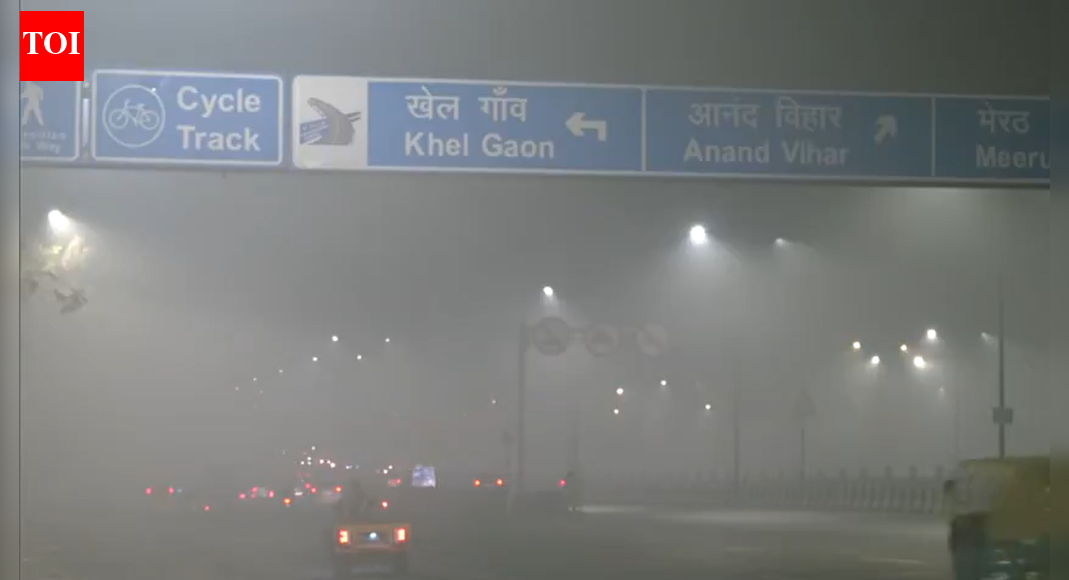
The decision came hours after Delhi slipped back into the ‘severe’ category, prompting the reimposition of Stage III curbs earlier in the day. According to official data, the city’s Air Quality Index, which stood at 349 on Friday evening, surged overnight and was recorded at 401 by Saturday morning due to slow wind speeds, a stable atmosphere and unfavourable meteorological conditions that hampered the dispersion of pollutants.According to news agency ANI, As of 7.00 PM, AQI readings were 488 in Anand Vihar, 434 in Ashok Vihar, 496 in Bawana, 457 in Burari, 479 in Chandini Chowk, 394 in IGI Airport, and 445 in Okhla Phase-2.Also read: Delhi AQI turns ‘severe’: GRAP Stage III reimposed across NCR; what’s allowed & what’s notA dense layer of smog enveloped the capital on Saturday morning, reducing visibility and intensifying health concerns. Wazirpur recorded the worst air quality with an AQI of 445, followed by Vivek Vihar at 444, Jahangirpuri at 442 and Anand Vihar at 439. Several other areas, including Rohini, Ashok Vihar, Narela, Mundka and Bawana, also remained in the ‘severe’ range.Poor air quality conditions extended beyond Delhi, with parts of Uttar Pradesh also reporting dense smog. Noida sectors recorded AQI levels of 448, while visibility dropped in cities such as Bulandshahr, Ayodhya and Mainpuri amid fog and haze.Under CPCB norms, an AQI between 401 and 500 is classified as ‘severe’ and poses serious health risks, particularly for children, the elderly and those with respiratory ailments. Authorities have directed enforcement agencies to intensify checks and ensure strict compliance with GRAP measures to prevent further deterioration in air quality.
What is NOT allowed under GRAP 4
Construction and industrial activity
- All construction and demolition activities, including earthwork, excavation, piling and structural work
- Operation of stone crushers, brick kilns, hot mix plants and mining activities
- Industries using coal, furnace oil or other unapproved fuels
Vehicles and transport
- Entry of all diesel-powered medium and heavy goods vehicles into Delhi, except those carrying essential goods
- Operation of BS-III petrol and BS-IV diesel four-wheelers
- Non-essential inter-state diesel buses that are not BS-VI, electric or CNG
Other restrictions
- Use of diesel generator sets, except for emergency and essential services
- Open burning of any kind, including waste and biomass
- Any activity that may increase dust or emissions
What is allowed under GRAP 4
Essential services and infrastructure
- Construction related to essential services such as metro, railways, airports, highways, defence, healthcare and sanitation
- Emergency repair and maintenance works with strict dust control measures
Transport and mobility
- Electric vehicles, CNG vehicles and BS-VI compliant vehicles
- Public transport services, including buses and metro
- Vehicles used by persons with disabilities
Education and offices
- Schools may shift to online or hybrid classes, especially for younger students
- Offices may reduce staff strength and encourage work from home
Utilities and emergency operations
- Power generation units supplying electricity
- Use of diesel generators for hospitals, data centres, telecom services and emergency situations


