
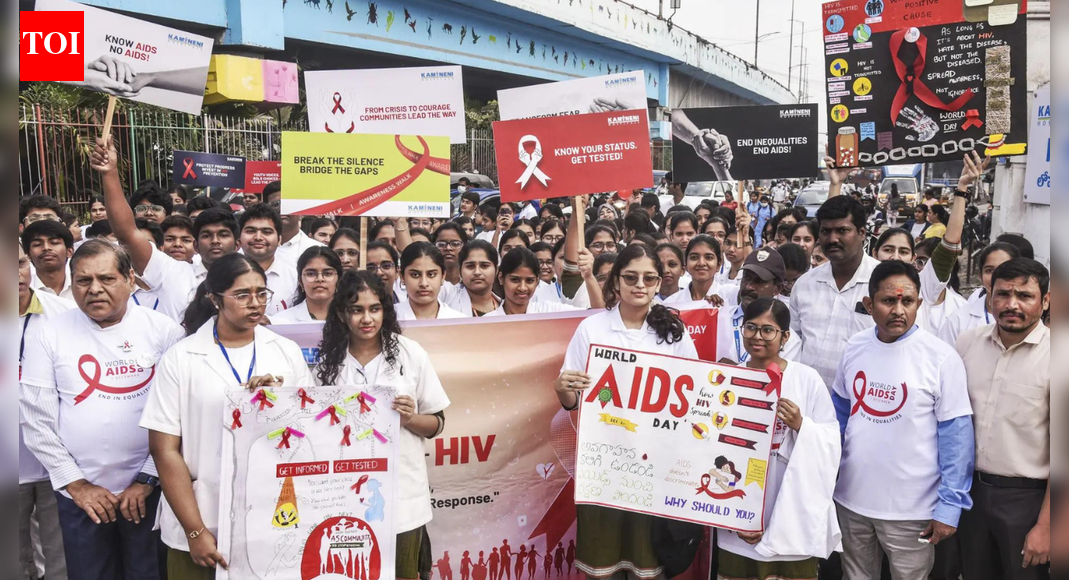
India’s HIV epidemic shows significant progress with declining deaths and new infections, outperforming global trends. However, alarming surges are reported in Northeast states like Mizoram and Nagaland, exceeding the national average. Drug use and changing sexual behaviors are linked to these regional spikes, demanding focused attention. Nursing students and doctors hold placards while participating in an awareness walk on ‘World AIDS Day’ NEW DELHI: India’s HIV epidemic continues to decline, with adult HIV prevalence steady at 0.2% and AIDS-related deaths dropping 81% since 2010 — one of the steepest reductions globally.New HIV infections have fallen by nearly 49%, placing India ahead of worldwide trends.But this national success hides a troubling shift. The latest HIV burden estimate shows sharp surges in the Northeast, with Mizoram and Nagaland now recording HIV prevalence of above 1% — more than five times the national average.Several other states — such as Meghalaya and Punjab — are also reporting spikes linked to drug use and changing sexual behaviour among young adults.The findings come from the India HIV Estimation 2025, released by Union health minister Jagat Prakash Nadda at the national World AIDS Day event at Vigyan Bhawan on Monday.Developed by NACO under the IESE framework, the report covers 34 States/UTs and 762 districts and was led by ICMR–NIRDHDS with support from nine national institutes and state AIDS control societies.Releasing the report, Nadda said India’s HIV programme continues to show strong gains, with testing rising from 4.1 crore to 6.6 crore, people on treatment increasing from 14.9 lakh to 18.6 lakh and viral load tests nearly doubling to 16 lakh.India has achieved a 35% drop in new HIV infections and a 69% decline in HIV-related deaths, outperforming global averages.He added that 85% of people with HIV know their status, 88% are on treatment and 97% have viral suppression — putting the country firmly on track to meet the 95-95-95 targets by 2030. Nadda, however, cautioned that HIV–TB co-infection and poor adherence to ART remain major hurdles that demand intensified counselling and community support.Nationally, India was estimated to have 25.6 lakh people living with HIV in 2024, including nearly 14 lakh men and 11 lakh women. HIV prevalence among youth (15–24 years) remains low at 0.06%.Maharashtra, Andhra Pradesh and Karnataka continue to carry the largest burdens and, together with six other states, account for 74% of all PLHIV in the country. The Northeast, however, presents the sharpest warning signs. Mizoram’s new infection rate (0.9 per 1,000 uninfected population) is nearly 18 times the national average.About the AuthorAnuja JaiswalAnuja Jaiswal is a Senior Assistant Editor at The Times of India, with an impressive 18-year career in narrative journalism. She specializes in health and heritage reporting, expertly simplifying complex health information to make it engaging and understandable for readers. Her deep dives into heritage topics are well-researched, resulting in captivating narratives that resonate with her audience. Over the years, she has worked in Chandigarh, Chhattisgarh and West UP, gaining diverse on-ground experience that shapes her storytelling.Read MoreEnd of ArticleFollow Us On Social MediaVideosWatch: MPs Speak Out as SIR Row Dominates Winter Session OpeningIndia’s Elections Earn Global Praise, CEC Calls It A ‘Moment Of Pride’ Amid Vote Row ClaimsHaryana Bodybuilder Killed After Standing Up To Harassers; Family Says Attack Was Planned MurderModi Trolls Opposition Over Bihar Setback Days Before Parliament ShowdownWoman Marries Boyfriend’s Corpse After Family Kills Him, Alleges Police Provoked BrotherMajor Twist In BrahMos Espionage Case As Higher Court Acquits Scientist Of Passing Defence SecretsRamaphosa Praises PM Modi’s Endorsement of South Africa Hosting G20 Summit, Counters Trump’s Claims‘Is There Any Law?’ Renuka Chaudhary Sparks Row After Bringing Stray Dog to ParliamentBSF IG Warns Of Looming Threat As 120 Terrorists Wait In PoK Despite Dip In Infiltration AttemptsPakistan Rages At UN After Criticism Of Munir’s Immunity Amendment Amid Fears Of Deeper Militarism123PhotostoriesDiabetes management: Doctor shares top 5 lifestyle strategies to lower HbA1c levelsFrom Sunda Pangolins to Sunda tiger: 5 of the most endangered animals in the world5 statement watches for women that will complete your traditional wedding lookKamal Haasan performances that redefined Indian cinema foreverIncrease protein intake: 4 easy ways to add more of it to everyday diet3 powerful anti-inflammatory drinks and how to make them at homeFrom Dead Sea Scrolls to Hope Diamond, 7 priceless objects in the world7 dinner dishes made with leftover roti offering over 20 gms protein5 animals that camouflage so perfectly that they almost become invisibleHow to make fiber-rich Gobhi ka Paratha for breakfast123Hot PicksParliament Winter SessionCyclone DitwahWorld NewsGold rate todaySilver rate todayPublic Holidays NovemberBank Holidays NovemberTop TrendingCardi BShedeur SandersDrake MayePat McAfeeCandace Owens Net WorthGisele BndchenConnor McDavidLian BichselJayden StrubleAnthony Davis

NEW DELHI: India’s HIV epidemic continues to decline, with adult HIV prevalence steady at 0.2% and AIDS-related deaths dropping 81% since 2010 — one of the steepest reductions globally.New HIV infections have fallen by nearly 49%, placing India ahead of worldwide trends.But this national success hides a troubling shift. The latest HIV burden estimate shows sharp surges in the Northeast, with Mizoram and Nagaland now recording HIV prevalence of above 1% — more than five times the national average.Several other states — such as Meghalaya and Punjab — are also reporting spikes linked to drug use and changing sexual behaviour among young adults.The findings come from the India HIV Estimation 2025, released by Union health minister Jagat Prakash Nadda at the national World AIDS Day event at Vigyan Bhawan on Monday.Developed by NACO under the IESE framework, the report covers 34 States/UTs and 762 districts and was led by ICMR–NIRDHDS with support from nine national institutes and state AIDS control societies.Releasing the report, Nadda said India’s HIV programme continues to show strong gains, with testing rising from 4.1 crore to 6.6 crore, people on treatment increasing from 14.9 lakh to 18.6 lakh and viral load tests nearly doubling to 16 lakh.India has achieved a 35% drop in new HIV infections and a 69% decline in HIV-related deaths, outperforming global averages.He added that 85% of people with HIV know their status, 88% are on treatment and 97% have viral suppression — putting the country firmly on track to meet the 95-95-95 targets by 2030. Nadda, however, cautioned that HIV–TB co-infection and poor adherence to ART remain major hurdles that demand intensified counselling and community support.Nationally, India was estimated to have 25.6 lakh people living with HIV in 2024, including nearly 14 lakh men and 11 lakh women. HIV prevalence among youth (15–24 years) remains low at 0.06%.Maharashtra, Andhra Pradesh and Karnataka continue to carry the largest burdens and, together with six other states, account for 74% of all PLHIV in the country. The Northeast, however, presents the sharpest warning signs. Mizoram’s new infection rate (0.9 per 1,000 uninfected population) is nearly 18 times the national average.


