
India faces a growing crisis as common infections become increasingly difficult to treat due to widespread antibiotic resistance. A recent ICMR report reveals that widely used drugs are failing against bacteria causing UTIs, pneumonia, sepsis, and diarrhoeal illnesses. This alarming trend, particularly in hospitals, necessitates urgent action to curb antibiotic misuse and strengthen infection control. NEW DELHI: Some of the most common infections – urinary tract, pneumonia, sepsis and diarrhoeal illnesses – are becoming increasingly harder to treat in India as widely used antibiotics continue to fail at alarming rates.ICMR’s annual report 2024 ‘Antimicrobial Resistance Research & Surveillance Network (AMRSN)’, showed that routine drugs like fluoroquinolones, third-generation cephalosporins, carbapenems and piperacillin-tazobactam are rapidly losing effectiveness against bacteria most frequently seen in hospitals.Based on nearly one lakh lab-confirmed infection samples from leading hospitals, the report showed drug-resistant Gram-negative bacteria continue to dominate. E coli, the most common cause of UTIs and abdominal and bloodstream infections, showed declining susceptibility to strong antibiotics. Klebsiella pneumoniae, a major cause of pneumonia and sepsis, is resistant to piperacillin-tazobactam in nearly three-fourths of the cases and to carbapenems in most samples, limiting treatment options.In ICUs, the situation is even more alarming. Acinetobacter baumannii shows 91% resistance to meropenem, forcing doctors to use more toxic or complicated drug combinations. Pseudomonas aeruginosa continues to show rising resistance. Overall, 72% of bloodstream infections were caused by drug-resistant Gram-negative bacteria, while ventilator-associated pneumonia was driven largely by acinetobacter, klebsiella and pseudomonas – organisms against which many commonly prescribed high-end antibiotics are ineffective.Though some isolated improvements were seen – including better sensitivity of E coli to amikacin and select cephalosporins – the broader resistance landscape continues to worsen. Diarrhoeal pathogens showed high resistance to fluoroquinolones and cephalosporins, and more than 95% of salmonella yyphi samples were resistant to fluoroquinolones. Among fungi, candida auris showed resistance in nearly 10% of isolates, while one-third of aspergillus samples were resistant to amphotericin B.ICMR said the data reflects hospital infections, not community patterns. But experts warn the message is unmistakable: India’s most widely used antibiotics are losing power, and critically ill patients are already facing the consequences. Without aggressive stewardship and rational prescribing, they caution, even common infections may soon become untreatable.Dr Rommel Tickoo, director, internal medicine, Max Hospital, Saket, said the findings mark a dangerous shift. “Strong antibiotics are failing against infections once treated easily. This signals an urgent public-health challenge that demands tighter control on antibiotic use and stronger infection-prevention measures.”Data shows how quickly options are shrinking. “Everyday bacteria are resisting medicines we once relied on. In ICUs, choices are narrowing even further. Rational antibiotic use is no longer optional – it’s essential to preserve what still works,” Dr Rakesh Gupta, senior consultant, internal medicine, Indraprastha Apollo Hospitals, said.About the AuthorAnuja JaiswalAnuja Jaiswal is a Senior Assistant Editor at The Times of India, with an impressive 18-year career in narrative journalism. She specializes in health and heritage reporting, expertly simplifying complex health information to make it engaging and understandable for readers. Her deep dives into heritage topics are well-researched, resulting in captivating narratives that resonate with her audience. Over the years, she has worked in Chandigarh, Chhattisgarh and West UP, gaining diverse on-ground experience that shapes her storytelling.Read MoreEnd of ArticleFollow Us On Social MediaVideosIndia Is a Key Ally, Cyprus Assures Strong Push to Finalise India–EU FTA TalksImran Khan Health Rumour: PTI Holds Sit In Outside Adiala Jail, KP CM Sohail Afridi Stages ProtestRam Madhav Challenges ‘No-Religion’ Narrative in White Collar Terror DebateAustralia Says India Is Now A Leading Global Power, Credits PM Modi For Transforming World DynamicsOusted PM Sheikh Hasina Faces Fresh Conviction as Court Awards 21-Year TermPM Modi Announces Major Move Allowing Private Players Into Nuclear Sector To Spur Advanced ReactorsExplained: Why Vikram-I Could Transform India’s Satellite Launch Market And Global Space Leadership‘Pak, Bangladesh, US…’: BJP Alleges Congress Using Foreign ‘X’ Accounts to Set India’s NarrativePakistan’s Adiala Jail Issues Statement On Imran Khan’s Health Amid Viral Death RumoursThe Indrajaal Ranger: India Unveils AI-Enabled Anti-Drone Patrol Vehicle In Hyderabad123PhotostoriesMalayalam cinema legends who made every frame shine with raw talentBollywood gems reviving forgotten tales with fresh heart and magic for a new generation of cinema lovers everywhereFun facts about the ‘Stranger Things’ castFrom ‘Apne’ to ‘Rocky Aur Rani Kii Prem Kahaani’: Dharmendra movies you can watch on OTT platforms‘Stranger Things 5’: Meet the new cast and find out who survives the final battle‘Stranger Things’ cast: Then and now‘Stranger Things’ cast: Educational qualificationsTaarak Mehta Ka Ooltah Chashmah: From Dilip Joshi being older than Amit Bhatt to Mandar Chandwadkar leaving his Dubai job for acting; Lesser-known facts about the castGastroenterologist doctor reveals the power of eating 3 eggs everyday5 must-visit national parks in the USA that are also UNESCO World Heritage Sites123Hot PicksDelhi AQI TodayNew Labour CodeWorld NewsGold rate todaySilver rate todayPublic Holidays NovemberBank Holidays NovemberTop TrendingToronto Maple LeafsAyesha CurryFuzzy ZoellerCristiano RonaldoStefon DiggsGabrielle UnionVanessa BryantReed Sheppard GirlfriendStephen CurryCandace Owens


NEW DELHI: Some of the most common infections – urinary tract, pneumonia, sepsis and diarrhoeal illnesses – are becoming increasingly harder to treat in India as widely used antibiotics continue to fail at alarming rates.ICMR’s annual report 2024 ‘Antimicrobial Resistance Research & Surveillance Network (AMRSN)’, showed that routine drugs like fluoroquinolones, third-generation cephalosporins, carbapenems and piperacillin-tazobactam are rapidly losing effectiveness against bacteria most frequently seen in hospitals.
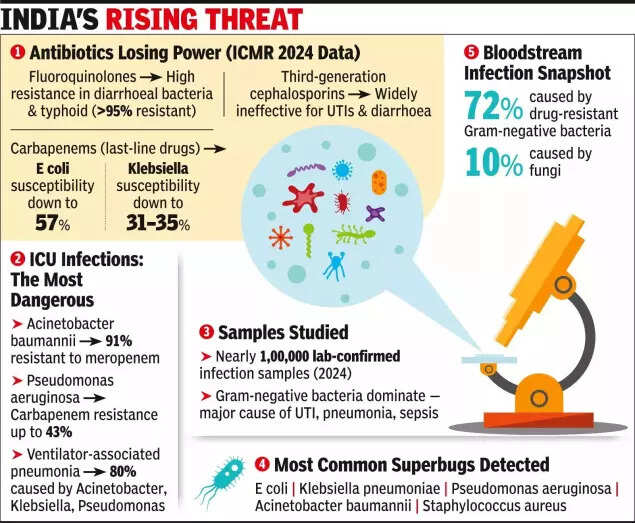
Based on nearly one lakh lab-confirmed infection samples from leading hospitals, the report showed drug-resistant Gram-negative bacteria continue to dominate. E coli, the most common cause of UTIs and abdominal and bloodstream infections, showed declining susceptibility to strong antibiotics. Klebsiella pneumoniae, a major cause of pneumonia and sepsis, is resistant to piperacillin-tazobactam in nearly three-fourths of the cases and to carbapenems in most samples, limiting treatment options.In ICUs, the situation is even more alarming. Acinetobacter baumannii shows 91% resistance to meropenem, forcing doctors to use more toxic or complicated drug combinations. Pseudomonas aeruginosa continues to show rising resistance. Overall, 72% of bloodstream infections were caused by drug-resistant Gram-negative bacteria, while ventilator-associated pneumonia was driven largely by acinetobacter, klebsiella and pseudomonas – organisms against which many commonly prescribed high-end antibiotics are ineffective.Though some isolated improvements were seen – including better sensitivity of E coli to amikacin and select cephalosporins – the broader resistance landscape continues to worsen. Diarrhoeal pathogens showed high resistance to fluoroquinolones and cephalosporins, and more than 95% of salmonella yyphi samples were resistant to fluoroquinolones. Among fungi, candida auris showed resistance in nearly 10% of isolates, while one-third of aspergillus samples were resistant to amphotericin B.ICMR said the data reflects hospital infections, not community patterns. But experts warn the message is unmistakable: India’s most widely used antibiotics are losing power, and critically ill patients are already facing the consequences. Without aggressive stewardship and rational prescribing, they caution, even common infections may soon become untreatable.Dr Rommel Tickoo, director, internal medicine, Max Hospital, Saket, said the findings mark a dangerous shift. “Strong antibiotics are failing against infections once treated easily. This signals an urgent public-health challenge that demands tighter control on antibiotic use and stronger infection-prevention measures.”Data shows how quickly options are shrinking. “Everyday bacteria are resisting medicines we once relied on. In ICUs, choices are narrowing even further. Rational antibiotic use is no longer optional – it’s essential to preserve what still works,” Dr Rakesh Gupta, senior consultant, internal medicine, Indraprastha Apollo Hospitals, said.


