
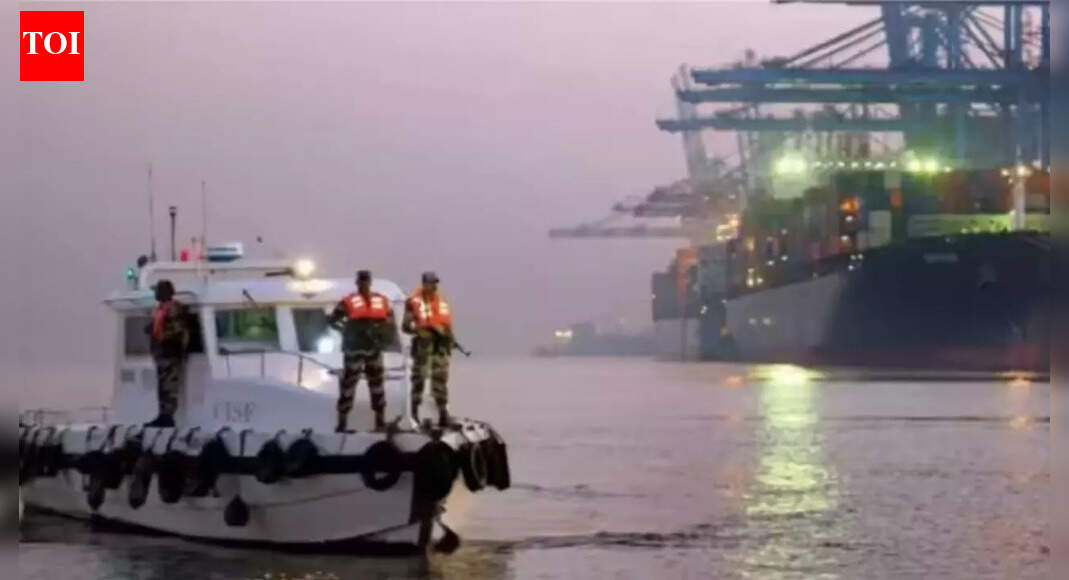
File photo: X/CISF NEW DELHI: The Central Industrial Security Force (CISF), which currently guards over 70 key airports and 13 seaports, has been mandated by the govt to act as the nodal or regulatory authority for all matters related to port security.The govt on Nov 18 designated CISF as the ‘recognised security organisation’ (RSO) for port security under the International Ship and Port Facility Security Code (ISPFSC). The mandate, which aligns with the govt’s vision of port-led growth as it focuses on a ‘blue economy’ as a key driver of economic expansion, followed the recommendation of a joint committee of CISF and DG, Shipping, constituted in Sept 2024 to study port security, conduct gap analysis and suggest remedial measures.As the RSO for ports, CISF said it will carry out a fresh assessment of security systems, prepare standardised security plans compliant with ISPFSC and carry out core security functions at all seaports engaged in export and import (EXIM) operations across the country.There are around 77 EXIM ports in the country, including 12 major and around 65 non-major ports. Also, there are around 200 minor ports where no cargo is handled as of now. However as and when these ports become EXIM ports, CISF will regulate their security as well. “For all things related to port security, the CISF will be the nodal or regulatory authority. We will work in three domains — providing consultancy for the establishment of security systems and gadgets, deploying hybrid security manpower and training all stakeholders in the sector,” said a senior CISF officer.“The initiative aims to resolve longstanding gaps arising from non-standardised security arrangements at non-major ports and ensure oversight by a domain expert security agency across all such facilities,” added CISF DIG(Int) Ajay Dahiya.A hybrid security model, improved screening systems and dedicated training institutions and courses for port-security personnel are also being introduced, officials said.The core security functions to be handled by CISF include access control, CCTV surveillance, perimeter security, seafront patrolling, quick reaction teams and the integrated operations centre. Non-core duties such as traffic management, container terminals and ancillary tasks may be handled by state police, state industrial security forces or private security agencies. However, these personnel too will be trained by a team of CISF experts to ensure professional and standardised port security services.CISF has prepared different training modules, focused on basic port security, specialised security and audit.Till now, seaport security was being dealt with by the Indian Register of Shipping (IRS) under the Directorate General of Shipping, and there was a requirement for a professional agency in this area, a CISF officer said.The officer disclosed that the idea to have a professional and sovereign RSO, had emerged from various top-level security meetings chaired by the prime minister and the home minister over the last few years, where the vulnerability and security gaps in the 254 big and small seaports of the country were underlined.About the AuthorBharti JainBharti Jain is senior editor with The Times of India, New Delhi. She has been writing on security matters since 1996. Having covered the Union home ministry, security agencies, Election Commission and the ‘prime’ political beat, the Congress, for The Economic Times all these years, she moved to TOI in August 2012. Her repertoire of news stories delves into the whole gamut of issues related to terrorism and internal strife, besides probing strategic affairs in India’s neighbourhood.Read MoreEnd of ArticleFollow Us On Social MediaVideosTejas Crash: IAF Pilot Killed In Dubai Crash Identified As Wing Commander Namansh SyalDefence Experts Break Down Possible Causes Behind Tejas Fighter Jet Crash In DubaiPM Modi Gets Rousing Welcome From Indian Diaspora In Johannesburg Ahead Of G20 Summit | South Africa’‘I Am A Hindu’: Shashi Tharoor Evokes Swami Vivekananda To Tell The World What Hinduism Stands ForAmit Shah Says BSF Crushed 118 Pak Posts, He Issues Tough Security Message From Sindoor Van In KutchEx-CIA Reveals Savage Reply To Imran Khan’s PTI After Apology Demand Over His India-Pak War Analysis’All 140 MLAs Are Mine’: DK Shivakumar Amid Karnataka CM Speculation; Siddaramaiah RespondsKabul Turns To India As New Trade Partner Amid Pak Blockades And Push For Fresh Regional CorridorsTejas Crashes In Dubai Air Show Display As Massive Fireball Sparks Panic, Pilot Succumbs To InjuriesDeadly 5.5 Earthquake Rocks Bangladesh, Killing At Least Six, Triggers Widespread Panic Across Dhaka123Photostories5 surprising vitamin D-rich foods Indians often overlookWhy do kids need Vitamin B12? Deficiency signs parents must be aware ofKidney disease emerges as the ninth leading cause of death globally: Early signs you should not ignoreShahid Kapoor and Mira Rajput’s parenting style: Love, roots and real-life lessonsIntroducing solids? Experts talk about the best first foods for growth, immunity & brain developmentHow to dress like MAGA women:Decoding Karoline Leavitt and Kristi Noem’s style secrets’Attack on Titan’s Mikasa scarf styling guide: Fan theories, merchandise, and trendy looksSai Pallavi wins hearts with her grace fierce resolve and unshakable defiance5 research-backed foods that may help lower your risk of colon cancerWhy Chunky Panday remains a cult favourite with timeless comic charm123Hot PicksDelhi AQI TodayBihar Minister List 2025Bihar CM Oath CeremonyGold rate todaySilver rate todayPublic Holidays NovemberBank Holidays NovemberTop TrendingPortland Trail Blazers vs Golden State WarriorsSavannah JamesMiami Heat vs Chicago BullsSophie CunninghamHow to get Vecna Skin in FortniteAdam FootePM ModiGavin BrindleySophie CunninghamMLB Trade Rumors
NEW DELHI: The Central Industrial Security Force (CISF), which currently guards over 70 key airports and 13 seaports, has been mandated by the govt to act as the nodal or regulatory authority for all matters related to port security.The govt on Nov 18 designated CISF as the ‘recognised security organisation’ (RSO) for port security under the International Ship and Port Facility Security Code (ISPFSC). The mandate, which aligns with the govt’s vision of port-led growth as it focuses on a ‘blue economy’ as a key driver of economic expansion, followed the recommendation of a joint committee of CISF and DG, Shipping, constituted in Sept 2024 to study port security, conduct gap analysis and suggest remedial measures.As the RSO for ports, CISF said it will carry out a fresh assessment of security systems, prepare standardised security plans compliant with ISPFSC and carry out core security functions at all seaports engaged in export and import (EXIM) operations across the country.There are around 77 EXIM ports in the country, including 12 major and around 65 non-major ports. Also, there are around 200 minor ports where no cargo is handled as of now. However as and when these ports become EXIM ports, CISF will regulate their security as well. “For all things related to port security, the CISF will be the nodal or regulatory authority. We will work in three domains — providing consultancy for the establishment of security systems and gadgets, deploying hybrid security manpower and training all stakeholders in the sector,” said a senior CISF officer.“The initiative aims to resolve longstanding gaps arising from non-standardised security arrangements at non-major ports and ensure oversight by a domain expert security agency across all such facilities,” added CISF DIG(Int) Ajay Dahiya.A hybrid security model, improved screening systems and dedicated training institutions and courses for port-security personnel are also being introduced, officials said.The core security functions to be handled by CISF include access control, CCTV surveillance, perimeter security, seafront patrolling, quick reaction teams and the integrated operations centre. Non-core duties such as traffic management, container terminals and ancillary tasks may be handled by state police, state industrial security forces or private security agencies. However, these personnel too will be trained by a team of CISF experts to ensure professional and standardised port security services.CISF has prepared different training modules, focused on basic port security, specialised security and audit.Till now, seaport security was being dealt with by the Indian Register of Shipping (IRS) under the Directorate General of Shipping, and there was a requirement for a professional agency in this area, a CISF officer said.The officer disclosed that the idea to have a professional and sovereign RSO, had emerged from various top-level security meetings chaired by the prime minister and the home minister over the last few years, where the vulnerability and security gaps in the 254 big and small seaports of the country were underlined.


