
4 Codes Replace 29 Laws; Rules Within 45 Days NEW DELHI: In one of the biggest reform initiatives, the Centre on Friday announced the implementation of the four labour codes, enacted five years ago, to replace 29 laws. The rollout, which will require notification of rules, comes within a week of a resounding electoral mandate in Bihar for the governing NDA after similar successes in Maharashtra, Haryana, and Delhi.The biggest workforce regulation recast in decades is aimed at increasing the employability of women and ensuring safety, ensuring that gig workers are eligible for social security benefits, salaries are paid on time, and minimum wage is guaranteed. At the same time, the laws provide more flexibility and certainty to businesses at a time when the economy is dealing with global headwinds. Investors have often cited India’s archaic labour laws as one of the stumbling blocks while deciding on setting up factories in India and have flocked to countries such as Vietnam and Bangladesh amid diversification of production bases.PM Modi called it the “most comprehensive and progressive labour-oriented reforms since Independence”.Officials said the rules for these four codes – on wages, industrial relations, social security and occupational safety and health – will be notified within 45 days for enforcement of the provisions.While the Centre had enacted the laws as part of the response to the Covid crisis, reluctance in opposition-led states had prompted it to go slow. But with more than two dozen states showing willingness to move ahead with amendments in laws, the Modi govt decided to press ahead after extensive consultations.All states, except West Bengal, have published draft rules on the provisions of the four codes, officials said.Codes cap share of allowances in overall package In any case, states that fail to notify the rules will have to follow those finalised by the Centre since labour is a subject under the concurrent list. The codes cap share of allowances in overall compensation paid to salaried employee to ensure companies don’t structure pays in a way that it results in lower social-security contribution by employers. For workers, there’s a national floor wage, and states can notify higher payment.ILO director-general Gilbert F Houngbo said, “Following with interest developments of India’s new labour codes announced today…” Under the new regime, fixed-term employees become eligible for gratuity after one year and social security coverage is expanded to all. All workers will get PF, ESIC, insurance, and other social security benefits. In addition, several sectors will now have mandatory annual health check-ups for their employees who are more than 40 years old.End of ArticleFollow Us On Social MediaVideosTejas Crash: IAF Pilot Killed In Dubai Crash Identified As Wing Commander Namansh SyalDefence Experts Break Down Possible Causes Behind Tejas Fighter Jet Crash In DubaiPM Modi Gets Rousing Welcome From Indian Diaspora In Johannesburg Ahead Of G20 Summit | South Africa’‘I Am A Hindu’: Shashi Tharoor Evokes Swami Vivekananda To Tell The World What Hinduism Stands ForAmit Shah Says BSF Crushed 118 Pak Posts, He Issues Tough Security Message From Sindoor Van In KutchEx-CIA Reveals Savage Reply To Imran Khan’s PTI After Apology Demand Over His India-Pak War Analysis’All 140 MLAs Are Mine’: DK Shivakumar Amid Karnataka CM Speculation; Siddaramaiah RespondsKabul Turns To India As New Trade Partner Amid Pak Blockades And Push For Fresh Regional CorridorsTejas Crashes In Dubai Air Show Display As Massive Fireball Sparks Panic, Pilot Succumbs To InjuriesDeadly 5.5 Earthquake Rocks Bangladesh, Killing At Least Six, Triggers Widespread Panic Across Dhaka123PhotostoriesWhy Chunky Panday remains a cult favourite with timeless comic charmCan the 10-3-2-1 rule improve your sleep? Here’s what science says‘120 Bahadur’ star Raashii Khanna’s promotional looksWhat causes high uric acid levels, early symptoms and how to bring it down naturally with science backed tipsTop Harvard doctor reveals the right time to eat these 7 nuts to gain maximum benefitsVegetarian Thanksgiving: 4 mains that taste better than the Turkey10 dhaba-style Paneer dishes to try at home this weekendRekha to Kriti Sanon: Trending celebrity style highlights of the dayFrom Shah Rukh Khan’s ‘Kabhi Khushi Kabhie Gham’ to Salman Khan’s ‘Maine Pyar Kiya’: A look at classic Bollywood films through the modern lensWhy Sadhguru recommends having Beetroot and Cardamom Soup during winter evenings123Hot PicksDelhi AQI TodayBihar Minister List 2025Bihar CM Oath CeremonyGold rate todaySilver rate todayPublic Holidays NovemberBank Holidays NovemberTop TrendingBest Rockstar Games to Play for GTA 6Savannah JamesWayne GretzkysTrevon DiggsDelhi School Suicide CaseKolkata EarthquakeCandace OwensGavin BrindleySophie CunninghamMLB Trade Rumors
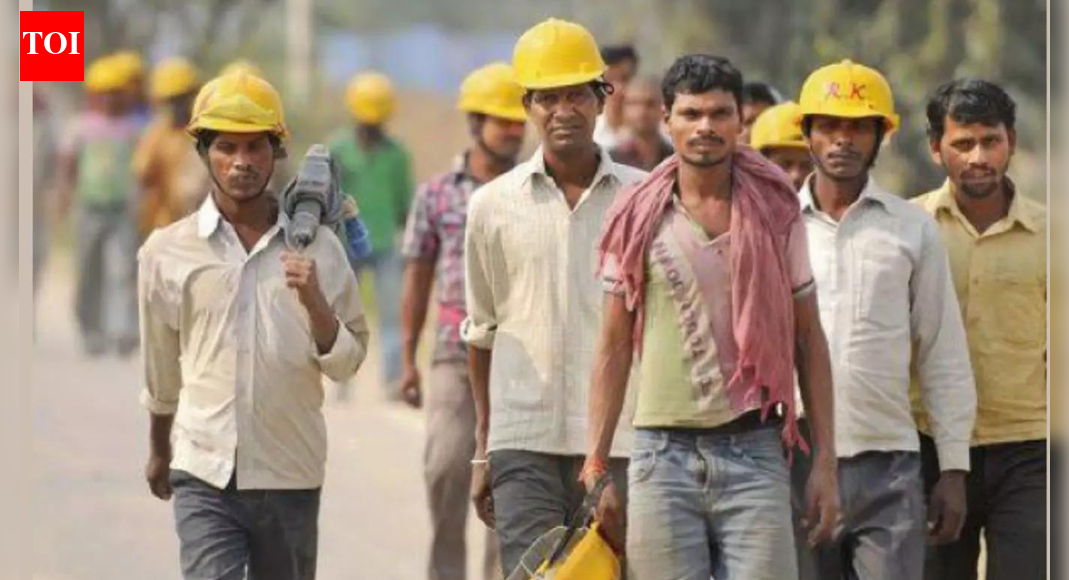
NEW DELHI: In one of the biggest reform initiatives, the Centre on Friday announced the implementation of the four labour codes, enacted five years ago, to replace 29 laws. The rollout, which will require notification of rules, comes within a week of a resounding electoral mandate in Bihar for the governing NDA after similar successes in Maharashtra, Haryana, and Delhi.The biggest workforce regulation recast in decades is aimed at increasing the employability of women and ensuring safety, ensuring that gig workers are eligible for social security benefits, salaries are paid on time, and minimum wage is guaranteed. At the same time, the laws provide more flexibility and certainty to businesses at a time when the economy is dealing with global headwinds. Investors have often cited India’s archaic labour laws as one of the stumbling blocks while deciding on setting up factories in India and have flocked to countries such as Vietnam and Bangladesh amid diversification of production bases.
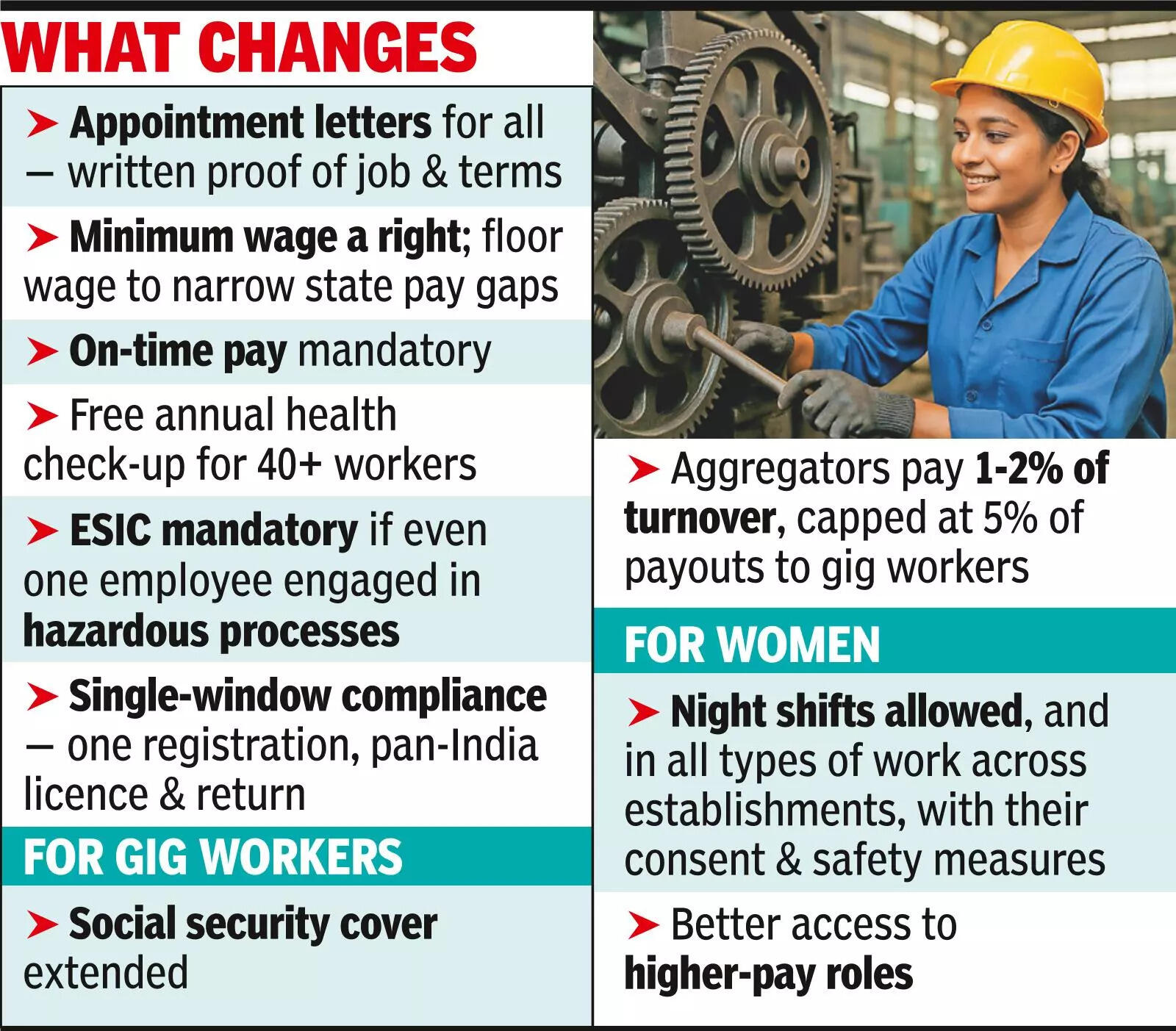
PM Modi called it the “most comprehensive and progressive labour-oriented reforms since Independence”.Officials said the rules for these four codes – on wages, industrial relations, social security and occupational safety and health – will be notified within 45 days for enforcement of the provisions.While the Centre had enacted the laws as part of the response to the Covid crisis, reluctance in opposition-led states had prompted it to go slow. But with more than two dozen states showing willingness to move ahead with amendments in laws, the Modi govt decided to press ahead after extensive consultations.All states, except West Bengal, have published draft rules on the provisions of the four codes, officials said.Codes cap share of allowances in overall package In any case, states that fail to notify the rules will have to follow those finalised by the Centre since labour is a subject under the concurrent list. The codes cap share of allowances in overall compensation paid to salaried employee to ensure companies don’t structure pays in a way that it results in lower social-security contribution by employers. For workers, there’s a national floor wage, and states can notify higher payment.ILO director-general Gilbert F Houngbo said, “Following with interest developments of India’s new labour codes announced today…” Under the new regime, fixed-term employees become eligible for gratuity after one year and social security coverage is expanded to all. All workers will get PF, ESIC, insurance, and other social security benefits. In addition, several sectors will now have mandatory annual health check-ups for their employees who are more than 40 years old.


