
The Bihar 2025 assembly elections delivered a historic defeat to the Mahagathbandhan (MGB) with latest trends showing that the alliance may secure just 36 seats. Despite high expectations and an alliance that sought to challenge the incumbent National Democratic Alliance (NDA), the MGB was unable to translate its efforts into electoral success. Multiple factors converged to undermine the alliance’s prospects, from strategic missteps in campaign timing and internal seat-sharing conflicts to over-reliance on anti-incumbency sentiments. Moreover, the lingering shadows of past governance issues and the weak performance of crucial allies further eroded the alliance’s standing. As Bihar voters gravitated toward the NDA’s broader caste and welfare coalition, the MGB failed to expand its appeal beyond its traditional base. Election Results 2025Bihar election results: Bihar votes for ‘sushasan’; NDA cruising towards clean sweepBihar election results: Top winners and losersWomen, welfare and the ‘phoenix’ CM: How Nitish-led NDA crushed MGB in Bihar electionsBiharAlliance ViewiParty ViewSeats: 243L + WMajority: 122NDA0MGB0OTH0Leads + Wins: 243/243NDA LEADINGExperience Bihar Election Results in 3D A new interactive way to explore constituenciesSource: PValueTejashwi came in late, offered nothing newTejashwi Yadav’s late and uninspired campaign entry critically handicapped the MGB. Moreover, his campaign promises — although ambitious — lacked specificity and actionable plans, causing scepticism. Even in his home constituency of Raghopur, Tejashwi trailed, reflecting disconnect and weak campaign energy. This late and reactive approach contrasted sharply with the NDA’s proactive and disciplined strategy, ultimately costing the MGB dearly in voter trust and turnout.Tejashwi’s late visible entry in the campaign was partly because the alliance partners took time to consolidate their seat-sharing arrangements and campaign strategies, which led to a perceived lack of unified front among the opposition parties. Some internal differences and delayed consensus on the campaign approach within the Mahagathbandhan contributed to this delay in fully projecting Tejashwi as the face of change in Bihar politics.Moreover, criticisms arose about unclear communication and the absence of a compelling new agenda from Tejashwi, which further diminished the early momentum expected from his candidature. Despite being the official CM candidate, the coalition’s internal coordination issues, including disagreements and a fractured campaign narrative, impacted the overall effectiveness of presenting Tejashwi as a dynamic alternative to the incumbent government.Not so ‘friendly fights’The internal seat-sharing formula among MGB allies was a crucial weakness. Unlike the NDA’s disciplined alliance, MGB’s seat-sharing was fraught with disagreements and resulted in multiple friendly fights where allies contested against one another. This inefficient coordination diluted votes, confused supporters, and fractured a united opposition front. Internal rivalries prevented efficient vote transfers, which are essential in a multiparty contest like Bihar’s. The lack of a coherent, strategic seat allocation undermined the alliance’s attempt to present itself as a strong alternative. Voters faced mixed messages, reducing the potential consolidation of anti-incumbent votes and allowing the NDA to exploit divisions with a narrative of unity and governance readiness.Banking on anti-incumbencyMGB’s electoral strategy focused heavily on anti-incumbency, assuming widespread voter dissatisfaction with Nitish Kumar. However, this bet ignored the JD(U) and NDA’s effective delivery of welfare schemes favored by key voter segments, especially women and youth. Voters gave credit to Nitish Kumar for governance, infrastructure development, and targeted social schemes, weakening the anti-incumbency wave. Exit polls and final results confirmed that the NDA neutralised MGB’s critique by convincingly projecting continuous development and stability. Consequently, MGB’s failure to offer a compelling positive alternative beyond criticising the incumbent government meant the anti-incumbency sentiment alone was insufficient to sway the electorate.Lalu’s ‘Jungle Raj’ shadowThe haunting shadow of Lalu Prasad Yadav’s ‘Jungle Raj’ legacy continued to drag the MGB down. The ‘Jungle Raj’ broadly refers to the period from 1990 to 2005 when Lalu’s regime was marked by widespread lawlessness, rampant crime, and systemic governance failures. During this time, Bihar witnessed a collapse in law and order with rises in kidnapping, extortion, caste-based violence, and the criminalisation of politics, all under the guise of empowering marginalised communities. The state’s economy stagnated, infrastructure deteriorated, and the infamous fodder scam further tainted Lalu’s legacy, painting a picture of rampant corruption and misuse of power.Despite Tejashwi’s efforts to uphold his father’s social justice agenda, emphasising inclusion and empowerment of backward classes, his campaign struggled to shake off the negative connotations attached to the ‘Jungle Raj’ label.Voters perceived an ambiguity in his messaging, unsure whether he represented a clear break from the chaotic past or a mere continuation of old patterns. This failure to convincingly distance himself from the legacy of lawlessness and corruption diluted the promise of renewal that the electorate, especially the younger and more aspirational voters, were seeking.The National Democratic Alliance (NDA) adeptly exploited this perception by relentlessly framing the MGB as a return to disorder and misgovernance. The NDA campaign underscored governance failures from Lalu’s tenure, evoking memories of insecurity and economic backwardness, which resonated deeply among upper caste voters and those who prioritise effective governance over identity politics.Concurrently, Tejashwi’s inability to manage internal factionalism within the RJD and cohesively control the allied parties weakened the MGB’s image of discipline and readiness to govern. This displayed disunity and further alienated voters who were increasingly looking for stable and disciplined leadership.VIP, Congress sink MGBThe poor performance of critical allies like the Vikassheel Insaan Party (VIP) and the Congress significantly contributed to MGB’s defeat. VIP candidates lost in all contested seats, failing to bring any meaningful vote share or organisational strength. Congress, with its limited presence and weak ground-level machinery in Bihar, could not mobilise voters or consolidate anti-NDA votes effectively. This weak alliance support created significant gaps in vote transfer and alliance vote consolidation, which the NDA exploited decisively. The MGB’s inability to integrate and energize its allies demonstrated alliance management shortcomings, resulting in vote leakage and an overall fragmented opposition front that failed to challenge the NDA’s cohesiveness.About the AuthorTOI News DeskThe TOI News Desk comprises a dedicated and tireless team of journalists who operate around the clock to deliver the most current and comprehensive news and updates to the readers of The Times of India worldwide. With an unwavering commitment to excellence in journalism, our team is at the forefront of gathering, verifying, and presenting breaking news, in-depth analysis, and insightful reports on a wide range of topics. The TOI News Desk is your trusted source for staying informed and connected to the ever-evolving global landscape, ensuring that our readers are equipped with the latest developments that matter most.”Read MoreEnd of ArticleFollow Us On Social MediaVideosBihar Assembly Poll Results: NDA Touches 200-Seat Lead, Congress Intensifies SIR, Vote Chori AttacksFirst-Time Woman Voter in Danapur Explains Why Nitish Kumar Scored Massive Landslide Win in BiharIndia Negotiating Multiple FTAs To Boost Free Flow Of Capital And Trade: Piyush Goyal‘Not Just Congress’: Tharoor Calls Out RJD Amid NDA’s Big Bihar Lead‘Pak Ready For Two-Front War’: Khawaja Asif’s Hollow Threat To India After Islamabad BlastCDS Anil Chauhan Issues Red Line To Defence Industry, Warns Against Delays And OverpromisingWashington Reports Encouraging Momentum As India-US Trade Talks Advance Toward A Year-End AgreementAsim Munir Steps In Amid Islamabad Terror Attack, Persuades Sri Lanka To Continue With Cricket Tour‘No Impunity For Terrorists’: Shashi Tharoor Endorses Govt Probe As Red Fort Blast Claims 13th LifeDelhi Blast: Security Forces Demolish House of Red Fort Bombing Accused Umar Nabi in Pulwama123PhotostoriesNew voices redefining the spirit of Bollywood cinemaWhich Plant You Should Bring Home As Per Your Date of BirthMetabolic doctor reveals top 10 foods to reduce triglycerides naturally7 most colourful frog species in the worldAfter Bihar poll debacle, what’s next for Tejashwi Yadav and a shaken RJD?Diabetes: Lesser-known symptoms women should be careful aboutJubilee Hills bypoll twist: Congress triumphs, Revanth Reddy emerges as Telangana’s tallest leaderFrom heart to gut: Health benefits of eating water chestnutsHyderabad eyes global spotlight: Govt may rope in Lionel Messi as ‘Telangana Rising’ ambassadorNitish Kumar’s stunning mandate in Bihar: How the veteran leader silenced doubters once again123Hot PicksAlinagar Election ResultRaghopur Election ResultBihar Election Result 2025Gold rate todaySilver rate todayPublic Holidays NovemberBank Holidays NovemberTop TrendingBihar Election CandidatesAlinagar Election ResultKargahar Election ResultPrashant KishorChirag PaswanAssembly Election BiharRaghopur Election ResultMahua Election ResultPune Bridge AccidentAnta Election Result
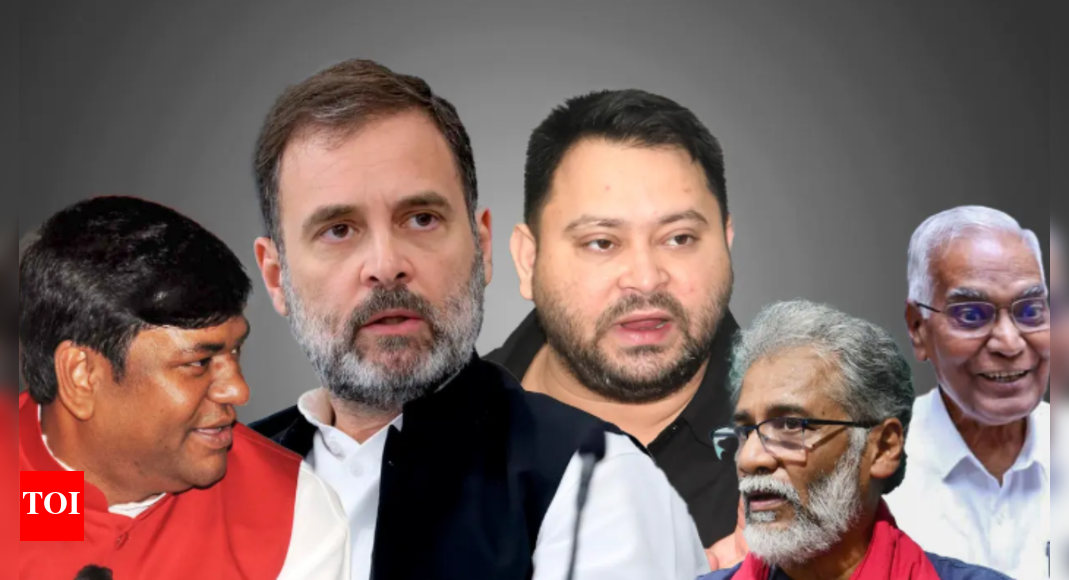
The Bihar 2025 assembly elections delivered a historic defeat to the Mahagathbandhan (MGB) with latest trends showing that the alliance may secure just 36 seats. Despite high expectations and an alliance that sought to challenge the incumbent National Democratic Alliance (NDA), the MGB was unable to translate its efforts into electoral success. Multiple factors converged to undermine the alliance’s prospects, from strategic missteps in campaign timing and internal seat-sharing conflicts to over-reliance on anti-incumbency sentiments. Moreover, the lingering shadows of past governance issues and the weak performance of crucial allies further eroded the alliance’s standing. As Bihar voters gravitated toward the NDA’s broader caste and welfare coalition, the MGB failed to expand its appeal beyond its traditional base.
Tejashwi came in late, offered nothing new
Tejashwi Yadav’s late and uninspired campaign entry critically handicapped the MGB. Moreover, his campaign promises — although ambitious — lacked specificity and actionable plans, causing scepticism. Even in his home constituency of Raghopur, Tejashwi trailed, reflecting disconnect and weak campaign energy. This late and reactive approach contrasted sharply with the NDA’s proactive and disciplined strategy, ultimately costing the MGB dearly in voter trust and turnout.Tejashwi’s late visible entry in the campaign was partly because the alliance partners took time to consolidate their seat-sharing arrangements and campaign strategies, which led to a perceived lack of unified front among the opposition parties. Some internal differences and delayed consensus on the campaign approach within the Mahagathbandhan contributed to this delay in fully projecting Tejashwi as the face of change in Bihar politics.Moreover, criticisms arose about unclear communication and the absence of a compelling new agenda from Tejashwi, which further diminished the early momentum expected from his candidature. Despite being the official CM candidate, the coalition’s internal coordination issues, including disagreements and a fractured campaign narrative, impacted the overall effectiveness of presenting Tejashwi as a dynamic alternative to the incumbent government.
Not so ‘friendly fights’
The internal seat-sharing formula among MGB allies was a crucial weakness. Unlike the NDA’s disciplined alliance, MGB’s seat-sharing was fraught with disagreements and resulted in multiple friendly fights where allies contested against one another.
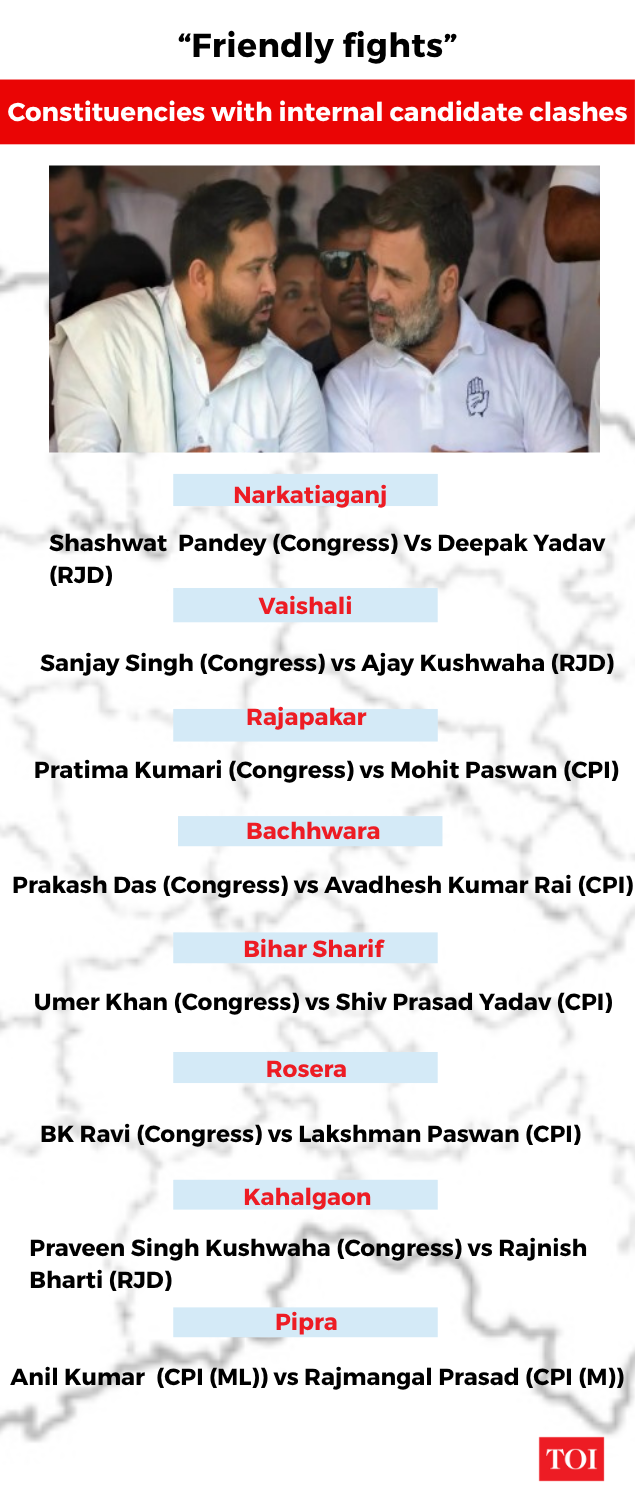
This inefficient coordination diluted votes, confused supporters, and fractured a united opposition front. Internal rivalries prevented efficient vote transfers, which are essential in a multiparty contest like Bihar’s. The lack of a coherent, strategic seat allocation undermined the alliance’s attempt to present itself as a strong alternative. Voters faced mixed messages, reducing the potential consolidation of anti-incumbent votes and allowing the NDA to exploit divisions with a narrative of unity and governance readiness.
Banking on anti-incumbency
MGB’s electoral strategy focused heavily on anti-incumbency, assuming widespread voter dissatisfaction with Nitish Kumar. However, this bet ignored the JD(U) and NDA’s effective delivery of welfare schemes favored by key voter segments, especially women and youth. Voters gave credit to Nitish Kumar for governance, infrastructure development, and targeted social schemes, weakening the anti-incumbency wave. Exit polls and final results confirmed that the NDA neutralised MGB’s critique by convincingly projecting continuous development and stability. Consequently, MGB’s failure to offer a compelling positive alternative beyond criticising the incumbent government meant the anti-incumbency sentiment alone was insufficient to sway the electorate.
Lalu’s ‘Jungle Raj’ shadow
The haunting shadow of Lalu Prasad Yadav’s ‘Jungle Raj’ legacy continued to drag the MGB down. The ‘Jungle Raj’ broadly refers to the period from 1990 to 2005 when Lalu’s regime was marked by widespread lawlessness, rampant crime, and systemic governance failures. During this time, Bihar witnessed a collapse in law and order with rises in kidnapping, extortion, caste-based violence, and the criminalisation of politics, all under the guise of empowering marginalised communities. The state’s economy stagnated, infrastructure deteriorated, and the infamous fodder scam further tainted Lalu’s legacy, painting a picture of rampant corruption and misuse of power.Despite Tejashwi’s efforts to uphold his father’s social justice agenda, emphasising inclusion and empowerment of backward classes, his campaign struggled to shake off the negative connotations attached to the ‘Jungle Raj’ label.Voters perceived an ambiguity in his messaging, unsure whether he represented a clear break from the chaotic past or a mere continuation of old patterns. This failure to convincingly distance himself from the legacy of lawlessness and corruption diluted the promise of renewal that the electorate, especially the younger and more aspirational voters, were seeking.The National Democratic Alliance (NDA) adeptly exploited this perception by relentlessly framing the MGB as a return to disorder and misgovernance. The NDA campaign underscored governance failures from Lalu’s tenure, evoking memories of insecurity and economic backwardness, which resonated deeply among upper caste voters and those who prioritise effective governance over identity politics.Concurrently, Tejashwi’s inability to manage internal factionalism within the RJD and cohesively control the allied parties weakened the MGB’s image of discipline and readiness to govern. This displayed disunity and further alienated voters who were increasingly looking for stable and disciplined leadership.
VIP, Congress sink MGB
The poor performance of critical allies like the Vikassheel Insaan Party (VIP) and the Congress significantly contributed to MGB’s defeat. VIP candidates lost in all contested seats, failing to bring any meaningful vote share or organisational strength. Congress, with its limited presence and weak ground-level machinery in Bihar, could not mobilise voters or consolidate anti-NDA votes effectively. This weak alliance support created significant gaps in vote transfer and alliance vote consolidation, which the NDA exploited decisively. The MGB’s inability to integrate and energize its allies demonstrated alliance management shortcomings, resulting in vote leakage and an overall fragmented opposition front that failed to challenge the NDA’s cohesiveness.


