
Photo credit: PTI NEW DELHI: RSS’ national publicity chief Sunil Ambekar on Friday said the Sangh was not strong enough at the time of Partition and claimed that “otherwise the Partition of the country would not have happened”.Ambekar made the remarks while speaking at the screening of the documentary “Delhi Mein Sangh Yatra”, presented by Indraprastha Vishwa Samvad Kendra in Delhi. Referring to the period between 1942 and 1947, he said RSS had expanded rapidly across Delhi and undivided Punjab, with large numbers of people joining the organisation, but its strength at the time was still limited.He said that during Partition, RSS volunteers worked to protect Hindus in areas that became part of Pakistan and remained there until the “last person reached safety”. Ambekar said countless volunteers made sacrifices during the violence and rehabilitation efforts, while several camps were set up for displaced people. He also said that in the first fortnight of August 1947, RSS chief M S Golwalkar, referred to within the organisation as “Shri Guruji”, was in Karachi guiding volunteers on relief and protection work amid the turmoil.Ambekar said RSS founder K B Hedgewar did not establish the organisation for political purposes but to create “cultural awakening” and strengthen society. “If Doctor Hedgewar wanted to do politics, he could have formed a political party. The aim was to organise society and build national self-confidence,” he said.He added that RSS activities in Delhi had begun during Hedgewar’s lifetime itself and remained closely linked to the organisation’s 100-year history.RSS Delhi prant pracharak Ritesh Agrawal said the documentary traced the journey of the organisation in Delhi from its early beginnings to its expansion through historical records, memories, interviews and archival material related to Partition and post-Independence developments.About the AuthorManash Pratim GohainManash Pratim Gohain is a seasoned journalist with over two decades at The Times of India, where he has built a rich body of work spanning education policy, politics, and governance. Renowned for his incisive coverage of the National Education Policy (NEP) 2020, accreditation reforms, and skilling initiatives, he has also reported on student politics, urban policy, and social movements. His political reportage—both reflective and news-driven—adds depth to his writing, bridging policy with public impact. Through his 2,500 articles and related outlets, he has emerged as a trusted voice in national discourse, particularly in linking education reform to broader societal change.Read MoreEnd of ArticleFollow Us On Social MediaVideosSuvendu Adhikari Announces New Direct Deportation Policy For Illegal Bangladeshi MigrantsKerala Swearing-In Sees Unity Moments As Rivals Exchange Smiles Inside Assembly Hall Today in KeralaTwisha Sharma Case: Husband Samarth Singh Surrenders In Court, Taken Into Police Custody | WatchWest Bengal: Crude Bombs Recovered In Birbhum’s Kod Village, Area Cordoned OffWest Bengal Begins Border Fencing In Phansidewa Amid Rising Infiltration And Smuggling ConcernsHumayun Kabir’s Cow Slaughter Remarks Trigger Political Row Over Qurbani And Law In West BengalUnion Home Minister Amit Shah Calls For Strong Action To End Illegal Infiltration Across BordersMankind Pharma May Raise Condom Prices As Middle East Conflict Pushes Oil Costs Higher | WatchIndian Army Issues Fake Alert Over AAP-RJD’s Viral Presser, Says They Are Spreading MisinformationMuslim Clerics Across India Appeal For Restraint On Cow Sacrifice Ahead Of Eid-al-Adha123PhotostoriesHow children raised by overly strict parents turn out later in life: The answer is an eye-openerWhat is Lormalzi? Expert explains how it works and who it’s meant for5 cooling essential oils perfect for stressful summer daysHow to beat heatwave: 5 Himalayan towns in India where summer is pleasantAshish Nehra’s luxurious Goa home is a multi-crore home designed for peaceful family living, away from fast-paced cricketing world5 giant fish that rule the ocean10 subtle mind games people play (And how to spot them)Gym wear to innerwear: How often should you wash your clothesCannes 2026: While others screamed for attention, Diana Penty let butter-yellow elegance do the talking at the French RivieraHow to make Mango Cookie for weekend indulgence123Hot PicksBandra demolition driveIPL Schedule 2026Vinesh PhogatUP HeatwaveHardoi fireNID DAT counselling 2026TN Ministers ListTop TrendingTN Finance Minister Marie WilsonNID DAT counsellingChristiano RonaldoPM ModiHardik PandyaJEE Advanced Response SheetIPL Orange Cap 2026Conor McGregor Net WorthNEET UG Paper LeakWest Bengal Annapurna Yojana

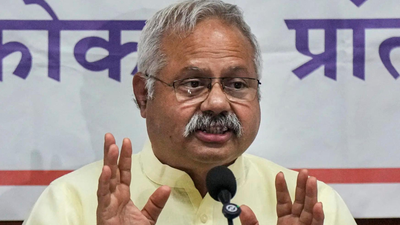
NEW DELHI: RSS’ national publicity chief Sunil Ambekar on Friday said the Sangh was not strong enough at the time of Partition and claimed that “otherwise the Partition of the country would not have happened”.Ambekar made the remarks while speaking at the screening of the documentary “Delhi Mein Sangh Yatra”, presented by Indraprastha Vishwa Samvad Kendra in Delhi. Referring to the period between 1942 and 1947, he said RSS had expanded rapidly across Delhi and undivided Punjab, with large numbers of people joining the organisation, but its strength at the time was still limited.He said that during Partition, RSS volunteers worked to protect Hindus in areas that became part of Pakistan and remained there until the “last person reached safety”. Ambekar said countless volunteers made sacrifices during the violence and rehabilitation efforts, while several camps were set up for displaced people. He also said that in the first fortnight of August 1947, RSS chief M S Golwalkar, referred to within the organisation as “Shri Guruji”, was in Karachi guiding volunteers on relief and protection work amid the turmoil.Ambekar said RSS founder K B Hedgewar did not establish the organisation for political purposes but to create “cultural awakening” and strengthen society. “If Doctor Hedgewar wanted to do politics, he could have formed a political party. The aim was to organise society and build national self-confidence,” he said.He added that RSS activities in Delhi had begun during Hedgewar’s lifetime itself and remained closely linked to the organisation’s 100-year history.RSS Delhi prant pracharak Ritesh Agrawal said the documentary traced the journey of the organisation in Delhi from its early beginnings to its expansion through historical records, memories, interviews and archival material related to Partition and post-Independence developments.


