
Govt plans childhood cancer registry as India battles 75,000 new cases a year NEW DELHI: The Ministry of Health and Family Welfare is working with the Indian Council of Medical Research (ICMR) on a nationwide system for early detection and reporting of childhood cancer, including a possible registry and making the disease notifiable, amid concern over delayed diagnosis and low survival rates among children in India.“One of the key priorities in childhood cancer care is early detection. Setting up a registry for childhood cancer and declaring it a notifiable disease is an issue. We are still working with ICMR on this. The aim is not to miss any patient,” said Leimapokpam Swasticharan, Deputy Director General, Directorate General of Health Services (DGHS), on Thursday.The move comes as India records an estimated 75,000 new childhood cancer cases annually, while survival rates remain below 60%, according to experts and studies cited at a national workshop organised by the Indian Childhood Cancer Initiative (ICCI).Calling childhood cancer a “low hanging fruit” in improving cancer survival outcomes, Dr Swasticharan said the government’s existing non-communicable disease (NCD) programme already includes a cancer component, but the immediate focus is on identifying children early and ensuring treatment support reaches them in time.“The priority is that a childhood cancer patient should be detected early and get financial support and medical care,” he said.He also suggested adopting successful district level models from Kerala and Tamil Nadu, including innovative financing mechanisms and community participation through self-help groups.Former NITI Aayog Member (Health) Dr V.K. Paul said India’s biggest challenge is enabling families and frontline workers to recognise symptoms early enough for treatment to begin before the disease advances.“If for childhood cancer the approach is a trigger that comes from the family based on care-seeking, then I have to enable families,” he said.“Educating families, educating grassroots workers, educating even the doctors could be the way forward,” Dr Paul added, while advocating wider use of telemedicine, regional support systems and national helplines for continuing care.Highlighting the role of Ayushman Bharat-Pradhan Mantri Jan Arogya Yojana (PM-JAY), Dr Paul said the scheme has become a critical support system for children requiring cancer treatment.“This programme is huge, as you know, 60 crore people,” he said.Doctors and public health experts also pushed for a dedicated National Childhood Cancer Programme and stronger global partnerships.Dr Ramandeep Arora, paediatric oncologist at Max Hospital and governing council member of ICCI, said India already has the expertise and clinical infrastructure needed for treatment, but requires stronger policy backing to improve outcomes nationwide.“A National Childhood Cancer Programme and an MoU with the WHO to make India a partner and focus country will further bring global best practices and technology to the country,” he said.Dr Arora also pointed to a 2022 Parliamentary Standing Committee recommendation that called for a comprehensive national childhood cancer policy covering early diagnosis, shared care and integrated paediatric oncology palliative care.About the AuthorAnuja JaiswalAnuja Jaiswal is a Senior Assistant Editor at The Times of India, with an impressive 18-year career in narrative journalism. She specializes in health and heritage reporting, expertly simplifying complex health information to make it engaging and understandable for readers. Her deep dives into heritage topics are well-researched, resulting in captivating narratives that resonate with her audience. Over the years, she has worked in Chandigarh, Chhattisgarh and West UP, gaining diverse on-ground experience that shapes her storytelling.Read MoreEnd of ArticleFollow Us On Social MediaVideosFIR Filed Against Parambrata Chattopadhyay & Swastika Mukherjee Over 2021 Social Media PostsFIR Filed Against Parambrata Chattopadhyay & Swastika Mukherjee Over 2021 Social Media Posts“Viksit Bharat 2047 Is Our Commitment”: PM Modi Pushes Faster Governance At Key Ministers’ MeetCBI Frees UP Man In Suvendu Adhikari PA Murder Case; Raj Singh Alleges Torture, Encounter ThreatCalcutta High Court Junks Pleas On West Bengal Cattle Slaughter Rules Ahead Of Bakr Eid‘Menon’ Surname Row: VD Satheesan Faces Heat From Kerala Congress Leaders Over Oath Name ChoiceIUML And VCK To Also Join Vijay Cabinet In Tamil Nadu, Expansion Tomorrow: ReportTMC Protests Against BJP Government Over Alleged Forced Eviction Of Hawkers In BengalTamil Nadu Cabinet Expansion: Congress MLAs Get Portfolios, Governor Stops Oath Praise Of LeadersNibe Successfully Tests Vayu Astra-1 Loitering Munition In Maiden Trials123Photostories10 legal documents you must check before buying a property in IndiaNelson Mandela quotes that define courage, leadership, and resilience10 traditional Indian foods that PM Modi gifted world leaders during his 5-nation tourThe monsoon gardening mistakes attracting mosquitoes to Indian homesArt quote of the day by Marc Chagall: “Great art picks up where nature ends”The best types of exercise for lowering colon cancer riskFrom Ronit Roy, Ram Kapoor to Tejasswi Prakash and more: TV celebs who own several luxurious propertiesThought of the day inspired by the Bhagavad Gita: “The soul grows quieter when gratitude grows louder”10 unique baby boy names that begin with the letter SLove quote of the day by Maya Angelou: “First best is falling in love, second best is…”123Hot PicksBandra demolition driveIPL Schedule 2026Indian rupeeFalta VotingUK NET MigrationElon MuskTN Ministers ListTop TrendingTN Finance Minister Marie WilsonForza Horizon 6 Hakone Nanamagari TougeChristiano RonaldoPM ModiHardik PandyaJEE Advanced Response SheetIPL Orange Cap 2026Conor McGregor Net WorthNEET UG Paper LeakWest Bengal Annapurna Yojana

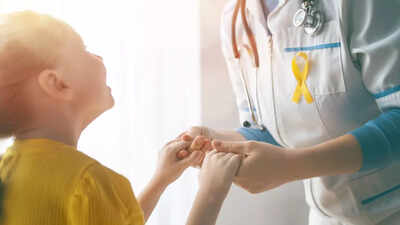
NEW DELHI: The Ministry of Health and Family Welfare is working with the Indian Council of Medical Research (ICMR) on a nationwide system for early detection and reporting of childhood cancer, including a possible registry and making the disease notifiable, amid concern over delayed diagnosis and low survival rates among children in India.“One of the key priorities in childhood cancer care is early detection. Setting up a registry for childhood cancer and declaring it a notifiable disease is an issue. We are still working with ICMR on this. The aim is not to miss any patient,” said Leimapokpam Swasticharan, Deputy Director General, Directorate General of Health Services (DGHS), on Thursday.The move comes as India records an estimated 75,000 new childhood cancer cases annually, while survival rates remain below 60%, according to experts and studies cited at a national workshop organised by the Indian Childhood Cancer Initiative (ICCI).Calling childhood cancer a “low hanging fruit” in improving cancer survival outcomes, Dr Swasticharan said the government’s existing non-communicable disease (NCD) programme already includes a cancer component, but the immediate focus is on identifying children early and ensuring treatment support reaches them in time.“The priority is that a childhood cancer patient should be detected early and get financial support and medical care,” he said.He also suggested adopting successful district level models from Kerala and Tamil Nadu, including innovative financing mechanisms and community participation through self-help groups.Former NITI Aayog Member (Health) Dr V.K. Paul said India’s biggest challenge is enabling families and frontline workers to recognise symptoms early enough for treatment to begin before the disease advances.“If for childhood cancer the approach is a trigger that comes from the family based on care-seeking, then I have to enable families,” he said.“Educating families, educating grassroots workers, educating even the doctors could be the way forward,” Dr Paul added, while advocating wider use of telemedicine, regional support systems and national helplines for continuing care.Highlighting the role of Ayushman Bharat-Pradhan Mantri Jan Arogya Yojana (PM-JAY), Dr Paul said the scheme has become a critical support system for children requiring cancer treatment.“This programme is huge, as you know, 60 crore people,” he said.Doctors and public health experts also pushed for a dedicated National Childhood Cancer Programme and stronger global partnerships.Dr Ramandeep Arora, paediatric oncologist at Max Hospital and governing council member of ICCI, said India already has the expertise and clinical infrastructure needed for treatment, but requires stronger policy backing to improve outcomes nationwide.“A National Childhood Cancer Programme and an MoU with the WHO to make India a partner and focus country will further bring global best practices and technology to the country,” he said.Dr Arora also pointed to a 2022 Parliamentary Standing Committee recommendation that called for a comprehensive national childhood cancer policy covering early diagnosis, shared care and integrated paediatric oncology palliative care.


