
Garage prodigy: 14-year-old boy built a nuclear fusion device in his parents’ garage

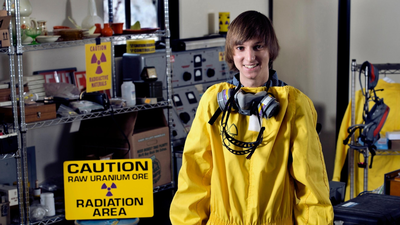
At an age when most teenagers are focused on schoolwork and video games, Taylor Wilson was attempting something that even advanced laboratories struggle to achieve. Working from his parents’ garage in Reno, Nevada, the 14-year-old successfully built a functioning nuclear fusion device known as a fusor. Using vacuum chambers, high-voltage equipment, deuterium gas and self-taught physics knowledge, Wilson achieved a real fusion reaction in 2008, making him one of the youngest people ever to accomplish the feat. His remarkable experiment drew international attention and transformed him into one of the world’s best-known young science prodigies.Wilson was born in Arkansas in 1994 and later grew up in Nevada. From an unusually young age, he became fascinated with science, especially nuclear physics, radiation and energy technology. According to interviews and public talks, Wilson’s interest in nuclear science intensified after he learned about the environmental impact of fossil fuels and the potential of nuclear energy. By the time he was around 10 years old, he was already studying advanced scientific material far beyond his grade level. His parents supported his curiosity and allowed him to convert part of their garage into a makeshift laboratory filled with electronics, vacuum systems and scientific equipment.
How a 14-year-old boy created a fusion device
Wilson built a device called a Farnsworth–Hirsch fusor, commonly known as a fusor. The machine is designed to create nuclear fusion reactions by accelerating ions inside a vacuum chamber using strong electric fields. Fusion occurs when atomic nuclei collide with enough energy to merge together.The basic fusion principle can be represented as:2H+2H→3He+nIn this equation, the symbol ²H represents deuterium, which is a heavier form of hydrogen containing one proton and one neutron. Wilson used deuterium gas as the fuel inside his fusion device. The plus sign means two deuterium nuclei are colliding with each other at extremely high speeds inside the fusor.In simple terms, Wilson’s machine used electricity and powerful electric fields to smash hydrogen atoms together. When some of those atoms collided with enough force, they fused into a different element and released particles, proving that a real nuclear fusion reaction had taken place.Although the device did not generate usable energy, it successfully produced genuine fusion reactions. Wilson reportedly spent years researching nuclear science and collecting components for the project. His homemade setup included vacuum pumps, stainless steel vacuum chambers, high-voltage power supplies, radiation detectors, custom electrical components and deuterium fuel systems.Some parts were purchased from scientific suppliers, while others were salvaged or modified from industrial equipment. He also relied heavily on textbooks, online scientific forums and discussions with amateur fusion enthusiasts. The internet played a major role in giving him access to highly specialised scientific information that would once have been difficult for a teenager to obtain.The garage gradually turned into a small experimental laboratory packed with wiring, scientific instruments and radiation-monitoring equipment.
Was it dangerous?
Yes. Fusion experiments involve significant risks.A fusor operates using extremely high voltages and can produce neutron radiation during successful fusion reactions. Vacuum chambers can also pose implosion hazards if improperly handled.Wilson used radiation detectors and safety precautions while building and operating the device. Over time, he also connected with professional scientists and engineers who offered guidance.Experts have repeatedly stressed that such experiments should only be attempted with proper knowledge, supervision and safety procedures.

How was the achievement verified?
In 2008, Wilson’s successful fusion experiment was independently verified after neutron emissions were detected from the device.The achievement earned recognition from the wider scientific community because measurable nuclear fusion is extremely difficult to achieve, even on a small scale. His work attracted attention from researchers, science organisations and media outlets around the world.Wilson soon became known as one of the youngest people ever to achieve nuclear fusion.Fusion is the same process that powers stars, including the Sun.Scientists have pursued fusion energy for decades because it has the potential to provide massive energy output, low carbon emissions, reduced long-term radioactive waste and fuel derived from relatively abundant elements.The fundamental idea behind stellar fusion can be simplified as:E = mc²This equation, developed by Albert Einstein, explains how tiny amounts of mass can be converted into enormous amounts of energy during nuclear reactions.However, maintaining stable and efficient fusion on Earth remains one of the most difficult engineering challenges in modern science. Large international projects such as ITER are still working towards practical commercial fusion power.
After the garage breakthrough
Wilson’s accomplishment opened doors to major scientific and public opportunities.He later delivered talks at TED, worked on nuclear detection technologies, collaborated with scientists and researchers, advocated for innovation in nuclear safety and continued exploring advanced energy concepts.One of his notable later projects involved developing compact radiation detection systems designed to identify smuggled nuclear materials.
Wilson’s story still fascinates people
Taylor Wilson’s story continues to capture public imagination as it combines scientific brilliance with a classic garage-inventor narrative.The image of a teenager building a functioning fusion device beside household tools and storage shelves feels almost unbelievable, yet the achievement was real and independently verified.His story represents the power of curiosity, self-education and determination.


