
In 1900, a routine cleanup at a desert cave uncovered a secret wall protecting a 1,000-year-old library

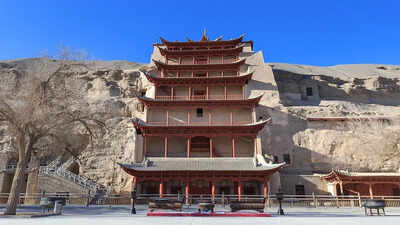
Some of the greatest secrets of history come about simply while cleaning up after oneself. It was in the summer of 1900 that Wang Yuanlu, an unofficial Taoist monk and custodian, was busy cleaning out the massive network of cave temples known as the Mogao Grottoes, located on the very edge of the Gobi Desert near Dunhuang, China. The wind from the desert was always depositing sand inside the shrines, covering the doors and obscuring their beautiful frescoes. While sweeping out one of the larger passageways of accumulated sand, he encountered something he hadn’t expected to find.He noticed a crack in a mural-covered wall that seemed to outline a hidden doorway. Curious, he pushed against the plaster and discovered a completely walled-off chamber that had been hidden from human sight for nearly a thousand years. When he stepped inside, he was not looking at space or a simple rock. The tiny room, later designated as Cave 17 or the Library Cave, was packed from floor to ceiling with bundle after bundle of ancient documents, silk scrolls, and religious paintings.It was a remarkable stash of history which had been intentionally buried at the beginning of the eleventh century. What Wang stumbled upon was a time capsule that would radically change mankind’s understanding of the Silk Road, trading and globalisation during the medieval era.An immense crossroads of long-forgotten ideas and languagesThe amount and diversity of material extracted from the dark and dusty room took the whole scientific community by surprise. As stated in a detailed historical article titled 14 Fascinating Facts about the Cave Temples of Dunhuang, published on the Getty Museum, there were almost 50,000 individual documents, as well as various silk banners and embroidered fabrics inside the tiny room.Rather than preserving records only for their own temples, the vault housed manuscripts written in Chinese, Tibetan, Sanskrit, Sogdian, and Khotanese languages. This was an entire collection of works recording times when Dunhuang served as an active multicultural centre for merchants, pilgrims, and scholars coming from totally separate continents. What motivated the local monks to store all those treasures in there and hide them behind a false wall remains one of the main mysteries of history. Some scholars consider the fact that the monks did it to preserve the texts from an incoming invasion. In contrast, others argue it was just a sanctified repository where old papers were put away because destroying them would have been sacrilegious.
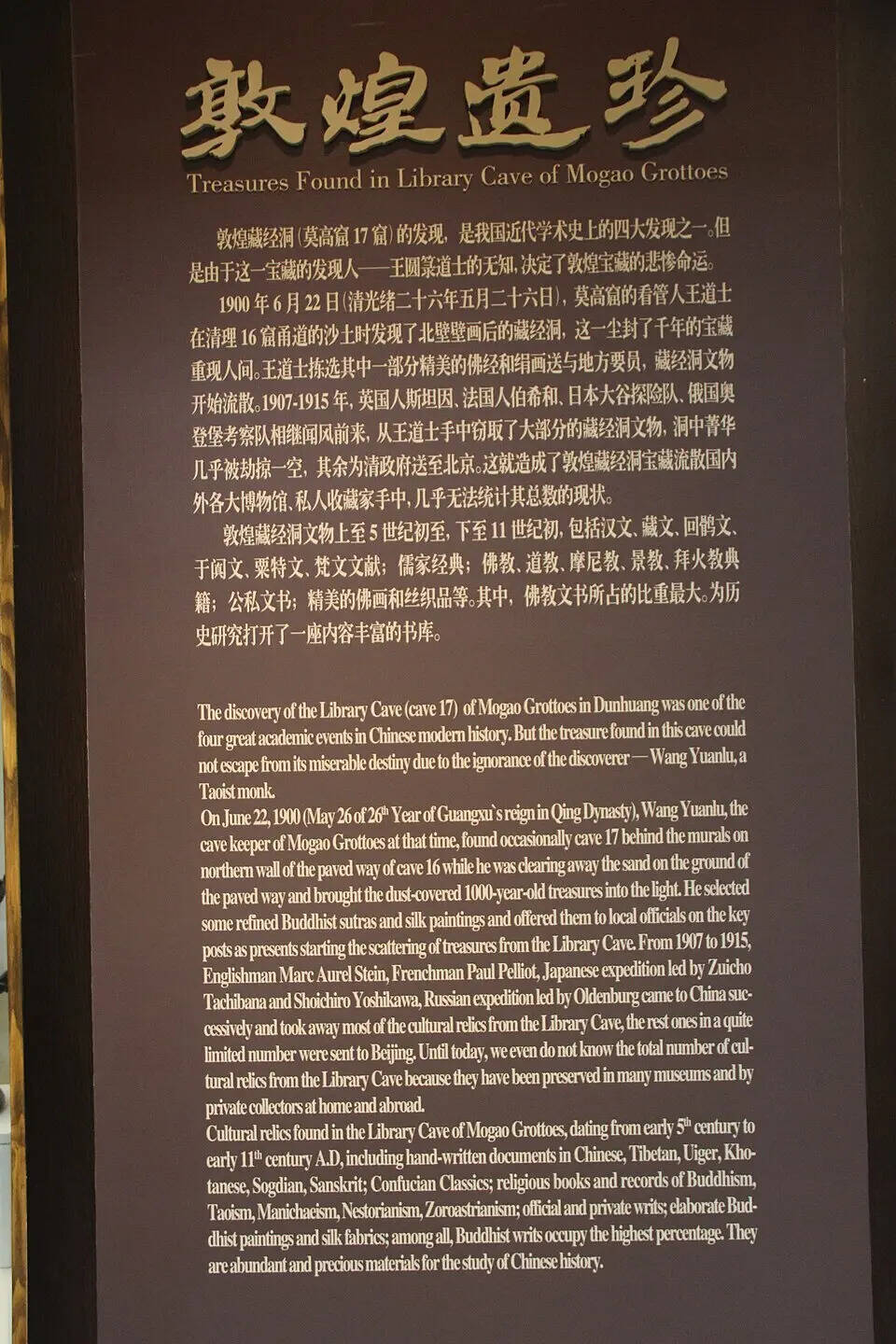
This discovery revealed extensive multicultural exchanges along the medieval Silk Road. The find transformed global understanding of ancient trade and ideas. Image credits: Wikimedia Commons
The danger of waking a sleeping tombAlthough the desert sands sealed these precious documents for many years successfully, their awakening from sleep has brought about severe preservation problems. As per the paper published on Heliyon, the microenvironment in these grottoes is extremely sensitive. In particular, the paper stresses the fact that the interaction between external air and changing levels of humidity can speed up the destruction of the splendid murals and architectural elements.When Wang opened that door, he unintentionally altered the environmental balance that had kept the textiles and paper intact since the Middle Ages. Shortly after the discovery, news of the hoard spread globally, and international explorers purchased large portions of the library, scattering the documents across museums in London, Paris, and Tokyo. Today, the Mogao Grottoes are recognised as a protected global heritage treasure, and scientists are working hard to balance public tourism with the strict climate control needed to keep these rock-cut temples from fading away.The Library Cave serves to remind us that there remain astounding mysteries hidden within the very earth we walk on, hiding mere steps away from the walls we take for granted in what we believe we already know. The act of cleaning becomes the portal through which the mundane broom reveals the doorway to a millennium past.The idea that for centuries, many men and women have walked by that plaster wall, entirely oblivious to the presence of a colossal literary treasure resting mere inches away from their own flesh and bones, is remarkable indeed.


