
The unmeasurable abyss: The deepest blue hole on earth has a hidden tunnel that defies science

Mexico’s Taam Ja’ Blue Hole has been identified as the world’s deepest, plunging to an astonishing 420 meters. This remarkable natural filter, located in Chetumal Bay, presents unique research opportunities.
Should you chance to take a glance at the Chetumal Bay area from above in Mexico, then you will only be able to notice one thing staring right at you from underneath – the giant blue eye, from which you are looking down. Among the impressively white and creamy hues of the coastlines of the Yucatan Peninsula, there lies something truly remarkable in terms of being a perfectly working filter – Blue Hole called Taam Ja’. However, that is not all about it. There is still another depth beneath its deep blue waters that outperforms any other depth record.As per the study titled Recent records of thermohaline profiles and water depth in the Taam ja’ Blue Hole, the depth of this pit is as great as 420 meters (or 1,377 feet). To clarify, once the Trump Tower of Chicago plunges into the pit, it will sink completely. Taam Ja’ earned itself first place, leaving the Dragon Hole from the South China Sea to come second.Hell with measurement: Why won’t sonar be helpful here?To the extent that one can see, the pings of the sonar will definitely assist in measuring everything. However, in this case, Taam Ja’ will not be an exception. This is due to the fact that it belongs to a particular karst type – namely, a tunnel system formed within the rock mass (like Swiss cheese).Based on the previous study, the likelihood that it will become clear to scientists why it is so difficult to conduct research will increase. First of all, it should not be assumed that the water in the cave is simply water; in reality, it consists of several layers, and its density changes depending on the water temperature and saltiness. This means that despite the fact that the scientists found out that its minimum depth is 420 meters, the real depth of this lake is much deeper due to the fact that the signals are simply distorted due to the bend created by these density levels.
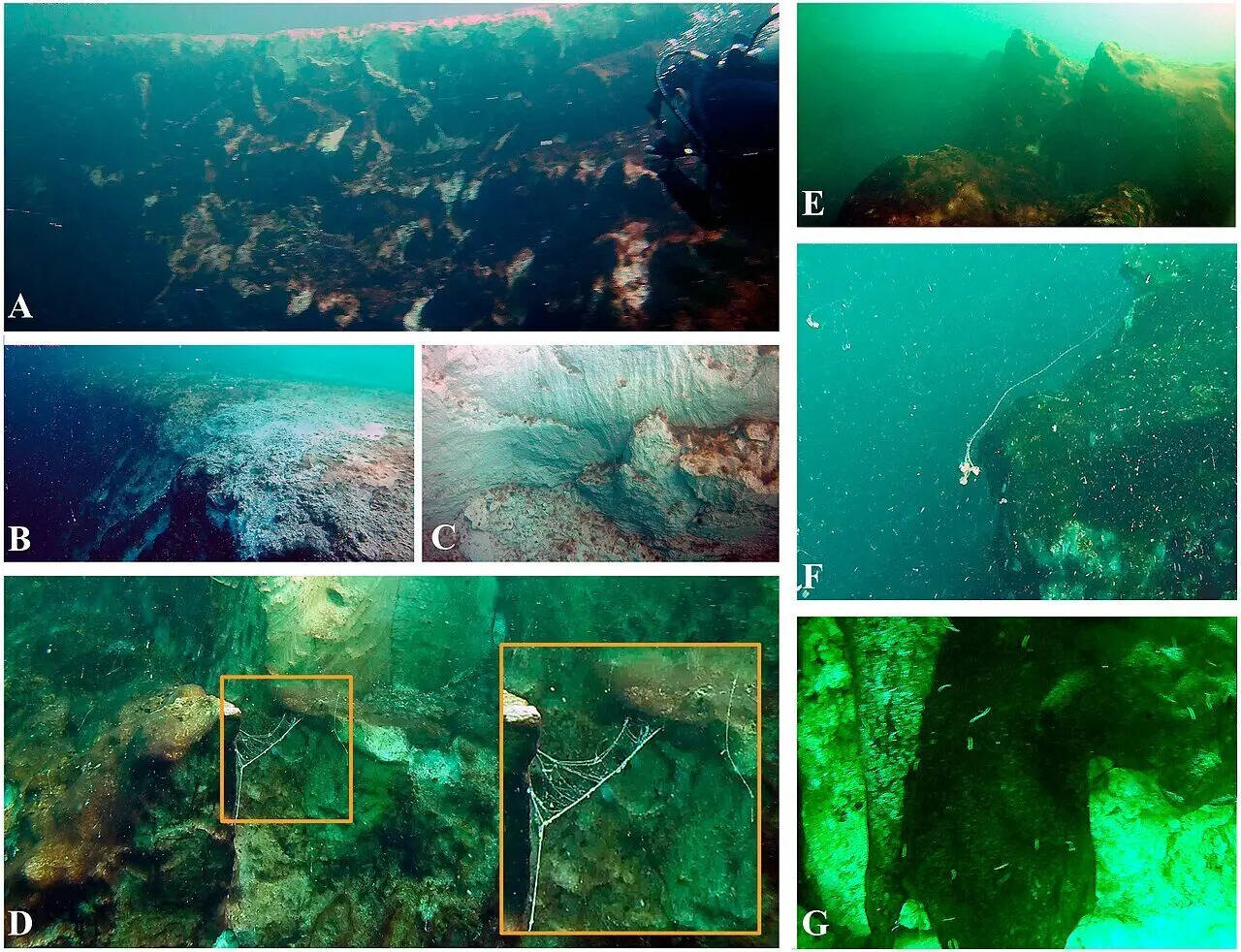
Its isolated depths act as a time capsule, preserving ancient organic material and potentially offering insights into the Stone Age due to minimal oxygenation. Image Credits: Wikimedia Commons
Depth aside: A time capsule from the Stone AgeWhile Taam Ja’ has officially been acknowledged as the world’s deepest lake by the Guinness World Record keepers, the most fascinating thing about it lies within. Due to its incredible depth and isolation, water at the bottom does not undergo circulation. Consequently, the lake creates an ideal environment for scientific experiments and research due to its capacity to preserve chemicals from several thousand years ago.In the study, First insights into an exceptionally deep blue hole in the Western Caribbean, scientists started digging into how these holes function as “ecological time capsules.” Because there is almost zero oxygen at the bottom, organic material doesn’t rot. This means Taam Ja’ could be a massive, underwater museum holding perfectly preserved fossils or microbial life that hasn’t changed since the last Ice Age.In essence, Taam Ja’ reminds us that we have yet to discover the “giants” right in our backyard. It was lurking on the Mexican coastline all along, only waiting for us to take an interest and measure its depth. Now that we have the gateway to the deep, we will just have to wait until technology catches up before we discover the end of the tunnel.


