
Ebola virus outbreak: WHO declares international health emergency after rare strain kills 87 in Congo

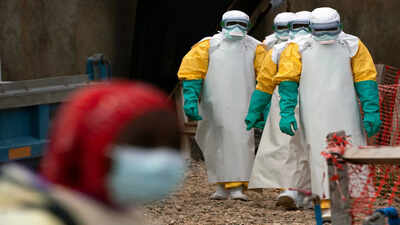
The World Health Organization (WHO) has declared an international health emergency over the spread of a rare Bundibugyo strain of Ebola in the Democratic Republic of Congo and Uganda, after the outbreak killed dozens of people. However, the agency stopped short of calling it a pandemic.“WHO…is hereby determining that the Ebola disease caused by Bundibugyo virus in the Democratic Republic of the Congo and Uganda constitutes a public health emergency of international concern (PHEIC), but does not meet the criteria of pandemic emergency,” the Geneva-based body said on Sunday.The decision came as cases and deaths continued to rise in Congo’s eastern Ituri province, where health workers are racing to contain the virus through screening and contact tracing.Earlier on Saturday, the Africa CDC said that at least 87 people have died in the latest outbreak, warning that the virus is spreading actively within communities.Officials had first announced the outbreak on Friday with 65 deaths and 246 suspected cases. By Saturday, suspected cases had jumped to 336, with 13 confirmed infections. Four people among the confirmed cases have died.Residents in Bunia, Ituri’s capital, said fear is growing as more people are being buried every day.“Every day, people are dying … and this has been going on for about a week. In a single day, we bury two, three or even more people,” said Jean Marc Asimwe, a resident of Bunia. “At this point, we don’t really know what kind of disease it is.”Ebola spreads through bodily fluids such as blood, vomit and semen. It is rare, but often severe and deadly.
Outbreak began in mining zone, then spread
Africa CDC Director-General Dr. Jean Kaseya said the first cases were reported in Mongwalu health zone, a busy mining area in Ituri.“Cases subsequently migrated to Rwampara and Bunia as patients sought medical care, enabling spread across three health zones,” he said.Kaseya said many infected people are still within local communities, especially in Mongwalu, making it harder to track contacts and stop the spread. He also said violence in Ituri, where Islamic State-backed militants carry out attacks, is making surveillance and emergency response more difficult.Of the 87 deaths reported so far, 57 were in Mongwalu, 27 in Rwampara and three in Bunia.Congolese Health Minister Samuel-Roger Kamba said that test results confirmed the Bundibugyo virus, a less common strain than those seen in many of Congo’s past Ebola outbreaks.This is Congo’s 17th Ebola outbreak since the disease first appeared in the country in 1976.


