
Canada reports suspected hantavirus case linked to deadly cruise ship outbreak

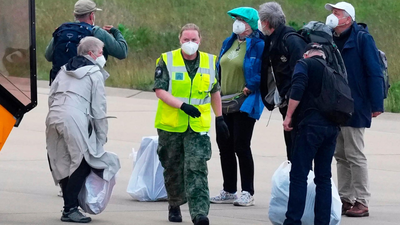
A Canadian passenger who travelled aboard the cruise ship MV Hondius has tested “presumptive positive” for the Andes strain of hantavirus, raising fresh concern as health authorities continue monitoring passengers linked to the outbreak that has already claimed three lives. Officials in Canada’s British Columbia province said the patient, one of four Canadians who returned from the vessel earlier this month, developed mild symptoms including fever and headache and is now being treated in isolation in hospital in Victoria.Dr Bonnie Henry, British Columbia’s provincial health officer, said the positive result still requires confirmation from Canada’s National Microbiology Laboratory in Winnipeg, with final test results expected over the weekend. “Clearly this is not what we hoped for, but it is what we planned for,” she said. The patient, part of a couple in their 70s from Yukon, remains stable, while their spouse has shown only very minor symptoms and initially tested negative.The outbreak aboard the Dutch-operated expedition ship has now been linked to at least 11 infections among passengers, with nine already confirmed through laboratory testing. Three passengers have died, including a Dutch couple believed to have first contracted the virus during travel in South America before boarding the ship. Authorities across several countries are tracing contacts and monitoring passengers who have returned home following the vessel’s evacuation.
Virus outbreak sparks global monitoring effort
The MV Hondius departed Argentina on 1 April for an Atlantic crossing before the outbreak emerged among passengers. Canadians who returned from the ship on 10 May have remained in strict isolation since arriving in British Columbia and Ontario, officials said. Public health authorities stressed that none of the four Canadians on Vancouver Island had contact with the public after returning home.Other countries are also dealing with suspected or confirmed cases. A French passenger reportedly developed symptoms while travelling home, while Spanish and American passengers have also shown possible signs of infection. Two British nationals with confirmed cases are being treated in the Netherlands and South Africa. Twenty Britons evacuated from the vessel are isolating after arriving back in the UK.The Andes strain is particularly significant because it is the only known form of hantavirus capable of spreading between humans, although experts say transmission requires prolonged close contact rather than casual interaction.
Why experts say ‘this is not Covid’
Health officials and the World Health Organisation have repeatedly sought to calm fears of a wider global outbreak. Dr Henry told the BBC that the virus “does not have pandemic potential”, while WHO experts stressed that hantavirus spreads very differently from respiratory diseases such as Covid-19 or influenza.Hantavirus is usually carried by rodents, with humans infected after breathing in particles from rodent urine, saliva or droppings. Symptoms often resemble flu at first, including fever, fatigue and muscle aches, before more severe complications such as breathing difficulties can develop. Symptoms can appear weeks after exposure, which explains the lengthy isolation periods imposed on passengers.


