
Prehistoric rain: The 1,000-foot-deep secret under the Great Plains that took millions of years to build

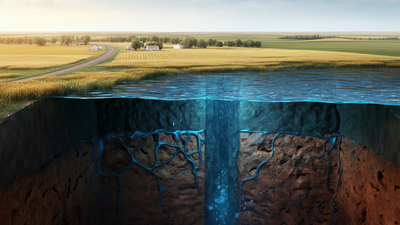
Beneath America’s seemingly simple Great Plains lies a colossal underground freshwater body, the High Plains aquifer, larger than California. This “invisible ocean,” primarily the Ogallala formation, sustains the region’s fertility and agriculture
When travelling through the middle of America by automobile, the environment seems almost mesmerisingly simplistic. This is an area defined by amber-coloured fields of wheat, grazing herds of cattle, and endless roadways that appear to disappear into thin air. The Great Plains seem to be nothing more than a peaceful and agricultural prairie for the average tourist. Underneath the wheels of every vehicle passing through the middle of the country lies a natural phenomenon which is physically bigger than the entire state of California.This giant exists under the soil layer. It is known as the High Plains aquifer. Spanning approximately 174,000 square miles and stretching into eight states, the aquifer is one of the biggest freshwater bodies on Earth. In spite of the fact that it stays hidden from our eyes, this underground structure is what makes the centre of America fertile and not a desert. It is the base of rural civilisation, but no one has ever seen the huge “invisible ocean,” which feeds the whole country.The ancient architectural structure of the OgallalaThere is an interesting feature in the naming of the system in question. Although many people refer to the aquifer as the Ogallala, according to the High Plains Groundwater Availability Study provided by the USGS, there is a big difference between the names. Namely, the High Plains aquifer refers to the general system as a whole, while the Ogallala formation comprises some 80 per cent of the former.This underground architecture has been shaped by nature over millions of years as the ancestral rivers from the Rockies transported their sediments eastwards. These porous rocks now serve as the continent’s biggest storage of ancient rainwater. Through decades of well measurements and hydrogeological observations, scientists have transformed thousands of farm wells into an elaborate network of information covering the continent. The study shows not only that the aquifer is not a local source of water but a region in itself with distinct geographical features.
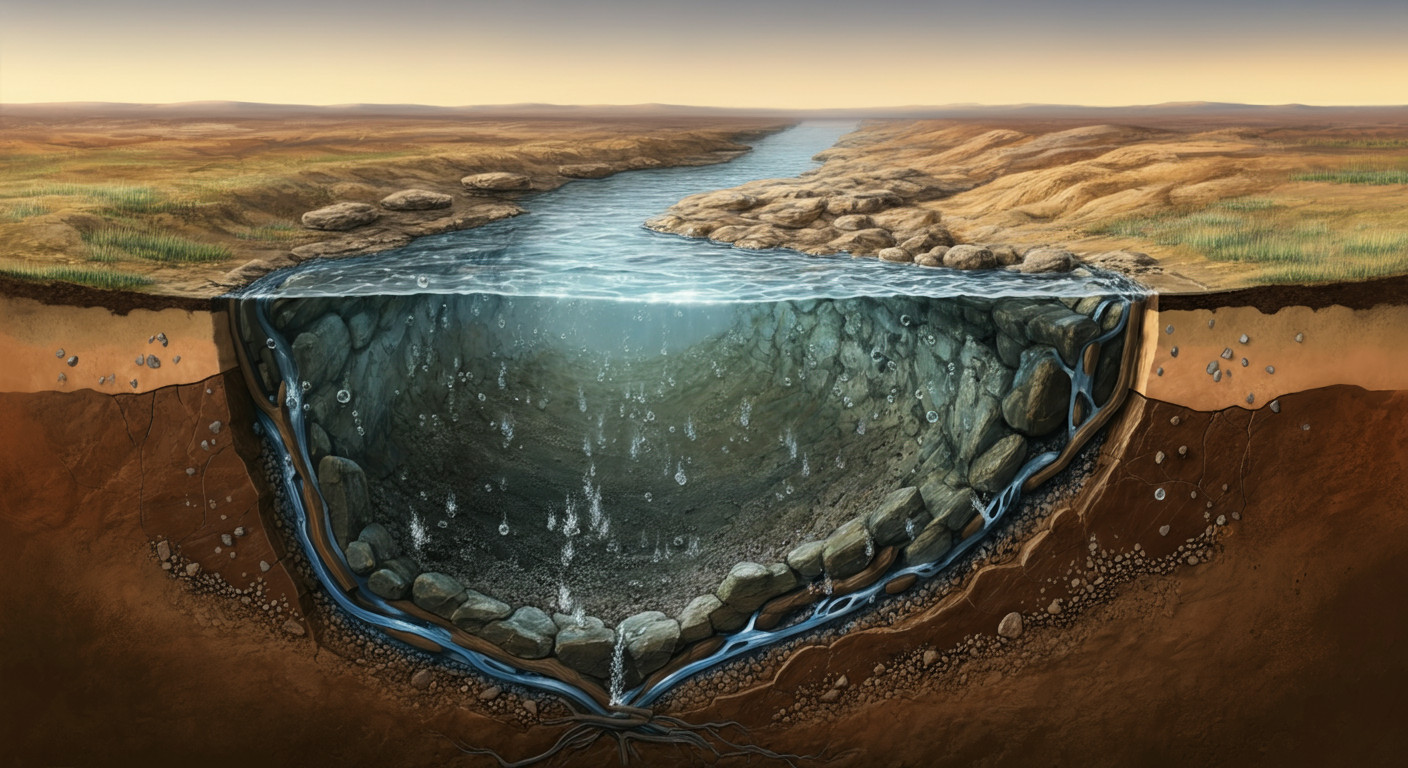
Beneath the seemingly simple landscape of America’s Great Plains lies the High Plains aquifer, a vast underground freshwater body larger than California.
The life and strain of the hidden engineThe real value of the High Plains aquifer comes in its function as the human engine in modern times. It serves as the source of life for one of the planet’s most productive agricultural belts, where all types of food can be grown. But the “hidden” nature of this source makes it difficult to detect that the water supply may be in danger. The aquifer is basically a fossil water source due to the slow natural recharge process.However, according to the NAWQA High Plains Regional Groundwater Study, the immense stress placed on the system has been noted. It has been noted that despite the large size of the aquifer, it is not a single lake. The water levels are declining at various rates depending on location. While there is a rapid decline of water in the southern plains of Texas and Kansas, on the northern side of the region, especially in Nebraska, the aquifer system is relatively strong.The appeal of the High Plains aquifer is in its subtlety. There are no grand canyons for picture-taking, and there are no impressive mountains that attract mountaineers. The size of the aquifer is known only through statistics. This is a case where the significance of the landscape is revealed to us because of the invisibility of the landscape. The Great Plains may not be very remarkable, but the beat of America lies beneath them.


