
SC’s Ayodhya verdict reveals ‘deeply majoritarian politics has penetrated legal validation”, says Jamiat report (Image credit: ANI) NEW DELHI: Noting that the Madhya Pradesh High Court order declaring the disputed Bhojshala complex in Dhar district a temple only validates the fears and concerns that they have raised all along since the 2019 Ayodhya verdict, the Jamiat Ulama -i- Hind (JUH) on Friday released a report arguing that Supreme Court’s interpretation of the Places of Worship Act reveals how “deeply majoritarian politics has penetrated legal validation”.JUH said that it was just a coincidence that the report was being released on the day the Bhojshala order came. Speaking at the programme attended by senior lawyers, legal experts, former judges, researchers, and intellectuals, JUH president Maulana Mahmood Asad Madani observed that disputes did not end with the Babri Masjid issue; rather, new controversies relating to Gyanvapi, Mathura Eidgah, Kamal Maula Mosque, and other religious sites are now being raised, reopening old wounds.The report titled “A critical analysis of Babri Masjid judgement and the Case of the Places of Worship (Special Provisions) Act 1991’ provides a detailed analysis of major Supreme Court judgments, including the Ismail Faruqui Case and the Ayodhya verdict, claiming that certain judicial interpretations weakened constitutional principles relating to the protection of religious places.In particular, the report discusses the far-reaching implications of the observations made in the Ismail Faruqui case, wherein a mosque was held not to be an essential part of Islamic practice in every circumstance. “As the judiciary increasingly accommodates Hindutva majoritarianism, Muslim sacred spaces have become legally vulnerable, culturally contested, and politically targeted,” the report stated.The report said The Places of Worship Act of 1991 was designed to freeze the religious character of worship sites as they existed on August 15, 1947. “Yet recent court rulings have interpreted the Act so narrowly that fresh claims against mosques in Varanasi, Mathura, and elsewhere are now proceeding.”“The arguments deployed in those cases—concerning essential practices, belief, archaeological evidence, and civilisational memory—are now being recycled in ongoing litigation involving the Gyanvapi Mosque in Sambhal, the Shahi Eidgah at Mathura, and others,” the report states.The report recommended that the judiciary must uphold the Places of Worship Act as intended and it be strictly implemented and protection of religious places should be treated as a constitutional obligation. It further recommended that “communal politics and historical claims should not be allowed to become instruments for legal disputes.End of ArticleFollow Us On Social MediaVideos28 Hostages From Kuki, Naga Communities Held By Armed Groups Released In Manipur’I Am Sorry To…’: Shashi Tharoor To Skip VD Satheesan’s Swearing-In As Kerala CMNEET UG 2026 Re-Exam On June 21, Computer-Based Test Format From Next Year: Education MinisterOman To Gujarat: India Fast-Tracks Deep-Sea Gas Pipeline Project Amid Hormuz CrisisCJI Surya Kant Makes Strong Remarks During Senior Advocate HearingKerala CM-Designate Satheesan Hits Back At BJP Over IUML, Secularism DebateFormer RAW Chief Flags Security Risks Over PM Modi’s Convoy DownsizingTMC MP Derek O’Brien Slams Centre After Petrol-Diesel Hike, Targets Modi Government’Bhojshala Complex Is A Temple, Hindus Have Right To Worship’: MP High CourtSergey Lavrov Says India Could Play Long-Term Mediator Role In US-Iran Conflict123PhotostoriesKishwer Merchant recalls her father’s reaction to her interfaith marriage and age gap with Suyyash Rai; reacts to her son being trolled for wearing a skull capLauki vs Tori: Which has more nutrition for summer and 5 interesting ways to eat themAncient Kashmiri beauty secrets that are becoming popular again in IndiaFrom transparent bodies to underground lives: 5 bizarre frogs you’ve probably never heard of8 modern TV unit designs to instantly upgrade your living roomPersonality test: Mango, litchi, watermelon? Pick a fruit and see if you are a natural leader, kind, or creativeCannes 2026:Why Sanam Saeed’s Cannes debut is a major moment for Pakistani cinemaHow to grow butterfly-friendly native plants in Indian city home gardensNot just travel: 10 cheapest countries to retire in — 9 and 10 will surprise you5 adorable dog breeds that stay puppy-sized forever123Hot PicksCBSE class 12 resultUS Iran warPrateek YadavHaryana election resultForeign outflowNEET exam cancelledTamil Nadu assemblyTop TrendingNEET UG Re-Exam dateAdmit card indian army agniveer gdIPL Points TablePM ModiKerala Board SSLC Result 2026IPL 2026IPL Orange Cap 2026Bengaluru RapeWho is Shubham KhairnarIndia UA Trade Talk

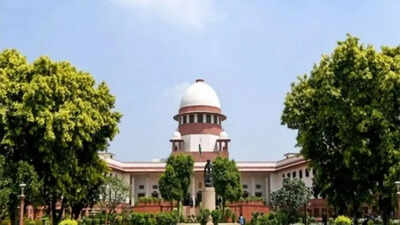
NEW DELHI: Noting that the Madhya Pradesh High Court order declaring the disputed Bhojshala complex in Dhar district a temple only validates the fears and concerns that they have raised all along since the 2019 Ayodhya verdict, the Jamiat Ulama -i- Hind (JUH) on Friday released a report arguing that Supreme Court’s interpretation of the Places of Worship Act reveals how “deeply majoritarian politics has penetrated legal validation”.JUH said that it was just a coincidence that the report was being released on the day the Bhojshala order came. Speaking at the programme attended by senior lawyers, legal experts, former judges, researchers, and intellectuals, JUH president Maulana Mahmood Asad Madani observed that disputes did not end with the Babri Masjid issue; rather, new controversies relating to Gyanvapi, Mathura Eidgah, Kamal Maula Mosque, and other religious sites are now being raised, reopening old wounds.The report titled “A critical analysis of Babri Masjid judgement and the Case of the Places of Worship (Special Provisions) Act 1991’ provides a detailed analysis of major Supreme Court judgments, including the Ismail Faruqui Case and the Ayodhya verdict, claiming that certain judicial interpretations weakened constitutional principles relating to the protection of religious places.In particular, the report discusses the far-reaching implications of the observations made in the Ismail Faruqui case, wherein a mosque was held not to be an essential part of Islamic practice in every circumstance. “As the judiciary increasingly accommodates Hindutva majoritarianism, Muslim sacred spaces have become legally vulnerable, culturally contested, and politically targeted,” the report stated.The report said The Places of Worship Act of 1991 was designed to freeze the religious character of worship sites as they existed on August 15, 1947. “Yet recent court rulings have interpreted the Act so narrowly that fresh claims against mosques in Varanasi, Mathura, and elsewhere are now proceeding.”“The arguments deployed in those cases—concerning essential practices, belief, archaeological evidence, and civilisational memory—are now being recycled in ongoing litigation involving the Gyanvapi Mosque in Sambhal, the Shahi Eidgah at Mathura, and others,” the report states.The report recommended that the judiciary must uphold the Places of Worship Act as intended and it be strictly implemented and protection of religious places should be treated as a constitutional obligation. It further recommended that “communal politics and historical claims should not be allowed to become instruments for legal disputes.


![Congress targets PM Modi after passport rank slips to 125th NEW DELHI: Congress president Mallikarjun Kharge on Monday criticised PM Modi’s government over India’s recent passport rankings, alleging that its policies had hurt the country’s global reputation. He also questioned the recent increase in passport fees, saying citizens were paying more despite what he described as poor services.In a post on X, Kharge referred to Prime Minister Modi’s 2018 remarks about the strength of the Indian passport and said the current rankings did not support those claims.”Modi Govt’s policies are responsible for hurting India’s global reputation,” Kharge wrote.”PM Modi claimed in 2018: ‘People travelling and living abroad know the respect and strength of the Indian passport today.’ Where is that ‘strength’ reflected? Facts bely his assertions,” he said.Citing different global passport rankings, Kharge claimed that India’s position had weakened over the years.”In one global passport ranking, India has fallen from 74th in 2013 to 80th in June 2026. [World Economic Forum] Another global passport index places India at a dismal 125th in 2026. [Global Citizen Solutions],” he wrote.Kharge also criticised the government’s decision to increase passport charges, saying fees had gone up without any improvement in services.”Instead of improving services, the Modi Govt has made passports more expensive. Passport fees have been hiked from Rs 1,500 to Rs 2,500, while Tatkal charges have gone up to Rs 5,000,” he said.The Congress chief also alleged that foreign tourist arrivals had not recovered to pre-pandemic levels and questioned the government’s tourism and visa policies.”Even with respect to the ease of travelling to India, Foreign Tourist Arrivals are still below pre-COVID levels: They have dropped from 10.93 million (2019) to 9.95 million (2024). Is the Modi Govt masking this failure by clubbing NRI arrivals with foreign tourist data? Why is India’s official visa application portal still so outdated and confusing that it resembles a website from the late 1990s? No one in India, the land of ‘Atithi Devo Bhava’ wants to welcome the tourists like this?” he wrote.Concluding his post, Kharge questioned the government’s claims about India’s international standing.”If the passport is weaker, tourism has not recovered, visa services are lacklustre and citizens are paying more for substandard services, then where exactly is this much-advertised global respect? Reality bites. India’s reputation suffers. Courtesy: Modi Govt!” he said.Kharge’s remarks came after the Global Passport Index 2026 ranked India 125th, down from 124th last year, with visa-free access to 26 destinations. The ranking placed India behind countries including the Philippines, Morocco, Uzbekistan and China, but ahead of Azerbaijan and Kyrgyzstan.His comments also follow the Centre’s decision to revise passport application fees from July 1, 2026. Under the new rates, the fee for a fresh or reissued 36-page ordinary passport has increased from Rs 1,500 to Rs 2,500, while the Tatkal charge has risen from Rs 2,500 to Rs 5,000. The fee for a 60-page passport has increased to Rs 3,500, with the Tatkal charge revised to Rs 6,000.Get the latest India news and live updates. Download the TOI App.About the AuthorTOI News DeskThe TOI News Desk comprises a dedicated and tireless team of journalists who operate around the clock to deliver the most current and comprehensive news and updates to the readers of The Times of India worldwide. With an unwavering commitment to excellence in journalism, our team is at the forefront of gathering, verifying, and presenting breaking news, in-depth analysis, and insightful reports on a wide range of topics. The TOI News Desk is your trusted source for staying informed and connected to the ever-evolving global landscape, ensuring that our readers are equipped with the latest developments that matter most.”Read MoreEnd of ArticleFollow Us On Social MediaVideosArmed Forces Seek Higher Retention Of Agniveers As First Batch Nears Completion Of Four-Year TenureNetanyahu Hails India’s ‘Tremendous Support’, Rejects JD Vance’s ‘Only Ally’ Claim for IsraelAkal Takht Gives Punjab Govt 10-Day Deadline, Alleges Anti-Sikh IT Campaign; AAP Denies ChargesVHP Seeks Probe Into Priyanka Gandhi, Arvind Kejriwal And Others Over Ayodhya Donation AllegationsISRO Successfully Tests New Motor For Gaganyaan SOLVE RocketMadhya Pradesh First To Include Hindu Members In Waqf Board Under New Law’Super Emergency’: TMC Claims Police Barricaded Mamata Banerjee’s House Before Baruipur VisitBadrinath-Kedarnath Temple Committee Forms 4-Member Panel To Probe Donation Irregularity ClaimsMumbai Monsoon Horror: 63-Year-Old Dies After Tree Falls On ShopCentre Denies Reports That Bhutan Rejected India’s E20 Petrol Proposal123PhotostoriesOne motivational quote that can bring positive change; according to your birth dateInside Bharti Singh and Harsh Limbachiyaa’s lavish home: A massive living room, stunning balcony views and moreRanveer Singh birthday special: Revisiting the ‘Dhurandhar’ star’s top-grossing movies of all time“Saving ₹5,000 a month will not change your life”: Why Ranveer Allahbadia’s money advice for people earning under ₹50,000 hits different for womenHow much money do you really need to retire comfortably in US, UK, Australia and IndiaNutritionist shares 1-month health reset diet plan that she made for her husband: And it seems so easy to follow!World Chocolate Day 2026: 6 most expensive chocolates in the world and why they cost so muchHow to maintain goldfish in aqaurium and bowls: A beginner’s step-by-step guide to keeping goldfish in healthy condition for several yearsBiotin alternatives for hair growth: 5 natural foods that may help strengthen hair from the rootMumbai rain update: Walking through floodwater? Doctor shares 5 things you should do the moment you reach home123Hot PicksRam temple donationITR filing FY 2025-26Khamenei funeralJoSAA Counselling 2026Mumbai school holidayMumbai rainBank holidayMumbai schools holidayMumbai-Pune expresswayTop TrendingOzempic ShaadiAgnipath Scheme ReviewNainital Sex RacketFIFA World Cup 2026Bengal rapeRam temple donationMumbai rainBank holiday todayKanpur Woman AssaultKCET mock seat allotment](https://vknewstoday.in/wp-content/uploads/1783335554_photo.jpg "Congress targets PM Modi after passport rank slips to 125th NEW DELHI: Congress president Mallikarjun Kharge on Monday criticised PM Modi’s government over India’s recent passport rankings, alleging that its policies had hurt the country’s global reputation. He also questioned the recent increase in passport fees, saying citizens were paying more despite what he described as poor services.In a post on X, Kharge referred to Prime Minister Modi’s 2018 remarks about the strength of the Indian passport and said the current rankings did not support those claims.”Modi Govt’s policies are responsible for hurting India’s global reputation,” Kharge wrote.”PM Modi claimed in 2018: ‘People travelling and living abroad know the respect and strength of the Indian passport today.’ Where is that ‘strength’ reflected? Facts bely his assertions,” he said.Citing different global passport rankings, Kharge claimed that India’s position had weakened over the years.”In one global passport ranking, India has fallen from 74th in 2013 to 80th in June 2026. [World Economic Forum] Another global passport index places India at a dismal 125th in 2026. [Global Citizen Solutions],” he wrote.Kharge also criticised the government’s decision to increase passport charges, saying fees had gone up without any improvement in services.”Instead of improving services, the Modi Govt has made passports more expensive. Passport fees have been hiked from Rs 1,500 to Rs 2,500, while Tatkal charges have gone up to Rs 5,000,” he said.The Congress chief also alleged that foreign tourist arrivals had not recovered to pre-pandemic levels and questioned the government’s tourism and visa policies.”Even with respect to the ease of travelling to India, Foreign Tourist Arrivals are still below pre-COVID levels: They have dropped from 10.93 million (2019) to 9.95 million (2024). Is the Modi Govt masking this failure by clubbing NRI arrivals with foreign tourist data? Why is India’s official visa application portal still so outdated and confusing that it resembles a website from the late 1990s? No one in India, the land of ‘Atithi Devo Bhava’ wants to welcome the tourists like this?” he wrote.Concluding his post, Kharge questioned the government’s claims about India’s international standing.”If the passport is weaker, tourism has not recovered, visa services are lacklustre and citizens are paying more for substandard services, then where exactly is this much-advertised global respect? Reality bites. India’s reputation suffers. Courtesy: Modi Govt!” he said.Kharge’s remarks came after the Global Passport Index 2026 ranked India 125th, down from 124th last year, with visa-free access to 26 destinations. The ranking placed India behind countries including the Philippines, Morocco, Uzbekistan and China, but ahead of Azerbaijan and Kyrgyzstan.His comments also follow the Centre’s decision to revise passport application fees from July 1, 2026. Under the new rates, the fee for a fresh or reissued 36-page ordinary passport has increased from Rs 1,500 to Rs 2,500, while the Tatkal charge has risen from Rs 2,500 to Rs 5,000. The fee for a 60-page passport has increased to Rs 3,500, with the Tatkal charge revised to Rs 6,000.Get the latest India news and live updates. Download the TOI App.About the AuthorTOI News DeskThe TOI News Desk comprises a dedicated and tireless team of journalists who operate around the clock to deliver the most current and comprehensive news and updates to the readers of The Times of India worldwide. With an unwavering commitment to excellence in journalism, our team is at the forefront of gathering, verifying, and presenting breaking news, in-depth analysis, and insightful reports on a wide range of topics. The TOI News Desk is your trusted source for staying informed and connected to the ever-evolving global landscape, ensuring that our readers are equipped with the latest developments that matter most.”Read MoreEnd of ArticleFollow Us On Social MediaVideosArmed Forces Seek Higher Retention Of Agniveers As First Batch Nears Completion Of Four-Year TenureNetanyahu Hails India’s ‘Tremendous Support’, Rejects JD Vance’s ‘Only Ally’ Claim for IsraelAkal Takht Gives Punjab Govt 10-Day Deadline, Alleges Anti-Sikh IT Campaign; AAP Denies ChargesVHP Seeks Probe Into Priyanka Gandhi, Arvind Kejriwal And Others Over Ayodhya Donation AllegationsISRO Successfully Tests New Motor For Gaganyaan SOLVE RocketMadhya Pradesh First To Include Hindu Members In Waqf Board Under New Law’Super Emergency’: TMC Claims Police Barricaded Mamata Banerjee’s House Before Baruipur VisitBadrinath-Kedarnath Temple Committee Forms 4-Member Panel To Probe Donation Irregularity ClaimsMumbai Monsoon Horror: 63-Year-Old Dies After Tree Falls On ShopCentre Denies Reports That Bhutan Rejected India’s E20 Petrol Proposal123PhotostoriesOne motivational quote that can bring positive change; according to your birth dateInside Bharti Singh and Harsh Limbachiyaa’s lavish home: A massive living room, stunning balcony views and moreRanveer Singh birthday special: Revisiting the ‘Dhurandhar’ star’s top-grossing movies of all time“Saving ₹5,000 a month will not change your life”: Why Ranveer Allahbadia’s money advice for people earning under ₹50,000 hits different for womenHow much money do you really need to retire comfortably in US, UK, Australia and IndiaNutritionist shares 1-month health reset diet plan that she made for her husband: And it seems so easy to follow!World Chocolate Day 2026: 6 most expensive chocolates in the world and why they cost so muchHow to maintain goldfish in aqaurium and bowls: A beginner’s step-by-step guide to keeping goldfish in healthy condition for several yearsBiotin alternatives for hair growth: 5 natural foods that may help strengthen hair from the rootMumbai rain update: Walking through floodwater? Doctor shares 5 things you should do the moment you reach home123Hot PicksRam temple donationITR filing FY 2025-26Khamenei funeralJoSAA Counselling 2026Mumbai school holidayMumbai rainBank holidayMumbai schools holidayMumbai-Pune expresswayTop TrendingOzempic ShaadiAgnipath Scheme ReviewNainital Sex RacketFIFA World Cup 2026Bengal rapeRam temple donationMumbai rainBank holiday todayKanpur Woman AssaultKCET mock seat allotment")
