
‘One last wish’: Why Napoleon Bonaparte wanted his hair preserved after death | World News

When Napoleon Bonaparte died in exile on Saint Helena in 1821, he left behind more than a military legacy and a political legend. In his will, he instructed that his hair be preserved and turned into a bracelet, with strands sent to members of his family, including his mother, siblings and son. That request reflected a wider 19th-century custom in which hair was kept as a personal memorial after death. Napoleon’s hair was cut before the autopsy, and the locks that survived became some of the most curious relics linked to him.
Napoleon Bonaparte’s final wish written into the will
Napoleon’s will makes the request unusually plain. It states that his valet Marchand should preserve his hair and have it made into a bracelet, with pieces sent to close family members and other members of his inner circle, including the Empress Marie-Louise, his mother and his brothers and sisters, with a larger bracelet intended for his son. In other words, this was not an offhand legend that grew up later; it was a documented instruction in the emperor’s own testament.To modern readers, the idea of preserving hair can sound unsettling. In Napoleon’s world, it was a familiar act of mourning. Hair was often turned into keepsakes and “memento mori” objects, a way of holding on to someone physically after death. Museums and historic collections still preserve Napoleon-related hair relics, including mourning rings and locks given to admirers soon after his death.The request mattered immediately after his death. A 2004 medical history article notes that because Napoleon had wished his hair to be distributed among family members, his head was shaved just before the dissection so the locks could be saved. That decision is one reason so many authentic or purportedly authentic samples survived into later centuries.
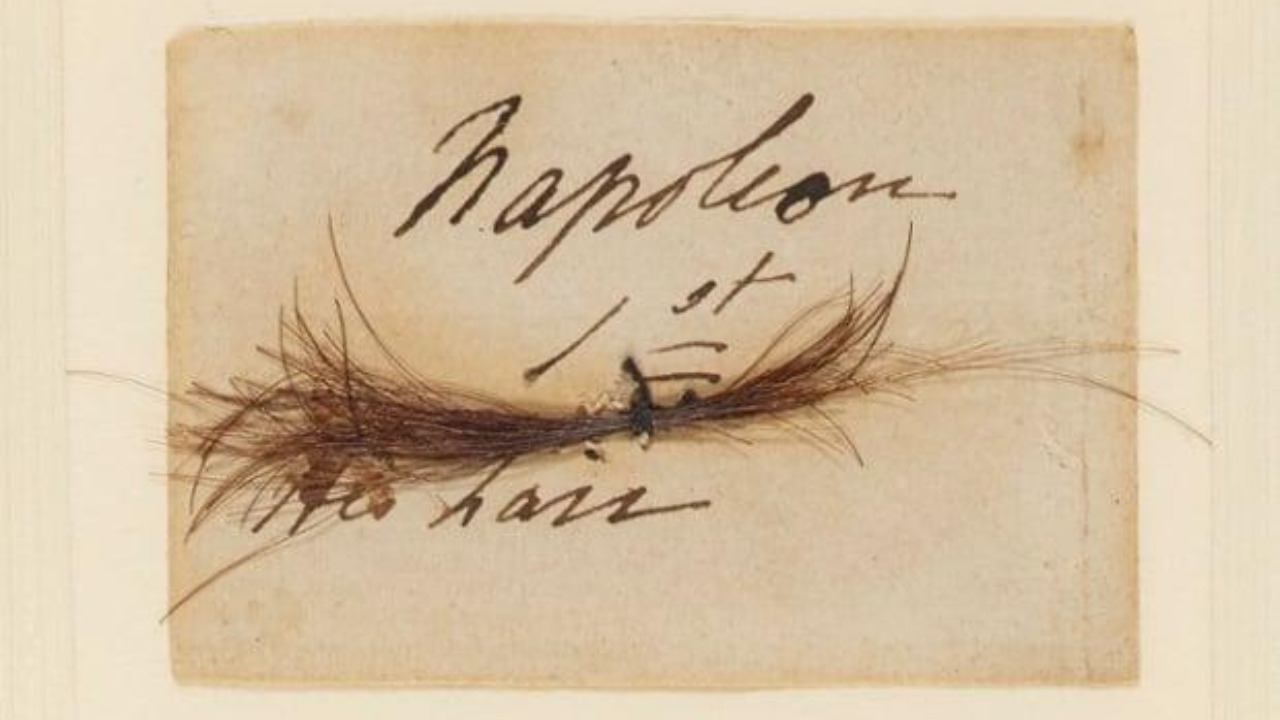
Napoleon’s hair, taken from the battlefield at Waterloo. Image: The Royal Collection Trust
The hair later fed a larger mystery
Napoleon’s preserved hair became important for another reason: it entered the long-running debate over how he died. Some researchers have argued that arsenic levels in hair samples point to poisoning, while others have said the evidence does not support that conclusion and is consistent with environmental exposure in the early 19th century. The wider historical record still leans towards stomach cancer as the most likely cause of death, though the poisoning theory remains part of the public fascination.
A small relic from a very large life
Napoleon’s request was probably not about vanity or immortality. It fits much better with the mourning habits of the era: a fallen emperor wanting a final, physical link left behind for the people closest to him. That is why his hair endured as both a sentimental keepsake and a historical artefact, carrying a strangely intimate trace of one of history’s most powerful figures.


