
Rewriting history: The 3.8-billion-year-old clue found in a Quebec rock

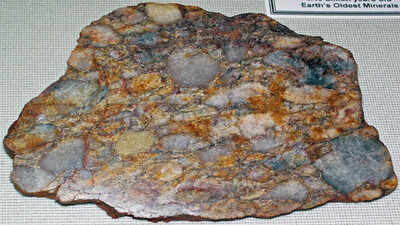
In the wilds of northern Quebec, near the shore of Hudson Bay, there is a formation of rocks which resembles any other formation in the Canadian Shield. Named the Nuvvuagittuq Supracrustal Belt, these rocks are among the oldest known formations on Earth. They had been considered a mere peculiarity of geology for many years, but lately, these rocks have become the focal point of heated discussions on life’s origin.Scientists studying these ancient formations discovered microscopic, tube-like structures and fine filaments made of hematite, a form of iron oxide. These aren’t just random scratches in the stone. To the trained eye, they look remarkably like the tiny microbes that live today near blistering hydrothermal vents on the ocean floor. If these are indeed fossils, they represent the oldest evidence of life ever found, dating back at least 3.77 billion years.Such an incredible discovery shows how fast organisms could evolve on the Earth. The findings indicate that almost immediately after the formation of water on the Earth’s surface, some organisms started to appear. It is usually assumed that life forms could not develop due to the very harsh conditions during the initial period of our planet’s history. Still, such microscopic evidence from Quebec proves quite the opposite.A chemical signature of the living organismsIt is important to note that such a discovery is not made only based on the shape of objects. When looking for the first life forms, one should remember that nature might create some artefacts that look like living organisms. In order to prove their findings, scientists had to rely on a chemical signature that would provide evidence for biological activity.In a landmark report titled Evidence for early life in Earth’s oldest hydrothermal vent precipitates, scientists explained that these structures were found alongside specific minerals like graphite and apatite. These minerals are often the byproducts of biological activity. The study suggests that these filaments were created by ancient iron-oxidising bacteria that lived on the edges of seafloor vents. By linking the physical shape to this specific chemical environment, the researchers built a much stronger case that these are true fossils rather than just geological accidents.But, of course, the scientific world is known for being very hesitant about making assumptions concerning any claims made decades ago. The thing is that these rocks were subjected to immense heat and pressure caused by the Earth’s tectonic plate movement throughout billions of years. There was an opinion that the existence of tubes might result not from biological processes but from some high-pressure fluids that travelled through rocks. And these are the reasons why the rocks from Quebec became the centre of the origin of life investigations.
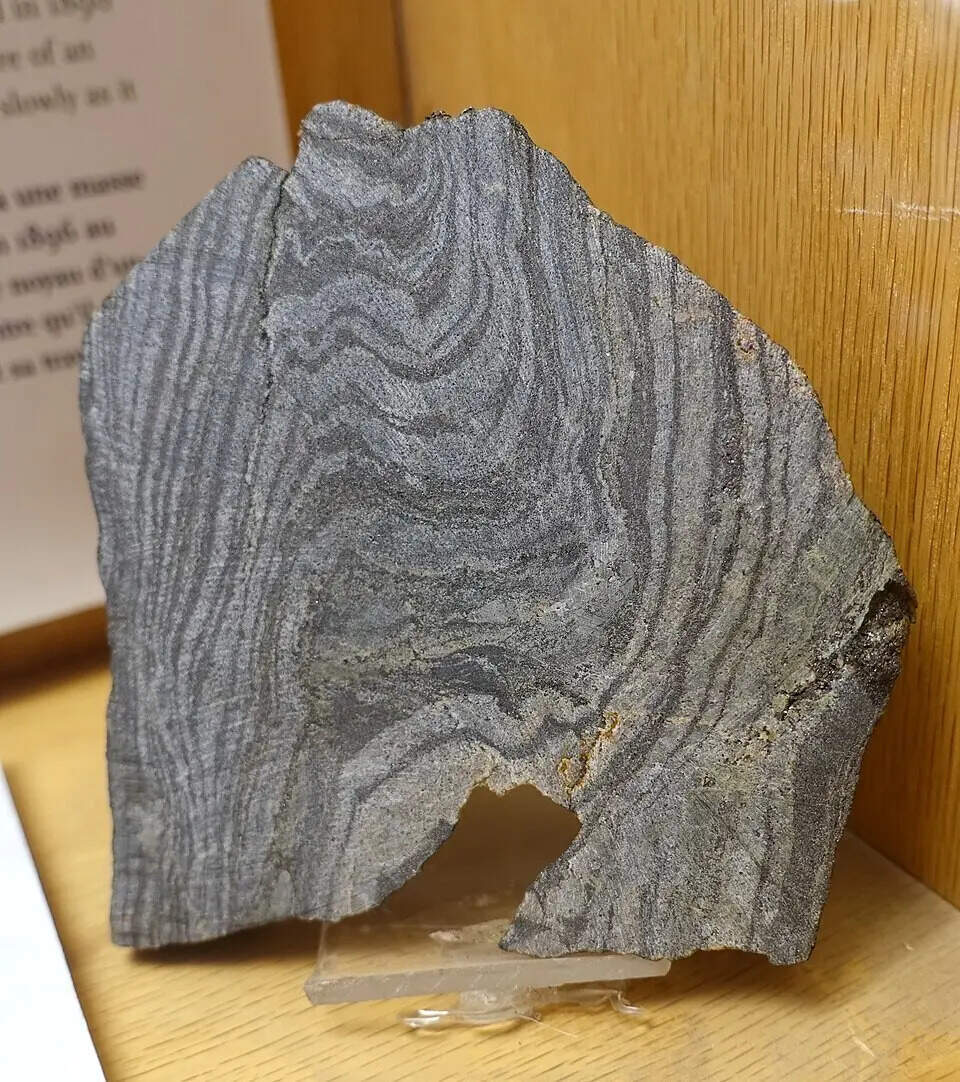
This suggests life emerged rapidly on early Earth, potentially thriving in hydrothermal vents, offering insights into life’s origins and possibilities on other planets. Image Credits: Daderot, via Wikimedia Commons
Diverse population of the ancient worldAs scientists carried on with their research into the Nuvvuagittuq belt, it turned out that there is a lot more diversity in terms of ancient life traces than people thought before. They found out that there were multiple fossils instead of one, thus indicating the presence of an entire community at that point in time.A follow-up study published in Science Advances added a new dimension to the story. By analysing isotopes within the rock, researchers found evidence of different types of energy being used, including sulfur and iron metabolism. This implies that life was already branching out and evolving into different “specialities” nearly 4 billion years ago. If this is true, it means the actual origin of life must have happened even earlier, perhaps shortly after the planet itself was formed.These discoveries can prove to be absolutely crucial when it comes to exploring the possibility of life existing on other planets, such as Mars. Life has proven to evolve and diversify very rapidly in the conditions found inside those vents of ancient Canada, and there is a good chance that this happened on Mars as well, with its own wet volcanic vents.For now, the fossils in Quebec will stay putative fossils, which means that they are the best possible candidates, but the dispute is definitely not closed. With each research paper published, we move a little closer to finding out more about those times of long ago. No matter what happens, whether the samples turn out to be fossilised remains or strange minerals after all, we can never forget that these little rocks have irrevocably altered our understanding of the origin of life on Earth.


