
Quote of the day by Ogden Nash: “To keep your marriage brimming, with love in the wedding cup, whenever you’re wrong, admit it; whenever you’re right, shut up.”

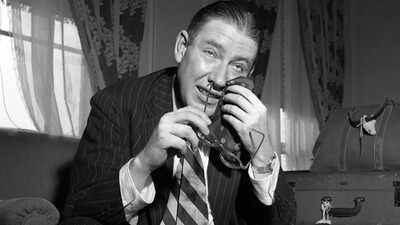
Marriage advice is often given in long speeches, relationship books, counselling sessions and complicated psychological explanations. But sometimes a single sentence can explain human relationships more honestly than pages of earnest discussion. It’s no wonder one quote by American poet Ogden Nash remains popular decades after it was first written. On the surface, Nash’s words about marriage are funny. Still, beneath the surface, they are deeply observant and have endured because they speak to something timeless about ego, communication and companionship.The quote, “To keep your marriage brimming, With love in the wedding cup, Whenever you’re wrong, admit it; Whenever you’re right, shut up,” has been widely circulated as humorous relationship advice. But beneath the wit is an understanding of human nature that many couples immediately recognise. Arguments are rarely just about the facts in relationships. More often, they are battles of pride, tone and emotional distance. Nash’s words cut through all of that with unusual simplicity.Even today, in an era where social media opinions, relationship podcasts, and endless compatibility debates dominate, the quote still rings true because it highlights something universal: successful relationships often rely less on winning arguments and more on maintaining emotional connection.
Quote of the day by Ogden Nash
“To keep your marriage brimming, with love in the wedding cup, whenever you’re wrong, admit it; whenever you’re right, shut up.”
Why Ogden Nash’s quote still feels surprisingly modern
The quote was penned many decades ago, but sounds surprisingly relevant even today. While modern relationships might be different from those of earlier generations, emotional misunderstandings are essentially the same. Couples still have problems with communication, defensiveness, and wanting to be right in arguments.What is memorable about Nash’s quote is that he adopts a humorous, rather than critical, stance towards these problems. The line does not try to sound philosophical or academic. Instead, it addresses a truth many people learn through experience: being technically correct isn’t always helpful to a relationship.In many arguments, the need to be right may only add to the emotional distance, rather than solve the real problem. Nash’s observation highlights the idea that empathy, patience and timing trump intellectual victory.Today, the relationship experts talk a lot about emotional validation, active listening and how to resolve conflict. Nash had the knack of condensing a similar idea into one witty sentence that people would still quote generations later.
The story behind Ogden Nash and his writing style
Ogden Nash is known for his humorous poetry and witty comments about everyday life. Born in New York in 1902, he developed an original literary style of satire, rhyme, and street talk. Poets who relied on heavy abstract imagery or dense symbolism were not like Nash. Nash wrote so that the ordinary reader could understand him on the spot.His poems tended to focus on everyday frustrations, family life, society and human behaviour. That accessibility made him one of the best-known American humorists of the twentieth century.What set Nash apart was his ability to mix humour with uncomfortable truths. His lines made readers laugh because they saw themselves in them. His comments on marriage, parenting, modern life and social behaviour tended to appear light-hearted at first glance, but often had surprising depth.That’s in the style of the famous marriage quote. It sounds playful, almost casual, but it quietly hints at an emotional truth many long-term couples understand deeply.
Why humour often works better than lectures in relationships
Part of the reason Nash’s quote keeps coming up is that sometimes humour can convey difficult truths more effectively than direct criticism. People often resist advice that sounds judgmental or preachy. Humour breaks down those defences.The quote isn’t about blaming husbands or wives. It doesn’t turn relationships into complex psychological theories. Rather, it gently reveals the stupidity of foolish arguments.Humour is important in healthy relationships, according to many psychologists. Shared laughter in disagreement can be a tension-reliever and a way to feel close. Couples who laugh together through stressful times tend to bounce back from conflict more easily.That’s exactly the balance Nash’s line strikes. It recognises that disagreements are inevitable but believes that humility and restraint may do a better job of preserving love than endless correction.
The hidden lesson about ego and emotional intelligence
The quote, at its heart, is really not about silence. This is about emotional intelligence.To admit mistakes requires humility. It takes restraint to remain silent in needless proof of self-righteousness. Both are difficult because they challenge the human ego. Most people have an instinct to be recognised, to be validated and to win in arguments.But enduring relationships often hinge on knowing when to surrender the desire to dominate the conversation. Emotional intelligence, you know, is knowing sometimes it’s better to keep the peace than to win the argument.Today, relationship counselling often focuses on emotional regulation and self-awareness. Decades earlier, Nash had humorously stated a version of the same principle.This quote also highlights an important difference between communication and competition. Any disagreement becomes a competition with winners and losers. This is what makes relationships unhealthy. Nash’s words gently suggest that marriages do better when partners cease treating conversations as wars.
Why people continue sharing this quote online today
In the age of digital, old quotes have found new life. Nash’s marriage advice continues to pop up on social media, relationship blogs and motivational pages because it is simple to understand and emotionally resonant.The quote sounds more human and conversational than complex self-help jargon. Many readers immediately relate it to their own experiences of family life, misunderstandings, or everyday arguments.Its popularity also reflects a broader trend of people being more willing to receive wisdom in simple form, rather than in the form of formal lectures. Subtle, catchy quotes are more successful at going viral because they are easily incorporated into online culture.At the same time, the quote still holds because it brings together entertainment and emotional truth. It’s shared first as a joke, but people tend to remember it because it contains some recognisable wisdom about relationships.
Marriage advice has changed, but emotional truths remain the same
Modern relationships are so different from the Ogden Nash era marriages. Social expectations, gender roles, careers and family structures have all changed dramatically over the decades.But some emotional truths never change. People still want to be understood, respected, patient and emotionally safe in relationships. Couples still argue over misunderstandings, lack of communication, and pride.That’s why older quotations can sometimes feel surprisingly relevant. They touch on emotional patterns that are not entirely erased by technology and social change.Nash’s line doesn’t endure because it offers a marriage solution, but because it recognises an age-old truth: love often demands compromise, humility and the ability to put connection over ego.
How simple language helped Ogden Nash become unforgettable
Another reason the quote remains popular is that it’s easy. Nash steered clear of complex literary language. His writing seemed natural, almost conversational. This made his ideas more memorable and repeatable.Great quotes often do this by expressing something emotionally complex in plain words. Nash had a sense of rhythm, timing and humour that made his lines memorable.The marriage quote is almost like a spoken piece of advice from some older relative at a family gathering. It feels personal, not intellectual. That accessibility helped Nash reach readers far beyond the traditional audience for poetry.This line is so easily crossed across generations and cultures that even readers unfamiliar with his wider oeuvre know it.
The emotional balance between honesty and kindness
One important implication of Nash’s quote is that it does not discourage honesty at all. It suggests a balance more.Honesty is a must for healthy relationships, but honesty without empathy can be harsh or destructive. The quote implies that timing and sensitivity are as important as truth itself.Many conflicts escalate not because people disagree, but because they feel unheard, dismissed, or emotionally attacked. Nash’s humour suggests a gentler mode of communication, one in which emotional connection takes precedence over asserting one’s superiority.This idea continues to be seen in contemporary discussions of relationships, emotional maturity, and communication psychology.
Why this quote continues to outlive generations
Some quotes are too attached to a particular time period to go. Some live on because they talk about feelings that people have over and over, from one generation to the next.Ogden Nash’s saying about marriage is of the second type. It survives because relationships themselves are emotionally complicated. People still have problems with pride, misunderstanding, and communication. They still seek ways to remain connected in stressful times.The quote works well here, too, because it’s not too serious-sounding. Readers laugh first, think afterwards. That mix makes it memorable.In the end, Nash’s words endure not because they promise perfect relationships, but because they gently remind us that love sometimes becomes stronger through patience, humility and a sense of when an argument just isn’t worth winning.


