
‘Crocodile Bridge’ on Mars: NASA’s Perseverance rover captures a mysterious ancient region on the Red Planet

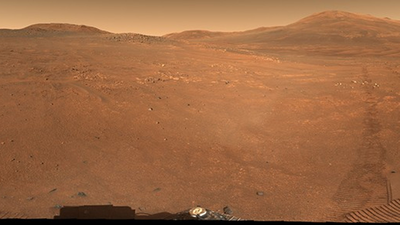
NASA’s Perseverance has captured a sweeping new panorama of a rugged Martian region nicknamed “Crocodile Bridge”, revealing one of the oldest known landscapes on Mars in remarkable detail. The 360-degree mosaic, created using the rover’s Mastcam-Z camera system, combines 980 images captured across multiple Martian days, or sols. Located on the rim of Jezero Crater, the area contains ancient rocks believed to date back to the early formation of the solar system. Scientists say the terrain could preserve valuable clues about Mars’ early crust, atmosphere and the planet’s long-lost watery past.
Inside the Crocodile Bridge region on Mars
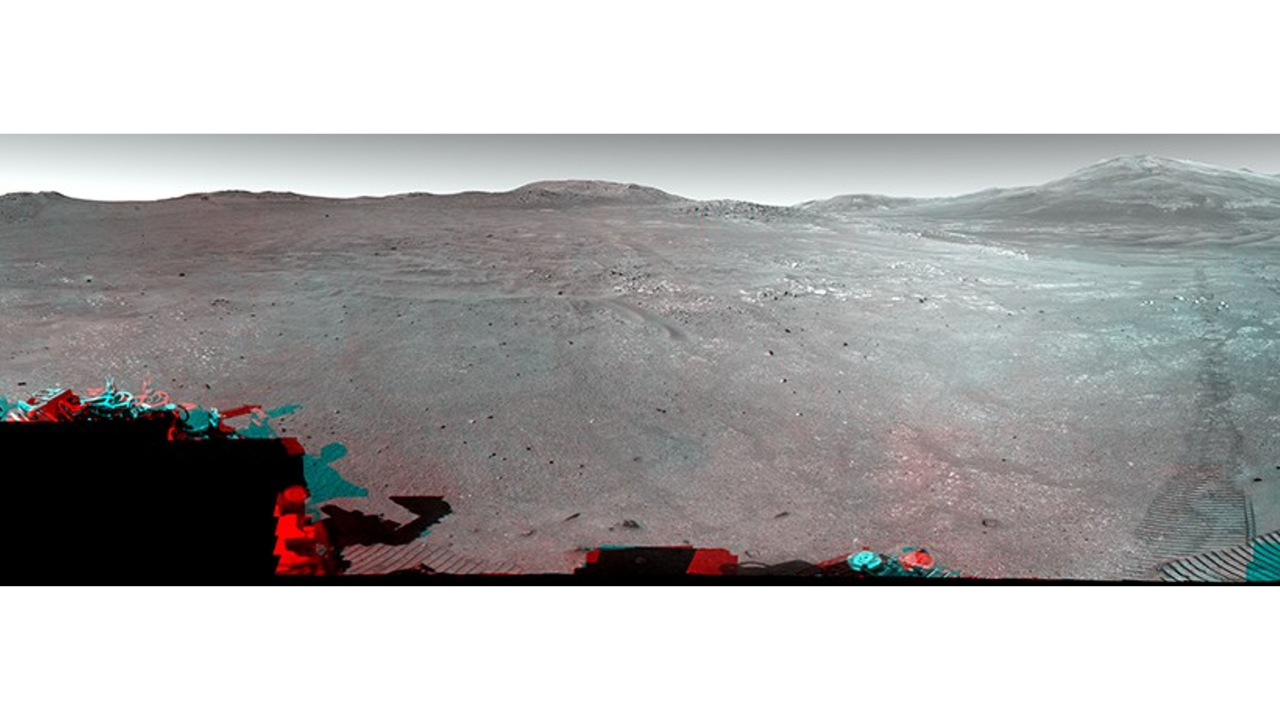
The newly released panorama was assembled using Perseverance’s Mastcam-Z camera system. According to NASA, 971 images were captured on 18 December 2025 during Sol 1,717 of the mission, while another nine images were taken on 25 January 2026 during Sol 1,754.The natural-colour panorama was processed to resemble how the human eye would see the Martian surface. NASA also released enhanced-colour and 3D anaglyph versions of the panorama, which help highlight subtle geological details and elevation changes across the rocky terrain.The images reveal a brownish-red plain scattered with rocks and bordered by ridges and hills on the horizon. Tracks left behind by the rover stretch across the surface, marking Perseverance’s route along the crater rim.The Crocodile Bridge region marks a transition into another scientifically important area called “Lac de Charmes”, which Perseverance is expected to explore for several months later this year.Scientists are especially interested in this region because the rocks around Jezero Crater’s rim are believed to be among the oldest preserved anywhere in the solar system. NASA describes them as geological time capsules from a period when Mars’ crust and atmosphere were still forming.Unlike Earth, Mars does not have active plate tectonics constantly recycling and reshaping its surface. This has allowed extremely ancient terrain to remain preserved for billions of years, giving researchers a rare opportunity to study material from the early history of the Red Planet.
Why is it called ‘Crocodile Bridge’
NASA has not officially explained the origin of the nickname “Crocodile Bridge”, but it appears to be an informal operational name used by the rover team to identify a specific landscape feature or route.Mars mission teams frequently assign unofficial names to terrain, rock formations and exploration zones to simplify navigation and scientific discussions. In this case, the nickname refers to a transition region leading into the “Lac de Charmes” area.The name does not indicate the existence of crocodiles or actual bridges on Mars. NASA has also not confirmed the exact inspiration behind the title, though it may relate to the shape or appearance of the terrain.
Exploring an ancient Martian lake system
Jezero Crater was selected as Perseverance’s landing site because scientists believe it once contained a lake and river delta billions of years ago. Previous orbital observations detected minerals that typically form in water-rich environments.One of the rover’s primary goals is to search for signs that microbial life may once have existed in these ancient habitats. Perseverance is also collecting rock and regolith samples that could eventually be returned to Earth for detailed laboratory analysis in a future mission.By exploring locations such as Crocodile Bridge, researchers hope to better understand whether Mars once had conditions capable of supporting life.
The technology behind the images
The panorama was captured using Mastcam-Z, a sophisticated stereo camera system mounted on the rover’s mast. The instrument can zoom, create 3D imagery and examine geological formations from long distances.Arizona State University leads Mastcam-Z operations in collaboration with Malin Space Science Systems and the Niels Bohr Institute, which contributed to the calibration systems used for the cameras.The high-resolution imagery allows scientists to study rock layers, identify mineral differences and choose locations for closer investigation.
A mission focused on Mars’ ancient past
Managed by NASA Jet Propulsion Laboratory on behalf of NASA, the Perseverance mission is part of NASA’s Mars Exploration Program.Since landing on Mars in February 2021, Perseverance has explored ancient river channels, sediment deposits and volcanic terrain across Jezero Crater. Each new region helps scientists reconstruct the environmental history of Mars and investigate whether the planet may once have been habitable.The Crocodile Bridge panorama adds another important chapter to that mission, offering a detailed look at a landscape that has remained largely unchanged since the early days of the solar system.


