
In 2016, beachcombers’ discovery of unusual riverbank bones led to the uncovering of Australia’s giant megafauna

A leisurely weekend spent by the seaside can create a vision in one’s mind: walking down the beach under the shimmering rays of light reflecting off the waves, and suddenly seeing something strange come out of the sands. Yet it’s not mere fiction for a group of Australians at the beach back in 2016, where they found a set of fossils belonging to some ancient beasts by following a path of huge bones near the riverside.It makes us look at things differently, pointing to a past where there were fantastic beasts lurking under the hustle and bustle of the city and its sleepy suburbs. Once upon a time, there were megafauna, mythical beings that walked the land: giant kangaroos, car-sized wombats, and large flightless birds towering above men. They roamed the area of Sahul, an ancient land bridge connecting Australia and New Guinea, until their disappearance remains an enigma to researchers today.The giants of the ancient Sahul landscapeWhen we think of prehistoric giants, dinosaurs typically come to mind. However, Australia’s megafauna were unique, giant marsupials, similar but bigger relatives of modern animals that adapted to changes in the environment. According to a study titled Seasonal migration of marsupial megafauna in Pleistocene Sahul, this was not happenstance. This implies that large herbivores, such as Diprotodon optatum, the biggest marsupial on record, migrated seasonally throughout the continent in search of sustenance and water.The nomadic way of life indicates that these titans were more than just a curiosity; rather, they were active participants in their environment. For thousands of years, they had been powerful browsers and herbivores in shaping the flora of the land. The importance of finding the skeleton at the riverside in 2016 is in giving credibility to the tale that scientists tell. When bones are unearthed due to erosion on the bank of the river, scientists have an actual roadmap of where these titanic travellers roamed before.
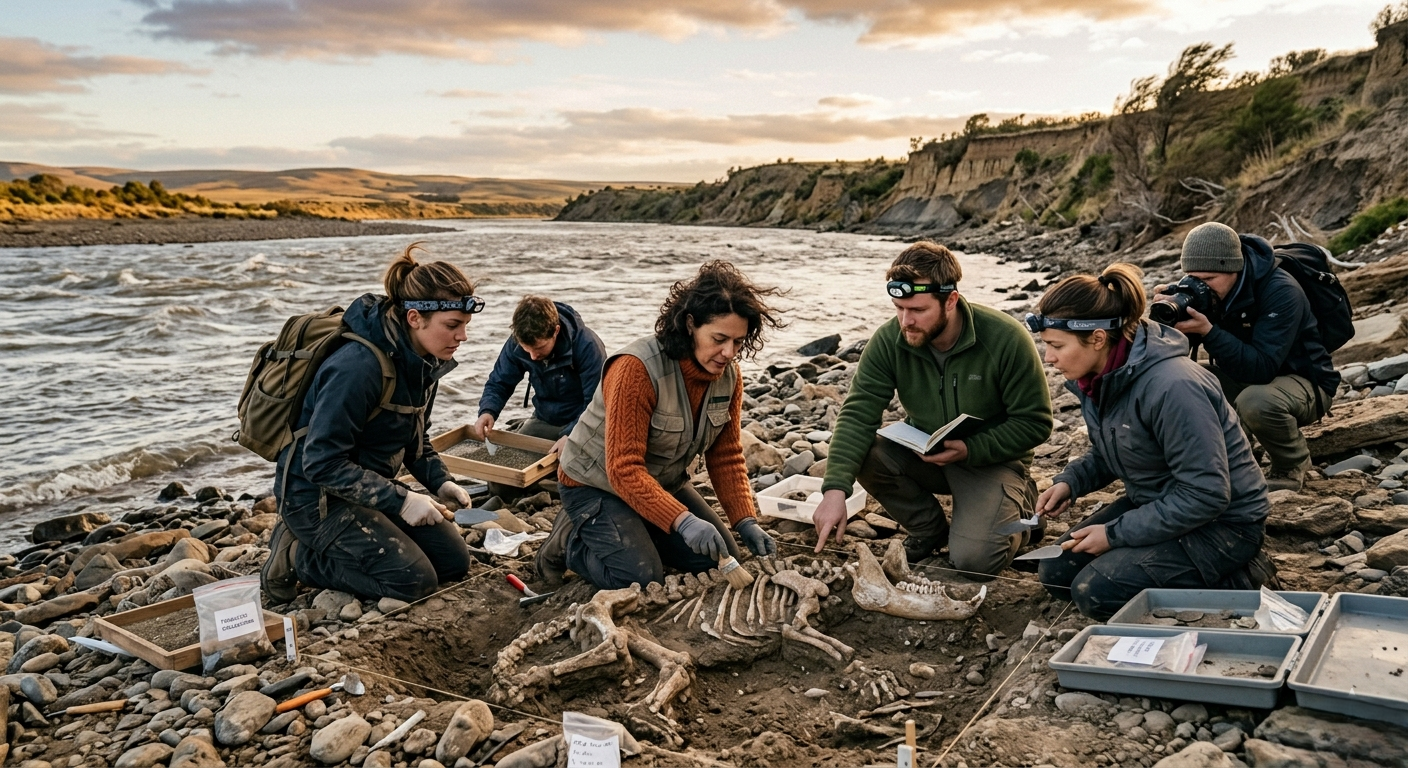
Their seasonal migrations and impact on the environment are now better understood through these unearthed remains, offering insights into their extinction alongside early humans. Image Credit: Google Gemini
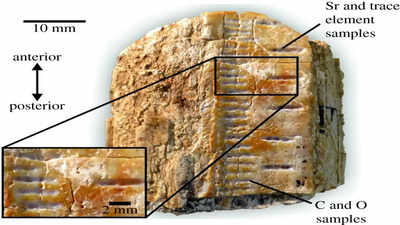
Thus, the timeframe of possible extinction is reduced to a specific period of time, which proves to be extremely significant due to its correlation with the spread of Homo sapiens throughout the continent. Despite heated debates on the reason behind the extinction event, fossils found in Pleistocene sediments indicate an extended period in which ancient Australians co-existed with megafauna along the rivers and plains.A forgotten era revealed through mudRiverbed fossils rarely provide researchers with a perfect specimen. Often, it is just one single bone or femur that tells the entire history of a species. The process of fossil discovery involves a careful balance of preservation and destruction of remains, while the same erosion processes that expose buried bones also work toward their destruction. Thus, public involvement becomes a vital component in paleontological expeditions – while professionals might overlook an important site, any member of the public could accidentally discover evidence of an unknown epoch.Beyond the giant marsupials, other members of the megafauna family were equally impressive. Research published in Nature Communications notes that the continent was also home to massive birds that stood nearly seven feet tall. The study highlights how a combination of environmental changes and human interaction likely led to the downfall of these specialised giants. By examining the chemical signatures in fossilised eggshells and bones, scientists can see a clear pattern of decline that coincides with the cooling and drying of the Ice Age.In contrast, these fossils mean much more than just exhibits today; they serve as an important indicator of how ecosystems react to disturbances such as changes in climate or the introduction of another species. The discovery made in 2016 on the bank of the river serves as a reminder of the ongoing process of evolution throughout the life cycle of Earth. The “odd bones” found by tourists represent the end stage of an ancient lineage.


