
NEW DELHI: On paper, the 2026 assembly elections are straightforward: five regions, 824 seats, and a familiar roster of parties battling for power. West Bengal (294 seats), Tamil Nadu (234), Kerala (140), Assam (126), and Puducherry (30) together form a significant, but not unprecedented, electoral exercise.Yet, this is not a routine election cycle.The timing gives it weight. As of May 3, 2026, the BJP-led NDA governs 21 out of 31 states and Union Territories. The regions that have just voted — particularly in the South and East — are among the last major spaces where the BJP has not fully consolidated power. That alone turns this into a test of geographic expansion. Watch Fish, Film Stars, Singer Zubeen & Pinarayi: 4 Uniques of This Election | I WitnessThe scale of voter participation sharpens that sense of importance. West Bengal has recorded turnout close to 91%, among the highest ever. Tamil Nadu has seen turnout in the 85.1%, a notable jump. Assam has recorded close to 86%, Kerala has remained steady around 80%, and Puducherry has touched roughly 90%. These are not numbers that suggest voter fatigue. They point instead to a politically charged electorate, invested in the outcome.High turnout, however, remains an ambiguous signal. It can indicate anti-incumbency, but it can also reflect strong mobilisation by ruling parties. It may point to enthusiasm for new entrants, or a consolidation of traditional vote banks. In 2026, it appears to be all of these at once — which is precisely what makes the outcome difficult to predict, hours before counting begins.The BJP’s expansion questionFor the BJP, the 2026 elections are as much about immediate outcomes as they are about long-term trajectory. The party has already achieved national dominance, but its map remains uneven. The Hindi heartland and parts of the West are firmly within its grasp, while the South and East continue to present resistance.This election is a test of whether that resistance is softening.In West Bengal, the BJP is no longer an outsider. Its rise from marginal presence to a formidable challenger in 2021 — when it secured 77 seats and over 38% vote share — marked a structural shift. The question now is whether that growth can translate into power, or at least into a vote share that pushes it decisively into the mid-40s.In Tamil Nadu, the challenge is different. The BJP remains a secondary player but has been attempting a gradual expansion. Even incremental gains — a higher vote share or a stronger assembly presence — would carry political significance by breaking the perception that the state is impenetrable.Assam is a test of consolidation. The BJP is the incumbent here. If it improves its standalone performance, it would suggest a move beyond coalition dependence toward deeper dominance.Across these states, the BJP faces a core question: can it convert national strength into uniform regional presence, or is it nearing a natural ceiling in culturally distinct regions?Congress and its fight for relevanceIf the BJP’s question is about expansion, the Congress faces a more fundamental one: relevance.The party remains a key player, but no longer the default pole of opposition. Instead, it operates within a fragmented landscape, often as part of alliances rather than as the central force.In Kerala, it remains a principal contender. A victory would reaffirm its ability to compete independently. A loss would weaken its claim to being a national alternative, particularly in the South.In Assam, it is challenging an entrenched BJP but faces the complications of a multi-cornered contest, where vote splits could dilute its impact.In Tamil Nadu, it is a junior partner dependent on the DMK. In West Bengal, it has gone solo but remains a marginal force.The underlying question is clear: can the Congress rebuild as a primary force in key states, or will it remain an essential but secondary player within coalitions?Regional strongholds under pressureWhile national parties dominate the narrative, these elections are equally about the resilience of regional forces.In West Bengal, Mamata Banerjee’s Trinamool Congress is defending not just a government, but a political model built on welfare, identity and leadership. The scale of its 2021 victory established dominance, but the BJP’s rise means that dominance is now under pressure. Even a reduced majority could have consequences beyond the numbers.In Banerjee’s case, the final stretch of the campaign has reflected a leader fighting not just an election, but a narrative. In the last few days after polling closed, Banerjee shifted gears from large rallies to hyper-local mobilisation, focusing on booth-level management and direct voter contact.The post-polling time became increasingly granular — with the chief minister reviewing constituency-wise feedback, flagging sensitive booths, and pushing cadre to ensure turnout among core support groups. Her visits to strongrooms and repeated public warnings about electoral vigilance reinforced this approach, signalling a strategy built as much on guarding votes as on winning them.The campaigning messaging, too, was sharpened this time: from broad welfare claims to a more pointed appeal around identity, rights, and alleged voter roll exclusions. By foregrounding issues like the Special Intensive Revision and positioning herself as a defender of the “vote”, Banerjee sought to convert organisational strength into electoral security. For the Trinamool Congress, this last-mile push is critical. In a contest where margins could tighten, the effectiveness of booth-level mobilisation — ensuring that every identified supporter actually votes — may ultimately matter as much as the broader political narrative.Tamil Nadu is witnessing a disruption of its traditional DMK-AIADMK binary. The emergence of the Tamilaga Vettri Kazhagam (TVK), led by actor Vijay, has introduced unpredictability. Even without sweeping wins, its vote share could alter outcomes across constituencies.In Kerala, the stakes are structural. The Left, led by Pinarayi Vijayan, is attempting a rare third consecutive term. For the Congress, stopping that is central to its political relevance.Assam represents a system already transformed, where the BJP is dominant and the question is whether opposition forces can regroup.Across states, a common thread emerges: regional parties remain powerful, but they are operating under increasing pressure from national expansion and shifting voter behaviour.A moment before the verdictBy this time tomorrow, the numbers will begin to settle. Governments will take shape. Winners and losers will be clear.But the deeper story will lie beneath the results.If the BJP expands, it reinforces the arc of national dominance. If regional parties hold, it signals resilience of India’s federal diversity. If Congress gains, it hints at recovery. If new entrants like TVK make an impact, it suggests appetite for disruption.What makes this election moment distinctive is that all these possibilities remain open, on the eve of counting.This is why the election feels existential — not because of any single result, but because of what the combination of outcomes will mean.As counting begins on May 4, one question will linger beyond the trends:Is India moving toward a more centralised political order, or will its regional diversity continue to define its democracy?The answer will emerge seat by seat.About the AuthorPallaviNews desk journalist, digital, at The Times of India, with a focus on Indian politics. Over a decade of chasing stories, taming headlines and arguing with commas like they’re part of the opposition. Tracks elections, policy pivots, party drama and the fine print of power, where every word can tilt the narrative. Believes good journalism is clarity under pressure, ideally filed before the next breaking alert crashes in. Powered by deadlines, context, sharp edits and a steady supply of strong tea.Read MoreEnd of ArticleFollow Us On Social MediaVideosBJP MP Sandeep Pathak Claims ‘No Information’ On FIRs, Alleges Misuse Of State Machinery In PunjabIndian Startup Launches Mission Drishti, World’s First OptoSAR Satellite, Aboard SpaceX Falcon 9Diljit Dosanjh Confronts Khalistan Supporters at Calgary Concert, Explains KBC AppearanceDelhi Approves ₹48,000 Crore Metro Expansion Plan To Connect Outer Regions With City CoreVietnam President To Lam’s First State Visit To India: What It Means For New Delhi-Hanoi TiesPune Rape-Murder Case: CM Fadnavis Assures Fast-Track Trial, Targets Oppn Over ‘Cash-for-Transfer’Nishant Kumar Begins Sadbhav Yatra from Patna, Says Aim is Worker Outreach & Public ConnectIAF Rescues Two Children Stranded On Water Tank in Siddharthnagar, UP Using Mi-17 HelicopterMassive Fire in Delhi’s Vivek Vihar Building, 9 Dead as Rescue Operations Continue in ShahdaraPune Child Rape-Murder Sparks Protests, Highway Blocked Near Navale Bridge123PhotostoriesRed vs green Apple: How to choose the right one for your health goalsRihanna to Katy Perry: 7 most bizarre Met Gala looks that stole the spotlightBhagavad Gita lessons to overcome life’s challenges and stay happySudden back pain? It might not be muscle strain; here’s how to spot kidney stones early and what to do5 countries where you can drive with your Indian driving licenceFrom six stunning balconies with spectacular views to a lobby with three private lifts, Siddharth Nigam offers a glimpse into his luxurious homeWhy Chennai’s Anna Salai1.5-km flyover section is a big relief for commutersBengaluru’s Namma Metro Pink Line enters crucial testing phase ahead of launch: What you need to know10 common behaviours that quietly ruin first impressionsWhere snakes hide around your home: 7 surprising spots in your house and garden you should never ignore123Hot PicksAssam key constituenciesKerala key constituenciesPuducherry election resultsTamil Nadu constituenciesAjay Pal SharmaBengal Poll RecordHimanta Biswa SarmaTop TrendingUS Germany relationsBank Holiday MayVande Bharat expressLPG cylinder price hikeMumbai missing linkPetrol, Diesel, LPG priceCBSE Class 12th ResultNEET 2026: Exam-day guideBSE AP SSC Class 10th ResultIPL Orange Cap

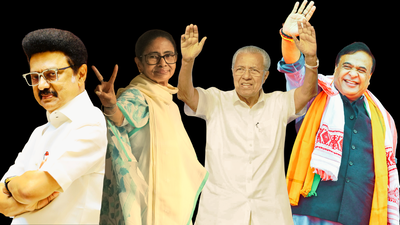
NEW DELHI: On paper, the 2026 assembly elections are straightforward: five regions, 824 seats, and a familiar roster of parties battling for power. West Bengal (294 seats), Tamil Nadu (234), Kerala (140), Assam (126), and Puducherry (30) together form a significant, but not unprecedented, electoral exercise.Yet, this is not a routine election cycle.The timing gives it weight. As of May 3, 2026, the BJP-led NDA governs 21 out of 31 states and Union Territories. The regions that have just voted — particularly in the South and East — are among the last major spaces where the BJP has not fully consolidated power. That alone turns this into a test of geographic expansion.
The scale of voter participation sharpens that sense of importance. West Bengal has recorded turnout close to 91%, among the highest ever. Tamil Nadu has seen turnout in the 85.1%, a notable jump. Assam has recorded close to 86%, Kerala has remained steady around 80%, and Puducherry has touched roughly 90%. These are not numbers that suggest voter fatigue. They point instead to a politically charged electorate, invested in the outcome.High turnout, however, remains an ambiguous signal. It can indicate anti-incumbency, but it can also reflect strong mobilisation by ruling parties. It may point to enthusiasm for new entrants, or a consolidation of traditional vote banks. In 2026, it appears to be all of these at once — which is precisely what makes the outcome difficult to predict, hours before counting begins.
The BJP’s expansion question
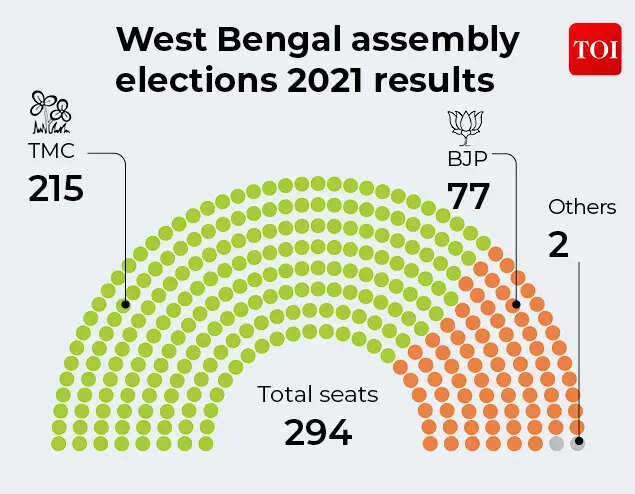
For the BJP, the 2026 elections are as much about immediate outcomes as they are about long-term trajectory. The party has already achieved national dominance, but its map remains uneven. The Hindi heartland and parts of the West are firmly within its grasp, while the South and East continue to present resistance.This election is a test of whether that resistance is softening.In West Bengal, the BJP is no longer an outsider. Its rise from marginal presence to a formidable challenger in 2021 — when it secured 77 seats and over 38% vote share — marked a structural shift. The question now is whether that growth can translate into power, or at least into a vote share that pushes it decisively into the mid-40s.
In Tamil Nadu, the challenge is different. The BJP remains a secondary player but has been attempting a gradual expansion. Even incremental gains — a higher vote share or a stronger assembly presence — would carry political significance by breaking the perception that the state is impenetrable.Assam is a test of consolidation. The BJP is the incumbent here. If it improves its standalone performance, it would suggest a move beyond coalition dependence toward deeper dominance.Across these states, the BJP faces a core question: can it convert national strength into uniform regional presence, or is it nearing a natural ceiling in culturally distinct regions?
Congress and its fight for relevance
If the BJP’s question is about expansion, the Congress faces a more fundamental one: relevance.The party remains a key player, but no longer the default pole of opposition. Instead, it operates within a fragmented landscape, often as part of alliances rather than as the central force.In Kerala, it remains a principal contender. A victory would reaffirm its ability to compete independently. A loss would weaken its claim to being a national alternative, particularly in the South.
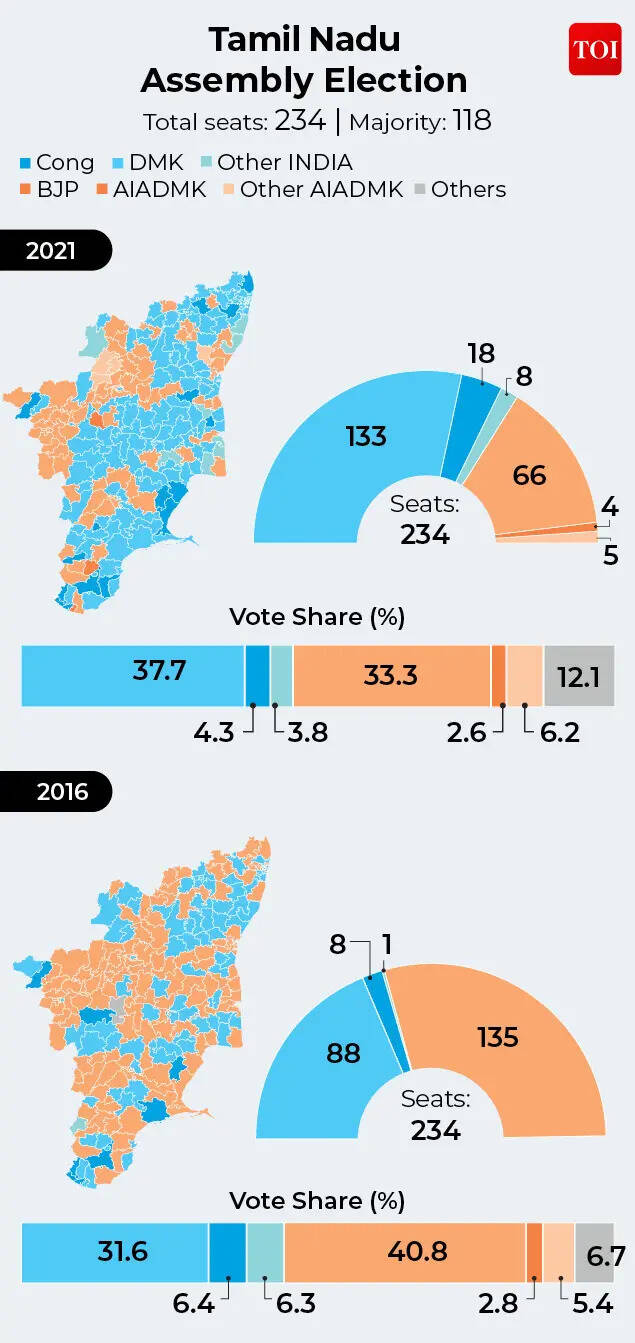
In Assam, it is challenging an entrenched BJP but faces the complications of a multi-cornered contest, where vote splits could dilute its impact.In Tamil Nadu, it is a junior partner dependent on the DMK. In West Bengal, it has gone solo but remains a marginal force.The underlying question is clear: can the Congress rebuild as a primary force in key states, or will it remain an essential but secondary player within coalitions?
Regional strongholds under pressure
While national parties dominate the narrative, these elections are equally about the resilience of regional forces.
In West Bengal, Mamata Banerjee’s Trinamool Congress is defending not just a government, but a political model built on welfare, identity and leadership. The scale of its 2021 victory established dominance, but the BJP’s rise means that dominance is now under pressure. Even a reduced majority could have consequences beyond the numbers.In Banerjee’s case, the final stretch of the campaign has reflected a leader fighting not just an election, but a narrative. In the last few days after polling closed, Banerjee shifted gears from large rallies to hyper-local mobilisation, focusing on booth-level management and direct voter contact.The post-polling time became increasingly granular — with the chief minister reviewing constituency-wise feedback, flagging sensitive booths, and pushing cadre to ensure turnout among core support groups. Her visits to strongrooms and repeated public warnings about electoral vigilance reinforced this approach, signalling a strategy built as much on guarding votes as on winning them.
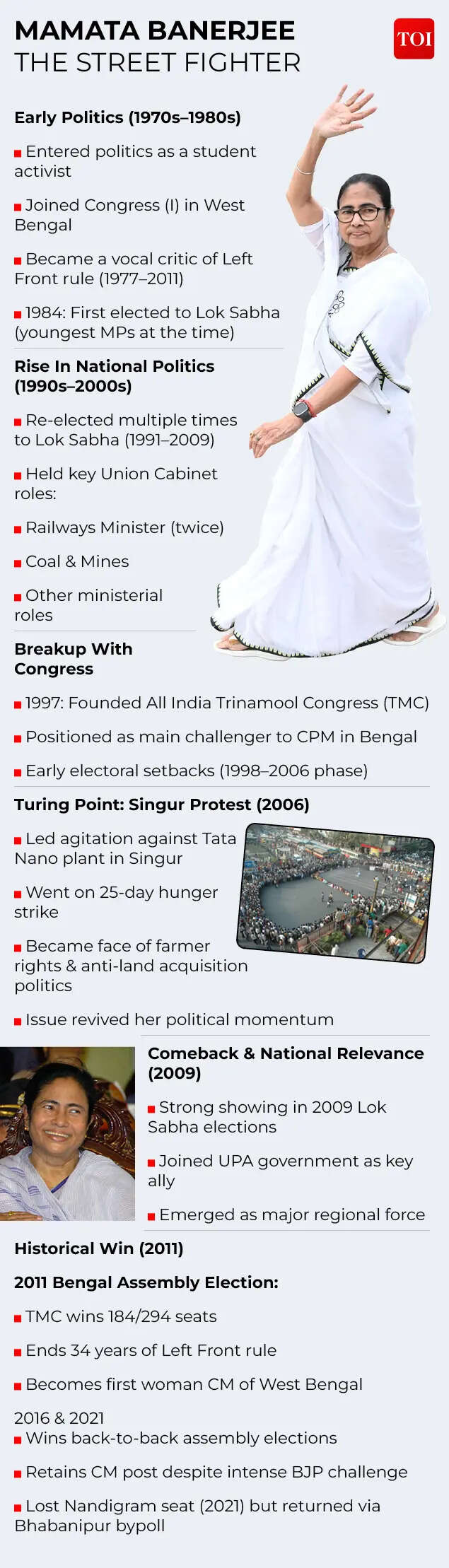
The campaigning messaging, too, was sharpened this time: from broad welfare claims to a more pointed appeal around identity, rights, and alleged voter roll exclusions. By foregrounding issues like the Special Intensive Revision and positioning herself as a defender of the “vote”, Banerjee sought to convert organisational strength into electoral security. For the Trinamool Congress, this last-mile push is critical. In a contest where margins could tighten, the effectiveness of booth-level mobilisation — ensuring that every identified supporter actually votes — may ultimately matter as much as the broader political narrative.Tamil Nadu is witnessing a disruption of its traditional DMK-AIADMK binary. The emergence of the Tamilaga Vettri Kazhagam (TVK), led by actor Vijay, has introduced unpredictability. Even without sweeping wins, its vote share could alter outcomes across constituencies.In Kerala, the stakes are structural. The Left, led by Pinarayi Vijayan, is attempting a rare third consecutive term. For the Congress, stopping that is central to its political relevance.Assam represents a system already transformed, where the BJP is dominant and the question is whether opposition forces can regroup.Across states, a common thread emerges: regional parties remain powerful, but they are operating under increasing pressure from national expansion and shifting voter behaviour.
A moment before the verdict
By this time tomorrow, the numbers will begin to settle. Governments will take shape. Winners and losers will be clear.But the deeper story will lie beneath the results.If the BJP expands, it reinforces the arc of national dominance. If regional parties hold, it signals resilience of India’s federal diversity. If Congress gains, it hints at recovery. If new entrants like TVK make an impact, it suggests appetite for disruption.What makes this election moment distinctive is that all these possibilities remain open, on the eve of counting.This is why the election feels existential — not because of any single result, but because of what the combination of outcomes will mean.As counting begins on May 4, one question will linger beyond the trends:Is India moving toward a more centralised political order, or will its regional diversity continue to define its democracy?The answer will emerge seat by seat.


