
The viral “towel hack” for blackheads: Genius or skin sabotage? |

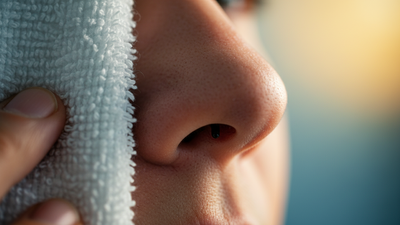
You may have seen it on social media: someone putting a warm, damp towel on their nose and pulling it off as if they’ve just deep-cleaned their pores. It seems satisfying, it sounds logical, and it costs nothing. So, of course, half the internet has tried it, but before you start grabbing for your bathroom towel, here’s what the science actually says, and it’s a little more complicated than the trend lets on.Blackheads aren’t what you think they areHere’s the thing that most skincare hacks get wrong: blackheads aren’t dirt. They are not dirt on the skin’s surface that you can just wipe off. According to the National Institute of Arthritis and Musculoskeletal and Skin Diseases (NIAMS), blackheads are open comedones, or plugs that form deep in hair follicles when dead skin cells and oil become trapped. That black colour? It is caused by oxidation, not by pollution or poor hygiene. So when you wipe your face with a warm towel, you are addressing a surface symptom of something happening deep in your pores.That difference is more important than it sounds. A towel can remove the top layer of your skin, excess oil and sweat, and possibly some residual SPF, making your skin look a little less congested for a while, but the plug that causes the blackhead is still there. It hasn’t moved any.So what can a warm towel really do?Warmth is not entirely useless, to be fair. Moist heat also helps to loosen surface oil and soften skin, which can make cleansing feel more effective. The towel method works on the same logic as warm compresses used for eye care, where heat affects the oil gland secretions. But the glands of the eyelids are not the same as the comedones of the face. In addition, simple towels quickly cool down and are therefore much less effective than devices designed to provide constant moist heat. So even the warmth argument has its limits.A clinical study published in the Skin Research and Technology journal showed that washing your face twice daily with a mild cleanser improved moderate acne without causing dryness or irritation. The benefit was in the routine and the cleanser, not friction or pressure. In this case, the towel is merely a supporting actor.
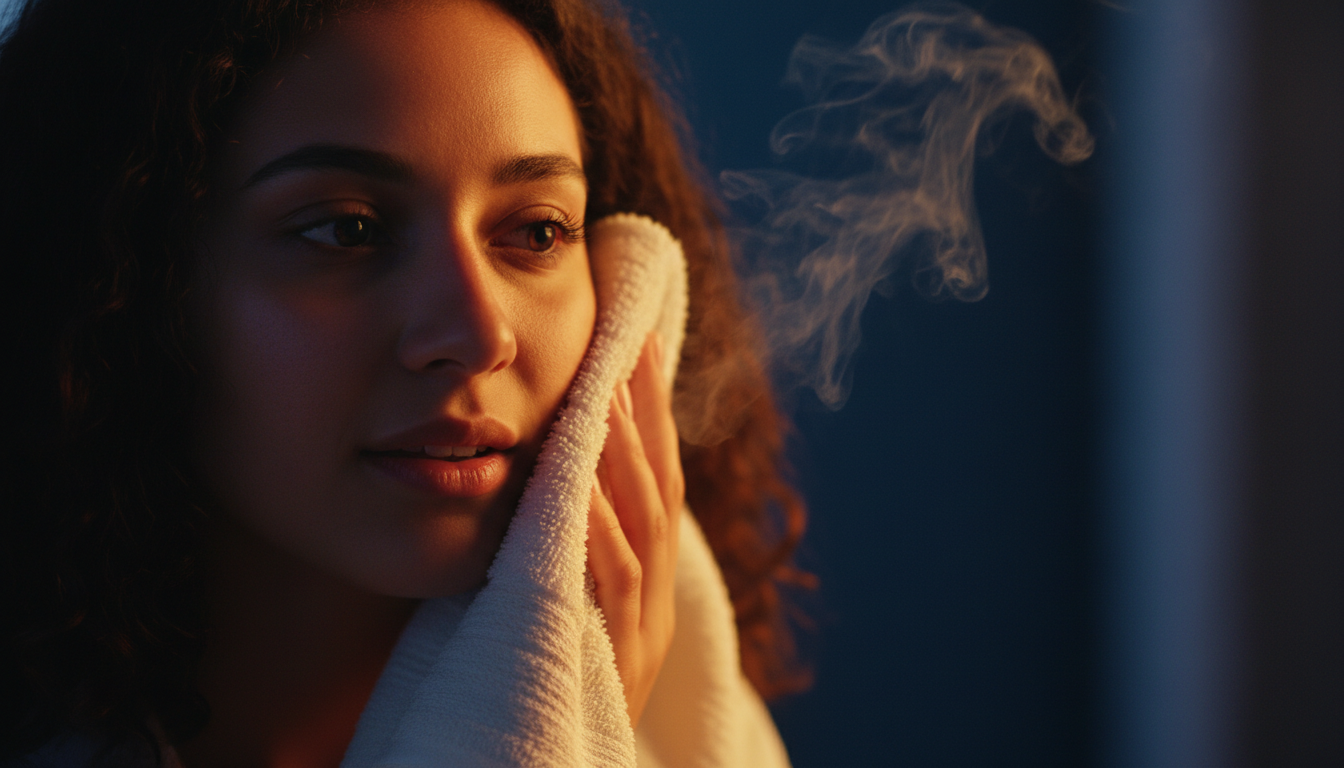
The skin barrier is more fragile than most people realise, and aggressive towel scrubbing can make acne worse, not better. Image Credits: Google Gemini
The part where it can actually backfireThis is where so many people get it wrong. They think the more pressure, the better the results. Vigorous scrubbing should always be avoided as rough rubbing can actually exacerbate acne and even cause a condition known as acne detergicans, essentially acne caused by over-cleansing. If you’re after results and you find yourself scrubbing instead of gently wiping or tapping, chances are you’re hurting yourself more than you’re helping.The skin barrier is real, and it’s a delicate thing. Once it’s compromised, your skin is more likely to get inflamed, irritated, and, ironically, more prone to breakouts.What actually removes blackheadsFor dermatologists, blackhead removal is a clinical procedure. Comedone extraction (the type of extraction done in a dermatologist’s office, not at home) also falls under the “other physical acne therapies” category, not at-home cleansing regimens.NIAMS also cites salicylic acid as a tested option, which helps break down blackheads and whiteheads by slowing the shedding of dead skin cells within hair follicles. Retinoids do something similar, targeting the early stages of comedone development, before a blackhead even appears. These treatments work inside the pores, and a towel can’t do that.What’s actually worth your time (and money)Gently doing the warm towel trick isn’t dangerous; it might actually make your skin feel cleaner and your cleansing routine a little more comfortable, but it won’t get rid of your blackheads. It makes the surface smooth, while the real problem is underneath.If you really want to get rid of blackheads, a routine with a mild cleanser and a salicylic-acid product (and, if necessary, advice from a dermatologist) will get you much further than any viral towel trick. Sometimes the boring answer is the right answer.


