
Why parrots can copy human voices but may not always understand the meaning

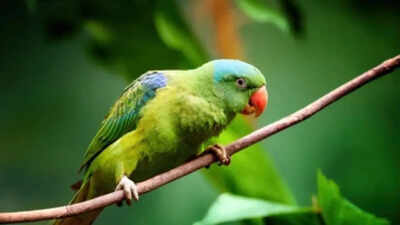
For ages now, parrots have caught the attention of people through their unique knack for replicating speech. Parrots can mimic sounds so well that they end up sounding like they’re actually conversing with someone. Even as such, although their vocalizing is commendable, it’s essential to differentiate imitation from linguistic comprehension.
The truth about their voice
Parrots belong to a certain type of vocal learners, which implies they possess the capacity to learn the sound through hearing, retaining, and replicating it with exceptional accuracy. This trait arises from their unique vocal organs and specific brain cells responsible for processing sound.Parrots lack vocal cords as humans have; they possess syrinx, which controls the flow of air into the lungs, thereby providing a rich variety of sounds at different tones and frequencies. For instance, parrots can reproduce the sounds of a phone ringing or even mimic human speech. Besides, the parrots’ brain structure favors their ability to copy human language.
Parrots’ mimicry as a means of communication
The parrots use imitation of sounds to socialize and bond with each other in nature. The birds exist in flocks and interact continuously using calls and sounds to communicate their emotions or actions. Therefore, the young birds learn the language from older parrots to establish an internal language among themselves.The parrots living with human beings consider them part of the flock and imitate human speech rather than the sound of other birds. However, mimicry is often influenced by interaction. For example, the birds tend to copy the sounds that trigger a reaction from people.
Are parrots conscious of their utterances?
Despite their ability to speak quite coherently, most parrots do not actually understand what it is that they are saying. Rather, the parrots associate a particular utterance with something else, for instance, if a parrot says “hello” each time someone walks into the room, it does so only because it knows that there is an event linked to the utterance.Parrots are thus engaged in associative learning rather than comprehension of what is being said. That is, the parrot notices patterns it realizes that it does something whenever it speaks a particular word.
Why do parrots find humans interesting?
The nature of parrots makes them curious and social animals, which means that human conversations intrigue and fascinate them. In response, they try to copy all the tones and expressions that they hear. Gradually, they make it a habit to repeat everything they hear from humans.When a parrot repeats “I love you,” he/she does not understand the feeling behind the phrase. They merely repeat something that they have learned through tone and regularity. For the parrot, the phrase is significant as an interaction and not an emotion. Erich Jarvis, a neuroscientist at Duke University, who researches the process of sound learning in animals, recently shared an intriguing explanation for why parrots can imitate speech. In those animals capable of sound imitation, there exists a particular area in the brain referred to as the “song system.”The difference with parrots lies in the fact that in their case the song system is more developed. There exist two levels of the song system, the inner level, which can be found in all animals able to mimic sounds, and an outer level unique only to parrots. The latter seems to explain parrot’s skill of sound imitating, yet the exact mechanism remains under study.In the natural world, parrots depend upon their vocal abilities to communicate essential messages and remain in touch with other members of their group, according to Dr. Irene Pepperberg, an animal cognition scientist and professor at Harvard University. Pepperberg is well-known for her studies of the cognitive abilities of Alex, an African Grey parrot she raised in captivity for 29 years until his death in 2007.According to a report by Audubon the ability to use dialects is even possible in the case of parrots. For example, the yellow-naped Amazon parrots of Costa Rica have their own unique styles of vocalization according to the region where they are located. According to the study done by Tim Wright of New Mexico State University, when these parrots migrate to other areas, they adapt to the dialect of that place.
A combination of cleverness and deception
Parrots exist in an intriguing space between cleverness and deception. Their tendency to mimic speech leads to the false belief that they understand human language.That does not make their feats any less extraordinary. If anything, it makes them all the more remarkable, for they are communicating on their own terms, using sounds to interact with humans rather than mimicking humans’ ability to speak.
Poll
What fascinates you most about parrots?
Why do parrots mimic human voices? Because their biology and social nature make it possible for them to do so. Parrots have flexible voices, amazing memory, and a great need for socialization, making them very adept mimics. Language, on the other hand, requires a certain level of cognition that is beyond most parrots’ intellectual capabilities. Still, they provide us with something else just as intriguing, an insight into how two parties can communicate without completely understanding one another.


