
In 2016, a child tripped over bone fragments and accidentally led scientists to a million-year-old prehistoric mammal skull

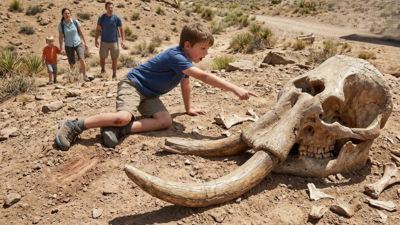
It was supposed to be a normal afternoon of exploring the desert. In November 2016, nine-year-old Jude Sparks was running ahead of his family near Las Cruces, New Mexico, when he suddenly tripped and fell. It is the kind of clumsy, everyday moment that parents see a dozen times a week. But when Jude scrambled back to his feet and looked at what had caused his tumble, he realised he hadn’t just hit a rock. He had landed face-to-face with something that had been waiting in the dirt for over a million years.The first thing which attracted the attention of Jude appeared to be an odd-looking piece of wood or a rock, which turned out to be no such thing in actuality. This turned out to be an enormous fossilised tusk connected to the near-complete head of a stegomastodon – an extinct prehistoric beast that roamed the earth millions of years before this time came into being. Usually, a hiking expedition ends up with a few dirty shoes and a story to be told, but in the case of the Sparks family, it provided them with an insight into an ancient age buried deep down under the layers of the desert.A rare glimpse into the prehistoric desertThis discovery proved to be of immense value to the field of palaeontology due to the excellent condition in which it was found, as usually, fossils arrive in scattered parts, while here the skull itself remained almost intact. According to the Experts Dig Up Las Cruces Boy’s Million-Year-Old Fossil Find article from Newswise, this fossil is estimated to be around 1.2 million years old. While the word ‘fossil’ is usually associated with dinosaurs, stegomastodons were actually prehistoric relatives of elephants.
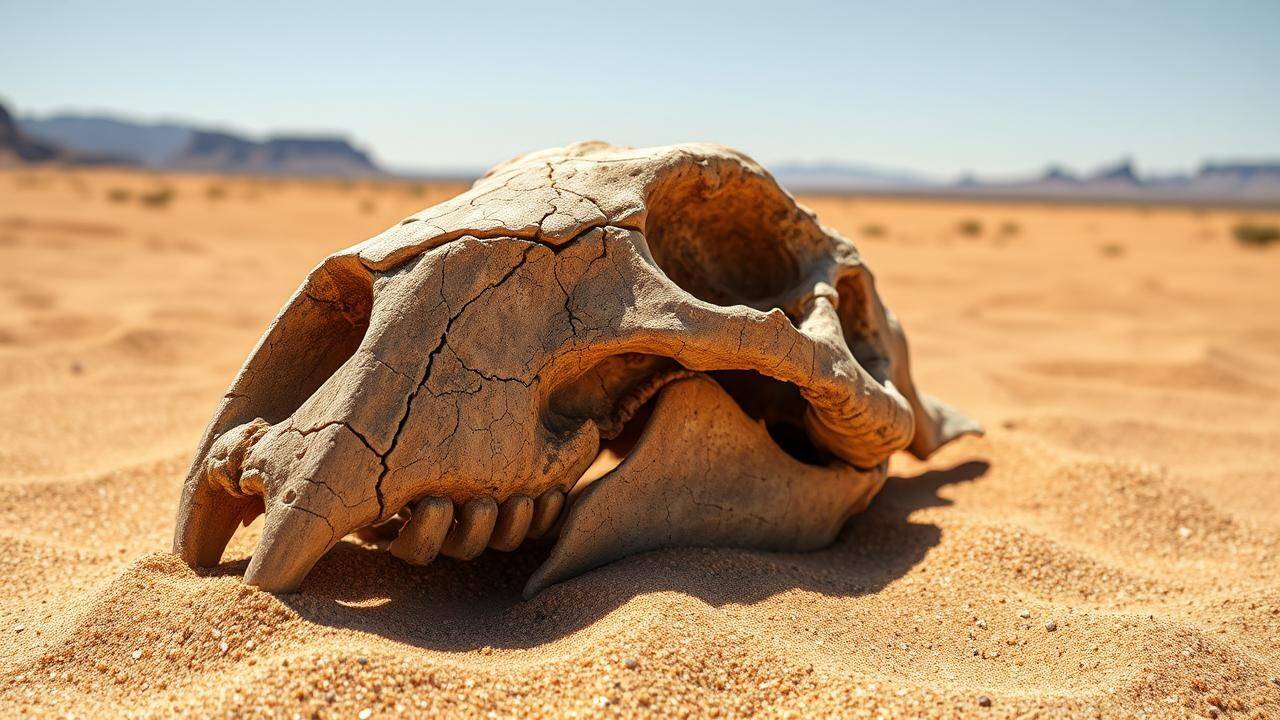
The fossil’s excellent condition offers valuable insights into ancient mammals. This discovery highlights the importance of careful handling and expert intervention in preserving history.
The skull could retain its outstanding condition for a number of reasons, with the main one being its discovery method. Instead of attempting to dig up the skull themselves, Jude’s parents decided to photograph the find and contact Professor Peter Houde from New Mexico State University. This phone call turned out to be very crucial since it enabled professional archaeologists to undertake the task and prevent the fragile bone structure from disintegrating at the first contact with oxygen. Jude’s accident shows that an intrigued kid and attentive adults can do great things together in order to preserve the history of the entire planet.The role of luck in archaeological discoveriesJude’s trip and subsequent stumble were as lucky as Jude’s tumble was. According to palaeontologists, Jude and his family managed to stumble upon an interesting place because a series of heavy rainfalls had occurred in the New Mexico desert shortly before that. In case Jude’s family came about a month sooner, the skull would have remained hidden under the sand, while coming one year later would have allowed the skull to decompose due to weather conditions.As noted in the National Geographic article titled Stegomastodon Fossil Discovery Boy New Mexico Desert, the recovery of the skull took months of careful planning and labour. The team had to apply specialised chemicals to the bone to harden it before it could be lifted from its resting place. This discovery has provided researchers with a wealth of information about the types of mammals that lived in the American Southwest during the Pleistocene epoch, helping to fill in the blanks of an ancient ecosystem that is now a dry, rocky landscape.In today’s world, Jude’s fall is replaced by a light push from the past, telling us that the world continues to hold many mysteries that have yet to be discovered.


