
AC vs Fan in a heatwave: What actually keeps you safe when temperatures soar? |


When heat turns relentless, the question shifts from comfort to survival. Long, humid days and warm nights are now common across Indian cities, and cooling is no longer a luxury. It is a health need. Many households switch between air conditioners and fans, often without thinking about how each affects the body. The answer is not as simple as choosing one over the other. It depends on how heat impacts the body and how each cooling method responds to it.A growing body of research, including guidance from the World Health Organization, shows that extreme heat can push the body beyond its ability to regulate temperature. This is when heat exhaustion or even heat stroke can set in. So, the real question becomes: which option actually protects the body better?
What extreme heat does to the body
Heat is not just about feeling uncomfortable. It changes how the body works. When temperatures rise, the body sweats more to cool down. This leads to fluid loss, and with it, essential salts.According to India’s National Disaster Management Authority heatwave guidelines, prolonged exposure to high temperatures can lead to dehydration, fatigue, dizziness, and in severe cases, organ stress.The body tries to cope, but there is a limit. Once internal temperature rises beyond safe levels, even strong airflow may not help. This is where the difference between AC and fan begins to matter.
Air Conditioners: Relief with a cost
Air conditioners cool by reducing both temperature and humidity. That makes them highly effective in extreme heat, especially when temperatures cross 40°C.Dr Sanjay Nagarkar explains, “While both air conditioners (ACs) and fans tend to provide relief, they work differently and can take a toll on well-being. So, the ‘healthier’ option depends on how each is used, your environment, and individual health needs.”But this relief comes with trade-offs.Lower humidity can dry out the skin, eyes, and throat. Many people wake up with irritation or a scratchy feeling in the nose. Dehydration can quietly build up because the body sweats less, but still loses fluids.Poorly maintained filters can circulate dust and allergens. Over time, this may trigger breathing issues, especially in those already dealing with allergies.There is also the issue of sudden temperature shifts. Walking from a cool room into intense outdoor heat can strain the body. It often leads to headaches or a sense of fatigue.Still, when used right, ACs remain one of the most effective tools against dangerous heat.
Fans: Simple, but not always safe
Fans work differently. They do not lower temperature. They simply move air around the body, helping sweat evaporate faster.This works well in moderate heat. But in extreme conditions, especially when temperatures rise above body temperature, fans may do more harm than good.Hot air blowing continuously can increase heat exposure instead of reducing it. The Centers for Disease Control and Prevention notes that in very high temperatures, fans may not prevent heat-related illness and can sometimes worsen dehydration.Dr Nagarkar highlights the risk clearly: “In very high temperatures, fans can circulate hot air, which won’t be able to provide proper cooling, and there can be heat exhaustion.”That said, fans are still useful when paired with ventilation. Open windows, cross-breeze, and shaded rooms can make fans effective without overloading the body.
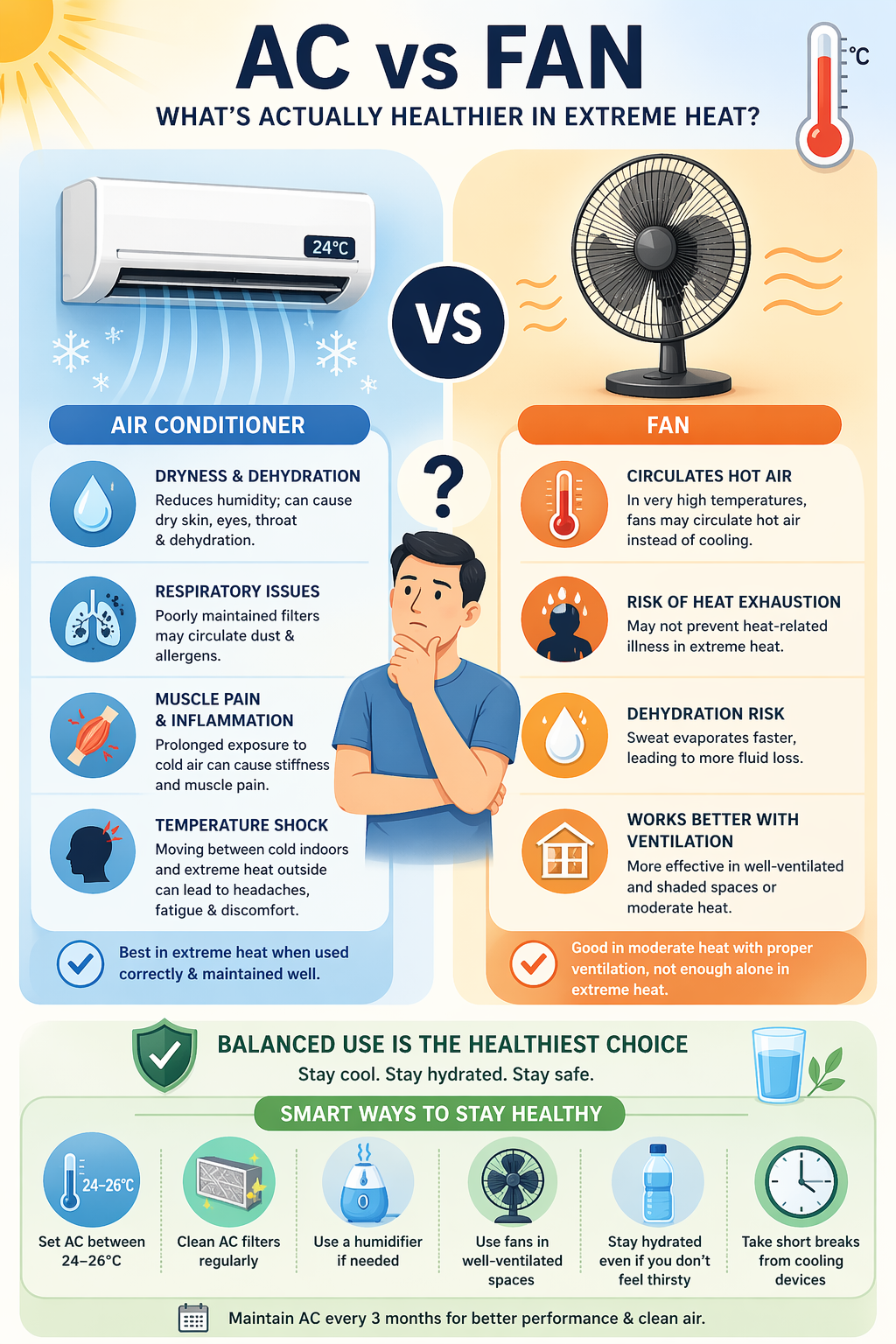
Fans help in moderate heat but may worsen heat exposure during severe conditions. A balanced, mindful approach using both is the safest way to stay healthy.
So, what’s actually healthier?
There is no single winner. The healthier option depends on the situation.In extreme heat, especially above 40°C, air conditioners offer safer protection. They actively reduce body heat and lower the risk of heat-related illness.But this comes with a condition. They must be used correctly.Dr Nagarkar advises, “Remember, it is not only about comfort, as this can lead to problems such as dehydration, muscle pain, and skin problems. Hence, it is necessary to be cautious during extreme heat and protect overall well-being.”Fans work well in milder heat or when combined with good airflow. But they should not be relied on alone during heatwaves.A balanced approach works best. Use AC during peak heat hours. Switch to fans when temperatures drop slightly, but ensure proper ventilation.
How to use both without harming your health
Small habits can make a big difference during summer.Set AC temperature between 24°C and 26°C. This avoids excessive cooling and dryness. Clean filters regularly to prevent dust buildup. Maintenance every three months helps keep air quality safe.
- Avoid sitting directly under cold airflow. It can lead to muscle stiffness or pain.
- Stay hydrated, even if you do not feel thirsty. Cooling devices can mask dehydration.
- Use fans in well-ventilated rooms. A fan in a closed, hot room will only circulate heat.
- Take short breaks from artificial cooling. Let the body adjust gradually instead of facing sudden temperature shocks.
Extreme heat demands smarter choices, not just cooler rooms. Air conditioners are more effective during severe heatwaves, but they must be used with care. Fans are helpful, but only within limits.The goal is not to pick sides. It is to understand how each tool works and use it in a way that supports the body, not stresses it.Disclaimer: This article is for general awareness and does not replace medical advice. Individual health conditions may vary. For persistent symptoms like dizziness, breathing difficulty, or severe fatigue, consult a qualified medical professional immediately.


