
Meet Ernst Öpik: The refugee astronomer who fled war in Europe and helped reveal where comets really come from

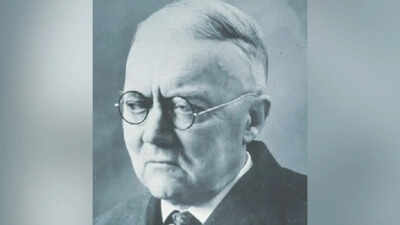
Ernst Öpik’s journey from Estonia to Northern Ireland is a story shaped by war, forced migration and scientific achievement. A respected astronomer and astrophysicist, he left his homeland during the Second World War as Soviet forces advanced across Eastern Europe. Like thousands of Estonians in 1944, he fled the Red Army and began a long and uncertain path across a continent in conflict. What followed was a life rebuilt far from home, eventually leading him to the Armagh Observatory in Northern Ireland. His scientific work earned him recognition, but recent research has focused just as much on his personal history, displacement, and the difficult choices he made during wartime Europe.
Ernst Öpik Estonia escape: Early life, war and forced migration from Soviet advance
Ernst Öpik was born when Estonia was still part of the Russian Empire. He later studied at the University of Moscow and built an early academic career in astronomy. Estonia gained independence after the First World War but was occupied again during the Second World War, first by Nazi Germany and then by the Soviet Union.In 1944, as the Red Army pushed westward, Öpik left Estonia with his family. Around 80,000 people reportedly fled the country during this period. The decision was driven by fear of renewed Soviet control and the instability of the region.His journey began in Tartu in southern Estonia. From there, he and his family travelled by cart for hundreds of miles across war-affected territory towards Germany.
Ernst Öpik refugee camp life and move to Northern Ireland
The family eventually reached Hamburg in northern Germany. They stayed in a refugee camp where living conditions were difficult and uncertain. Food shortages, overcrowding and lack of stability were part of daily life for many displaced people at the time.Despite these circumstances, Öpik’s scientific reputation remained important. His earlier academic work had already gained attention in international scientific circles. This connection would later play a key role in changing the direction of his life.During this period, Eric Mervyn Lindsay, an astronomer from Northern Ireland who had previously interacted with Öpik through academic networks, became aware of his situation. Lindsay was based at the Armagh Observatory and later extended an invitation for Öpik to join him in Northern Ireland.Visa complications delayed the move. Eventually, permission was granted, allowing Öpik and his family to leave the refugee camp and travel to Armagh.
Ernst Öpik Armagh observatory career and scientific legacy
Öpik spent the second half of his career at the Armagh Observatory and remained there until his death in 1985. His work in astronomy continued well into his later years, contributing to the development of astrophysics research in the region.His name is still recognised in parts of the scientific world, particularly in Estonia and within academic communities familiar with his work. In Northern Ireland, his contribution is less widely known.Matthew McMahon of the Armagh Observatory and Planetarium has noted that Öpik’s presence in Armagh reflects a broader history of skilled migrants and refugees contributing to scientific and cultural life in the region.
Ernst Öpik archive research reveals hidden letters and personal history
Recent research by Maddy Kennedy, a public history student at Queen’s University Belfast, has helped reconstruct many aspects of Öpik’s life. Her work involved cataloguing 305 letters and documents that had remained untouched for decades.The material provided new insight into his movements across Europe, his scientific collaborations and personal experiences. Some documents were undated, requiring careful chronological reconstruction.Kennedy’s research also uncovered personal details that had not been widely discussed before. These included references to a second family in Estonia and aspects of his private life that were not previously documented in English-language sources.The archive work connected materials from Armagh with Russian-language records and academic collaborations, including input from researchers at the University of Tartu.
Ernst Öpik legacy and family link to Lembit Öpik in UK public life
Öpik’s grandson, Lembit Öpik, later became known in UK public life as a politician and media figure. The family name gained recognition in a different context, though Ernst Öpik’s scientific legacy remained more specialised.In Armagh, his story is now being revisited through exhibitions that focus on his personal journey rather than only his scientific achievements. The aim has been to present him as a displaced scientist who rebuilt his career after fleeing war.


