
Can Earth’s fungi survive on Mars? NASA study reveals surprising answers

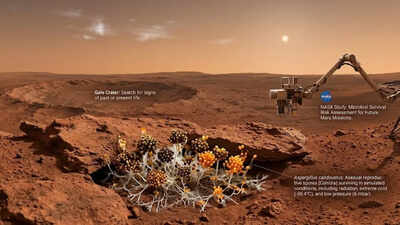
A new NASA-supported research study has discovered that some fungal spores can survive exposure to the extreme environment of outer space; these findings raise questions about the potential for bacteria and other microbes to survive during future trips to Mars. The research, which was published in the journal Applied and Environmental Microbiology, involved exposing conidia (asexually produced spores) of Aspergillus calidoustus to simulated Mars-like conditions (high doses of ultraviolet radiation, very low barometric pressure, and extremely cold temperatures) over an extended period (up to 1.5 years). Although this study does not provide evidence of any current contamination on Mars, it highlights a major flaw in existing planetary protection protocols. As humanity prepares to explore deeper into the cosmos, it will be essential to continue studying the resilience of eukaryotic microorganisms to avoid unintended biological contamination across different planets.
Aspergillus calidoustus: Earth’s fungi survival on Mars is possible
According to a recent study conducted by scientists in collaboration with NASA, Aspergillus calidoustus spores found in spacecraft assembly cleanrooms are more resilient than originally thought. When subjected to simulated conditions found on Mars, these spores survived: exposure to low pressure (6 mbar) and solar radiation, as well as the presence of Martian regolith (soil). The spores were able to survive conditions that had previously been considered sterilising, including long-term exposure to neutron radiation and standard dry heat microbial reduction procedures.
Integrating fungal risks into Mars mission standards
According to a study published in Chemistry Views, current planetary protection protocols focus on the elimination of bacterial spores, as these have been the primary target of decontamination efforts (due to the durability of bacteria). This study’s findings prompt scientists to urge that planetary protection regulations be expanded to include eukaryotic organisms, such as fungi. Different from bacteria, fungi have complex cellular structures with a nucleus and, thus, have different means of surviving. The results of this study suggest that existing decontamination procedures are inadequate at preventing fungi from hitchhiking on robotic systems because highly controlled cleanrooms can still contain these resilient fungal spores.
The Outer Space Treaty and the challenge of biological integrity
The ability of micro-organisms from Earth to survive on Mars represents a key hurdle for future explorative efforts, specifically missions that seek evidence of past and current life from beyond planet Earth. NASA’s policy, established by the Outer Space Treaty of 1967, requires that all exploration must take place with an intent to prevent ‘forward contamination’ to protect the biological integrity of another body within our solar system. The fact that Aspergillus calidoustus can withstand various combinations of environmental conditions relevant to the Space Environment is being leveraged to improve the accuracy of risk assessments for the contamination of Mars by landers or rovers sent from Earth. Although there is no guarantee that such contamination will take place, experts agree that a full understanding of the ‘synergistic effects’ (resulting from the combined effects of radiation, cold temperatures, etc.) of these space environmental factors is essential to providing adequate assurance that future landers or rovers will not alter the Martian ecosystem.


