
NEW DELHI: The concept and nomenclature of Civil Lines, residential areas established by the British and long associated with their proximity to administrative power, may fade into history.As the Centre intensifies its efforts to replace remnants of colonial-era laws and practices with alternatives that are of Indian origin and reflect the country’s culture, the framework ‘Civil Lines’ has been identified as one such legacy for review.TOI has learnt that an extensive exercise is being undertaken to identify vestiges of British rule, aimed at decolonising mindset and embracing indigenous identity. PM Narendra Modi, in Jan, had asked ministers and top bureaucrats to identify colonial-era practices and suggest alternatives that have Indian roots.Originally developed in the 19th century, Civil Lines were planned as exclusive enclaves with better infrastructure, which signified power and proximity to colonial masters. These were built to house “senior colonial civilian officials”. Civil Lines exist in Delhi and several cities across states such as Uttar Pradesh, Rajasthan, Haryana, Punjab, Madhya Pradesh, Bihar and Maharashtra. For long, these remained different from other parts of “old” cities or bazaars. “The development of Civil Lines was a part of planned development. On one side of the city, there was cantonment board, and on the other, Civil Lines. This is how cities have developed,” said an urban planner and architect who has done extensively studied British-period planning and architecture.Former DDA commissioner (planning) A K Jain said Civil Lines across the country have been completely transformed in all these years. “In place of bungalows, now you have multi-storeyed buildings; population has increased manifold and these have become part of main cities. So, changing names hardly has any significance.””During the colonial era, about 75 cantonments were developed in India. Civil Lines were the counterpart of the military enclaves,” he added.In the past decade, govt has renamed certain key roads and offices whose original names were iconic to the British era. Some of these include changing the name of Race Course Road in Delhi to Lok Kalyan Marg among others.End of ArticleFollow Us On Social MediaVideosUS Nationals Detained At Srinagar Airport Over Banned Satellite DeviceNo Fuel Shortage: Govt Assures 100% Domestic Gas Supply As India’s LPG Demand Falls 13% In MarchPM Modi Takes ‘Jhalmuri’ Break, Interacts With Locals In West Bengal’s Jhargram Amid Poll CampaignIndia Warns Iran Of Consequences After Attack On Two Tankers In Strait Of HormuzIndia Expands Export Relief After Hormuz Tensions Adds Egypt & Jordan To Shield Trade RoutesCongress Holds Protest After PM Modi’s Address To The Nation On Women’s Reservation Bill SetbackIndia’s Naval Push In Indo-Pacific: IOS Sagar Departs Phuket After Successful Thailand Port CallManipur Streets Erupt As Security Forces Fire Tear Gas On Protesters | WatchManipur Horror: Retired Soldier Among Two Shot Dead In Ukhrul Highway AttackWhat We Know About Indian Ships Hit In Hormuz Strait By Iran Gunboats And Unknown Projectile123Photostories5 style lessons from Amitabh Bachchan’s iconic wardrobeWhy you forget names instantly: It’s not your memory, it’s your attention, and here’s how to fix it5 Horror movies based on real-life events: ‘The Conjuring’, ‘The Exorcist,’ and moreTop 5 sneaker releases of 2026 you shouldn’t missWhy it’s so hard to end long-term relationships as per science, therapist revealsBeautiful Indo-Arabic and Persian baby names quietly used in Indian familiesHe never drank alcohol, yet was diagnosed with severe fatty liver: What this says about modern diets and silent lifestyle risksHow to stop rice flour roti from cracking: 5 proven home tips to make soft and puffed rotiAs Deepika Padukone and Ranveer Singh announce second pregnancy, a look at Bollywood’s cutest pregnancy announcementsInside Cristiano Ronaldo and Georgina Rodríguez’s parenting style: How they’re raising grounded, disciplined teen sons123Hot PicksIran warDelimitation Bill DefeatPurple cap winnerOrange cap winnerIPL Points TablePublic holidays April 2026Bank Holidays AprilTop TrendingIPL Orange Cap 2026VijayPM Modi LiveWorld Largest EconomySue BirdIce SpicePahalgam Pony Wallah StoryWomen Quota BillE Coli Smuggling CaseErika Kirk Event

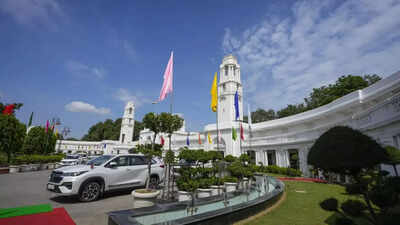
NEW DELHI: The concept and nomenclature of Civil Lines, residential areas established by the British and long associated with their proximity to administrative power, may fade into history.As the Centre intensifies its efforts to replace remnants of colonial-era laws and practices with alternatives that are of Indian origin and reflect the country’s culture, the framework ‘Civil Lines’ has been identified as one such legacy for review.TOI has learnt that an extensive exercise is being undertaken to identify vestiges of British rule, aimed at decolonising mindset and embracing indigenous identity. PM Narendra Modi, in Jan, had asked ministers and top bureaucrats to identify colonial-era practices and suggest alternatives that have Indian roots.Originally developed in the 19th century, Civil Lines were planned as exclusive enclaves with better infrastructure, which signified power and proximity to colonial masters. These were built to house “senior colonial civilian officials”. Civil Lines exist in Delhi and several cities across states such as Uttar Pradesh, Rajasthan, Haryana, Punjab, Madhya Pradesh, Bihar and Maharashtra. For long, these remained different from other parts of “old” cities or bazaars.
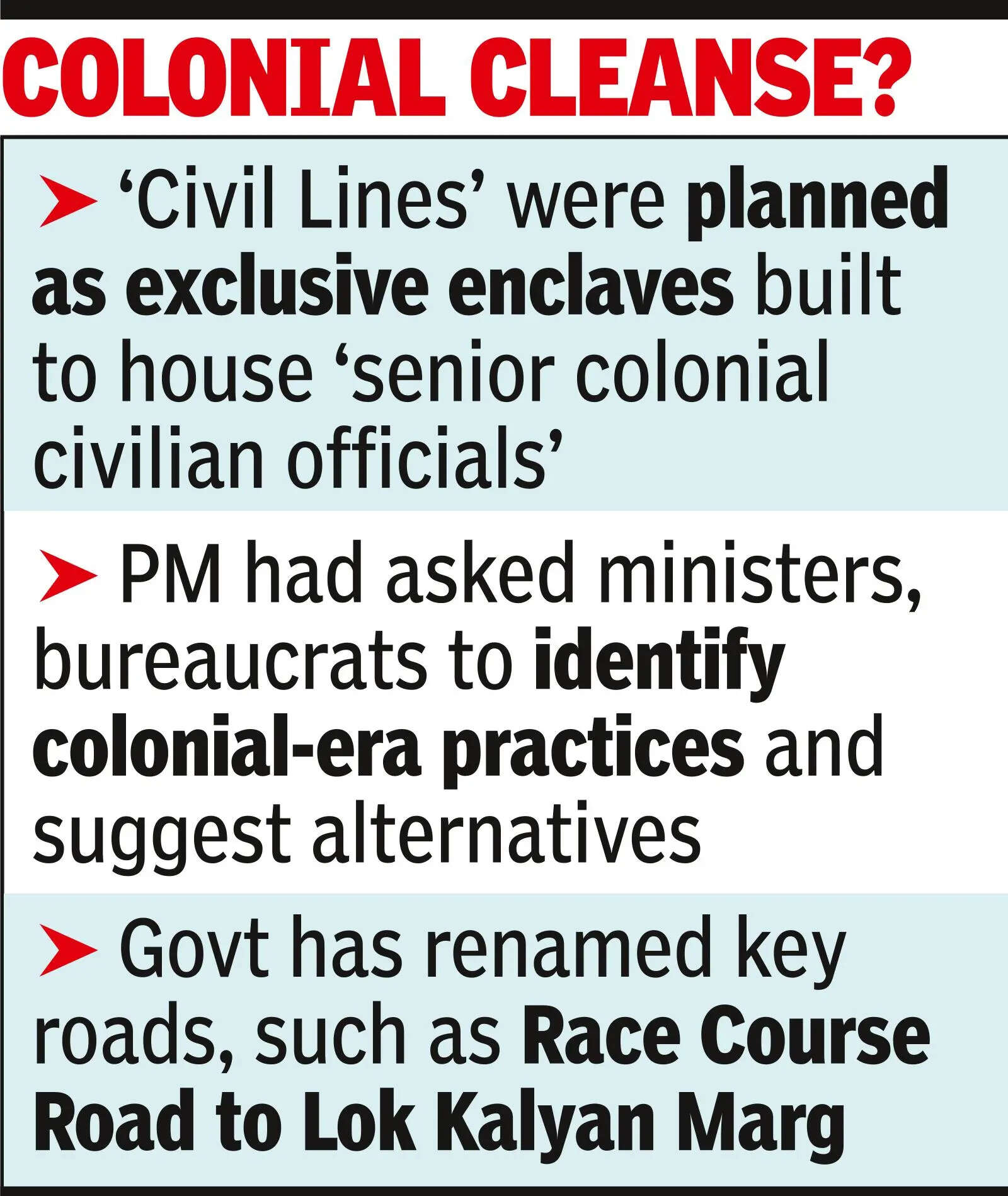
“The development of Civil Lines was a part of planned development. On one side of the city, there was cantonment board, and on the other, Civil Lines. This is how cities have developed,” said an urban planner and architect who has done extensively studied British-period planning and architecture.Former DDA commissioner (planning) A K Jain said Civil Lines across the country have been completely transformed in all these years. “In place of bungalows, now you have multi-storeyed buildings; population has increased manifold and these have become part of main cities. So, changing names hardly has any significance.”“During the colonial era, about 75 cantonments were developed in India. Civil Lines were the counterpart of the military enclaves,” he added.In the past decade, govt has renamed certain key roads and offices whose original names were iconic to the British era. Some of these include changing the name of Race Course Road in Delhi to Lok Kalyan Marg among others.


